
‘There’s hopes and dreams in there’: Why first responders risked everything inside the fertility clinic blast zone
Firefighters who rushed to the scene of a deadly May 17 blast say the decision to enter the heavily damaged clinic was driven by a sense of duty — and the knowledge that families’ futures were at stake.
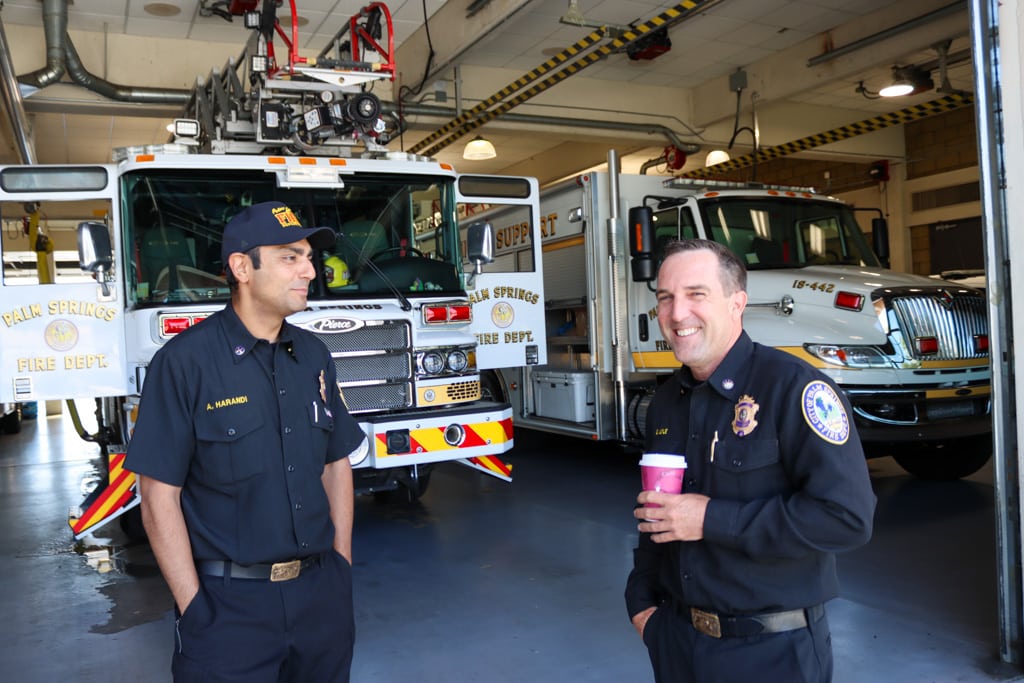
Deputy Fire Chief Greg Lyle had just returned to his home from getting a haircut on the morning of Saturday, May 17, when he got an alert on his phone that there had been an explosion in Palm Springs. He immediately started driving toward the scene. Because he lived 30 miles west of Palm Springs, he knew he had no time to waste.
While Lyle was en route, Battalion Chief Ali Harandi was the first chief officer on the scene at the American Reproductive Centers (ARC) facility off North Indian Canyon Drive, the target of what authorities said was a deliberate act of terrorism.
Local reporting and journalism you can count on.
Subscribe to The Palm Springs Post
Neither was alone. Firefighters at multiple stations heard and felt the blast, just like the rest of the city, and started rushing toward the scene before they even received a call.
“Once I got on the scene and just took an initial glance at the magnitude, I knew we’re gonna have a lot of work ahead of us, and I was just trying to kind of wrap my mind and my arms around how big this is going to be and how I’m going to start divvying it up, and what our priorities are going to be,” said Harandi.
Harandi and his crew’s priorities were search and rescue, fire extinguishment, and area security. Shortly after Lyle arrived, the fire team went into a tactical pause, as the bomb squad had raised concerns about the possibility of a secondary explosion and the overall safety of the building.
A Plea to Save Embryos
While the fire team wasn’t being utilized, many of the firefighters began discussing their concerns about the safety of the embryos kept at the clinic. Lyle had seen video footage on a phone of an interview with Dr. Maher Abdallah from ARC, saying the embryos were OK. However, given the extent of the damage they had seen, the fire crew was concerned.
After taking position in the command structure, Lyle knew he was the one with the ability to at least try to get the go-ahead from the FBI. The lead FBI investigator was very busy, and Lyle knew he had 10 seconds of eye contact to try and convince him to let them go inside the building.
“I was trying everything I could, and I think that’s when I said, ‘There’s hopes and dreams in there,'” said Lyle. “And I tried to get him to agree to it, and surprisingly, he did. I figured he would say, ‘No, that’s too dangerous, and go away.’ But he basically said, ‘You take care of it.’ And so that gave me the green light.”
Lyle quickly began calling the dispatch line to reach Dr. Abdallah and connected with the doctor’s staff. Amid the confusion, Lyle learned there was a backup generator and that maintaining power was critical. He spoke with FBI agent Chris Meltzer, who shared his concern. When Dr. Abdallah and a staff member arrived at the command post, Lyle checked with the lead FBI investigator to see if they could accompany the team into the clinic to provide guidance.
“I didn’t know what a cryogenic tank looked like. When they were talking about certain equipment, I didn’t know how big that equipment was …I didn’t know,” said Lyle. “But the answer was absolutely not. No civilian was going to go in there.”
So he and Agent Meltzer looked at each other and knew what they had to do.
“I said that I wasn’t comfortable with sending any of my guys in but that I would do it. He agreed to that,” said Lyle. “And so it ended up being me and him.”
A Palm Springs native with 30 years of experience, it was the first time in his career that Lyle had to make a decision of this magnitude.
“It’s not only that I wouldn’t be able to live with myself if I got somebody else hurt doing something I told them to do, but I like learning about leadership and good leaders would never ask somebody to do something that they wouldn’t do themselves … and this was the first time where the circumstances were so uncertain that I wasn’t gonna tell somebody to do it,” said Lyle. “It had to be me.”
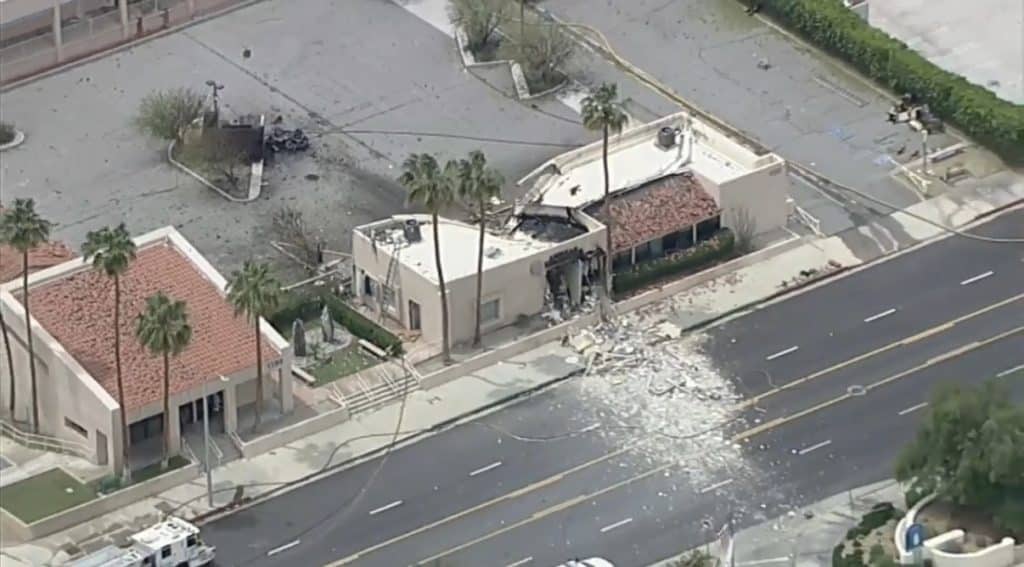
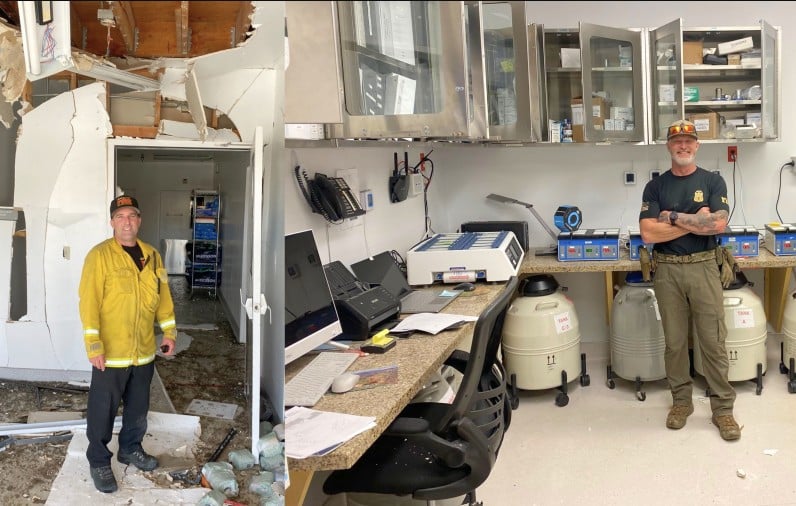
Lyle and Meltzer approached the building to the left of the main one featured in news reports, which was the one hit by the gas pressure blast. With little information and no one else around, they weren’t sure where to go once inside. The building had significant damage: blown-out windows and door frames, structural damage to the facade, fallen drywall, exposed electrical wiring, and 4 to 6 inches of standing water. They went room to room searching for the cryogenic tanks.
Search for the Cryogenic Tanks
“And we found them pretty easily,” said Lyle, who explained that upon entering the room, they saw about 15 tanks, a high desk on wheels, and all sorts of other equipment. “I didn’t know what was important.”
It was clear at that point that it was too big of a job for the two of them. Fortunately, they didn’t see any indication the building was going to immediately collapse or signs of a secondary device.
“I felt comfortable then at that point to get help to come in,” said Lyle, who explained he and Meltzer also tried to restart a generator without success, so they went back to the command center to get help.
Chief Harandi gathered the crew from Engine 3, along with members from the Palm Springs Police Department, the Riverside County Sheriff’s Bomb Squad, the FBI Bomb Squad, and the Palm Springs Fire Department. The team was assigned to restore power to the building.
Once the team reentered the building, the initial focus was on restarting the on-site emergency generator. After several minutes of unsuccessful attempts, they shifted to using one of the department’s generators, which they carried on their heavy rescue equipment, along with extension cords to provide temporary emergency power to the building. While exploring that option, they began resetting the building’s fuses, which had been shut off.
“And we were able to work with Edison to restore power to that block and turn the fuses to the building back on and get it back on normal power from then on,” said Harandi.
During the mission, Abdallah was monitoring at the command post, checking an app to constantly track the temperatures of the embryos and ensure they were all OK. The next morning, when the doctor returned to the scene, Lyle said the doctor was very pleased with the numbers he was seeing from the machines, even though some of the screens were blacked out.
But there was one more very important thing that concerned him.
Abdallah mentioned there was a “narrow window of time” for certain patients who were at a specific point in their medical procedure. Some patients were scheduled to come in on Monday and Tuesday, and these particular patients were particularly important. The doctor needed the paper records for these patients, who were at a critical stage in their fertility treatment.
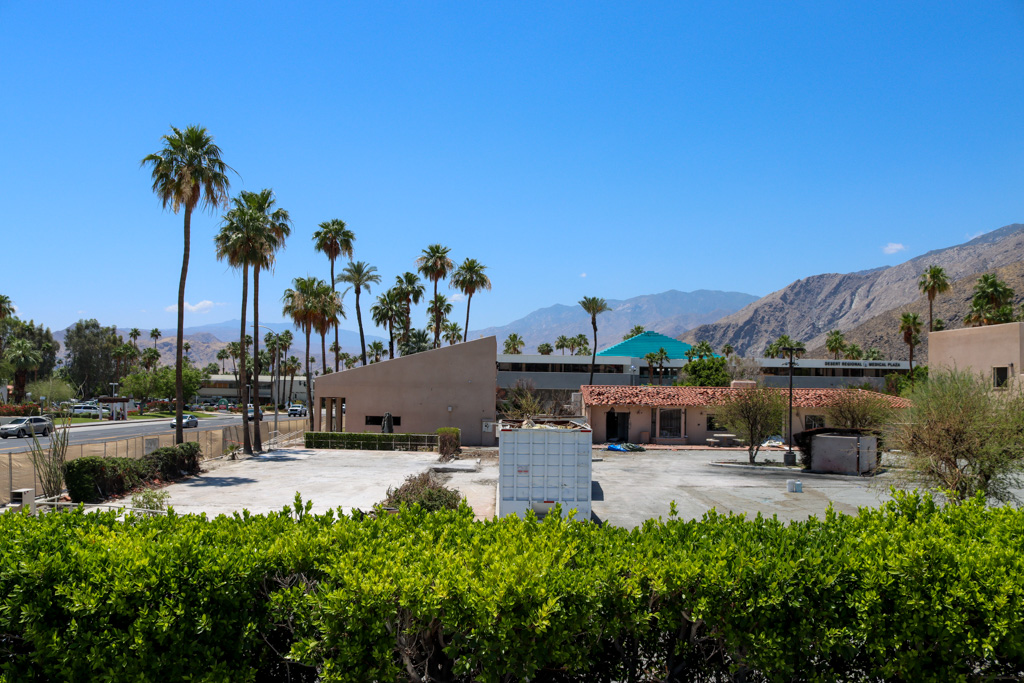
“And so, unfortunately, he said that those were in that building that you see most of the time in the pictures, the one that’s completely blown up,” said Lyle, noting that no one had been in that building since the response to the initial incident when firefighters noticed the walls closing in on them. But he and Meltzer agreed to go together again.
“It ends up being thousands of folders. So we got a couple of other firefighters in there with us, and we were able to pull all the paperwork out as much as we could find,” said Lyle.
An Extraordinary Team Effort
Both Harandi and Lyle are proud of everyone’s work during those days, saying their role was only a small part of the effort that affected many people. They are proud of the collective work between the multiple agencies that collaborated, including the fire department, police department, and FBI.
“I mean, for me, just that is absolutely like the best-case scenario, best-case outcome that could have happened,” said Harandi. “I’m really proud of everyone’s work.”
On a personal note, just hours after retrieving the medical records, Lyle received a text from a fellow firefighter whose wife was in the process of getting pregnant, thanking him for saving those embryos. That’s when it really sunk in.
“That’s when it changed for me. I hadn’t really even thought about what we had done …But that’s when it really hit home, how small the world is.”
Author
Related Articles
Rebuild Palm Springs closes fund, makes final grants a year after bombing
The grassroots fund tied to last year’s fertility clinic bombing raised nearly $160,000 and is sending its remaining balance to health grants, a police equipment purchase and emergency prep workshops.
One year after the Palm Springs bombing, a survivor is still picking up the pieces
A marketing concierge injured in the fertility clinic attack one year ago this weekend has faced homelessness, denied benefits, and mounting debt — but found a lifeline in the city’s LGBTQ community center.

American Reproductive Centers breaks ground on new Palm Springs facility nearly one year after bombing
The groundbreaking marks a turning point for the fertility clinic that was destroyed in a May 2025 bombing, with construction targeting an ambitious Dec. 31 completion and a goal of full operations by 2027.