
American Reproductive Centers breaks ground on new Palm Springs facility nearly one year after bombing
The groundbreaking marks a turning point for the fertility clinic that was destroyed in a May 2025 bombing, with construction targeting an ambitious Dec. 31 completion and a goal of full operations by 2027.
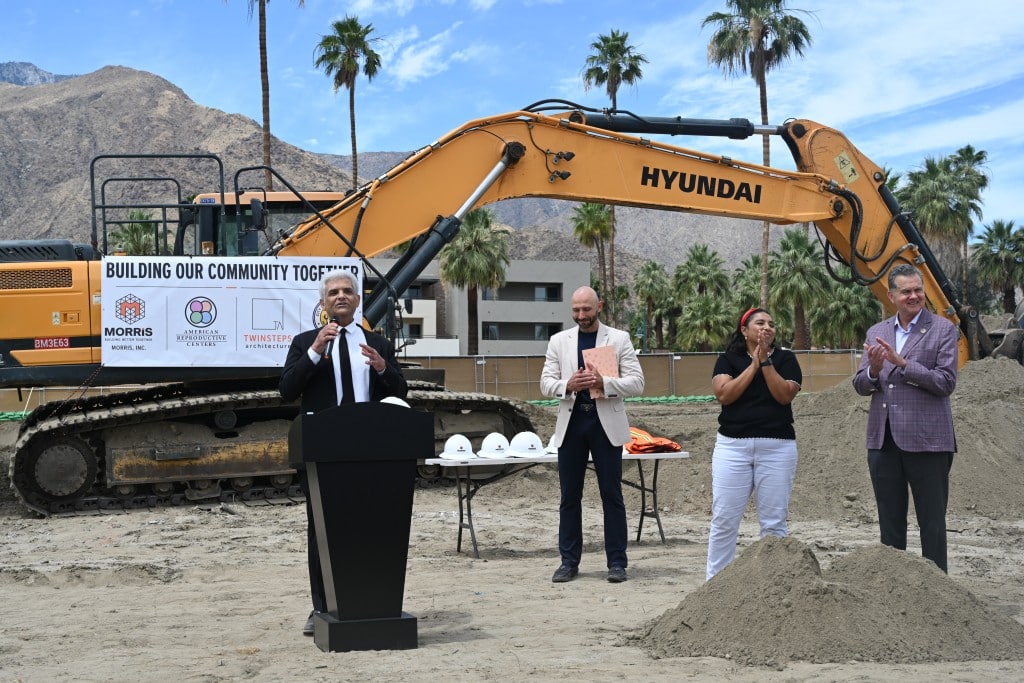
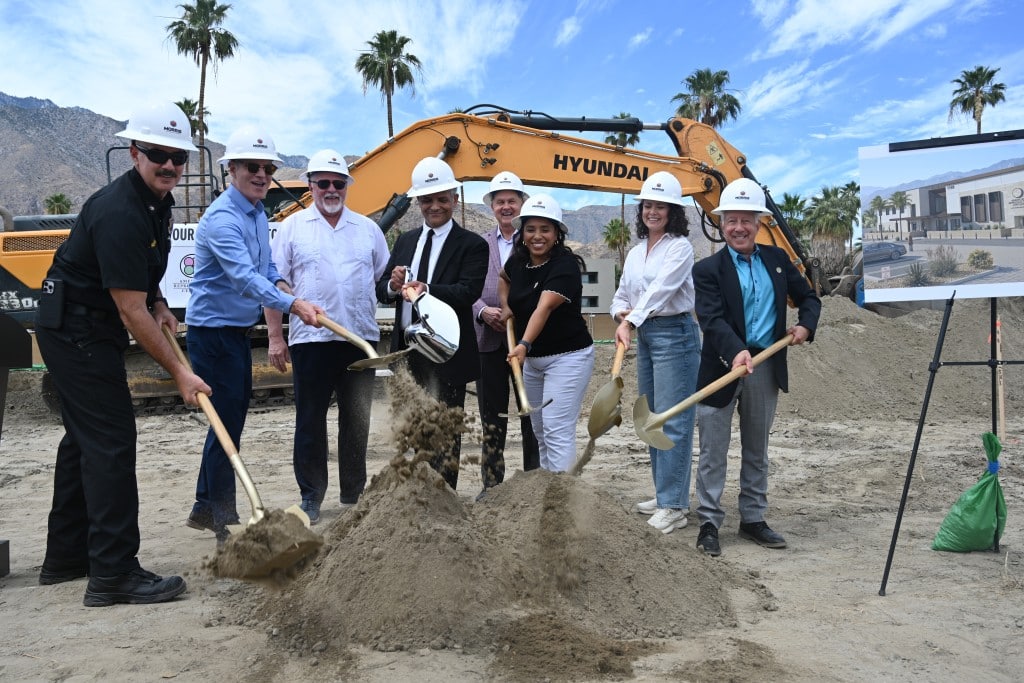
American Reproductive Centers broke ground Monday on a new state-of-the-art fertility clinic and surgical center in Palm Springs, nearly one year after a bombing destroyed the original facility and set off a community-wide effort to help the clinic survive and rebuild.
Dr. Maher Abdallah, the founder and medical director of ARC, stood alongside Palm Springs Mayor Naomi Soto, City Manager Scott Stiles, Fire Chief Paul Alvarado, and members of the city council for the ceremony at 1199 North Indian Canyon Dr. — the same site where the May 17, 2025 blast leveled the building and sent debris spanning more than 250 yards in all directions.
Local reporting and journalism you can count on.
Subscribe to The Palm Springs Post
“The reason why we’re doing the groundbreaking today is because of their hard work behind the scenes, making it happen,” Abdallah said of city officials. “The project moved in a very expedited fashion.”
Abdallah said he hopes construction will be completed by Dec. 31, with the clinic fully up and running by 2027. The builder selected for the project specializes in IVF centers and has built more IVF centers than any other contractor on the West Coast, Abdallah said, a distinction he believes will allow the work to move faster than a typical construction timeline.
“The usual time frame is a year, but we’re gonna get it, hopefully, towards the end of the year,” Abdallah said. “Even if the building itself is ready by December 31 and more work is done on the outside, hopefully we can get an occupancy permit and get going.”
The new facility will include a first-of-its-kind IVF lab, expanded patient services, and enhanced safety and security infrastructure, Abdallah said. Security was on hand at the groundbreaking ceremony, monitoring the entrance to the construction site.
Abdallah described his long-term vision as positioning Palm Springs as a regional and national destination for fertility care.
“My goal is to really expand this program, where we’re attracting patients from throughout California [and] out of state,” he said. “Another lofty goal is for Palm Springs to be known for its fertility side.”
Among the most closely watched developments since the bombing has been the fate of the embryos stored at the clinic at the time of the blast. First responders entered the compromised structure in the immediate aftermath and restored electricity to keep incubators running, preserving frozen eggs, sperm, and embryos.
“I promised that those embryos that we were dividing will yield a pregnancy — something that you never do as a physician, especially in the IVF world, because even when you transfer a perfect embryo, it may not necessarily yield the pregnancy,” Abdallah said. “But it has.”
Abdallah confirmed Monday that the embryo that was dividing was transferred and resulted in a pregnancy on the first attempt, and that the patient is now in the second trimester.
Beyond that single case, Abdallah said the clinic has thawed 60 frozen embryos from the cryo tanks that survived the blast, and 40 of those transfers yielded pregnancies — a rate he described as above average.
“The damage was obviously just structure,” he said. “We are rebuilding.”
The path from the bombing to Monday’s groundbreaking required an extensive effort from city staff across multiple departments. The project moved through planning, architectural review, and the community building permit process, and Soto said the speed of that work was unusual by California standards.
“From cleanup to rebuild within a year is pretty much unheard of in California construction more broadly,” Soto said. “We are just so grateful to every department, our commissions, our planning department, our building department, to really make sure that we’re doing everything we can.”
Desert Regional Medical Center also played a role in the clinic’s survival in the immediate aftermath of the bombing. Soto said Desert Regional found medical office space for ARC within a week, allowing the clinic to move its reproductive material directly from the blast site without an intermediate stop — a critical factor, Abdallah has said, because moving the material multiple times increases its vulnerability.
Since the bombing, ARC has been operating out of the El Mirador building, but the space wasn’t designed specifically for IVF services.
“Things are going really slow there, because we have limited space,” Abdallah said. “We use the OR for recovery. We can’t do a large volume.”
American Reproductive Centers defines its success in heartbeats, and Abdallah and the rest of his staff are looking forward to the future.
Soto said the decision by Abdallah to stay in Palm Springs — when he could have chosen to rebuild anywhere — was not lost on the city.
“Every time I hear Dr. Abdallah talk, I’m renewed with optimism,” she said. “It is incredibly inspiring to know that we’re not just rebuilding — we’re going to be a leader in fertility care, not for the city, for the valley, for Southern California more broadly. And it just goes to show that this is a medical office that cares about our community.”
Author

Related Articles
Palm Springs committee approves revised In-N-Out design, but wants one more look before final sign-off
Under pressure from state limits on project reviews, the committee conditionally approved designs for the restaurant planned for Smoke Tree Village along East Palm Canyon Drive.
City committee moves 115-unit affordable apartment complex forward
The project will serve households earning 30%-80% of area median income, with eligible income limits ranging from $25,850 to $98,400 depending on household size.
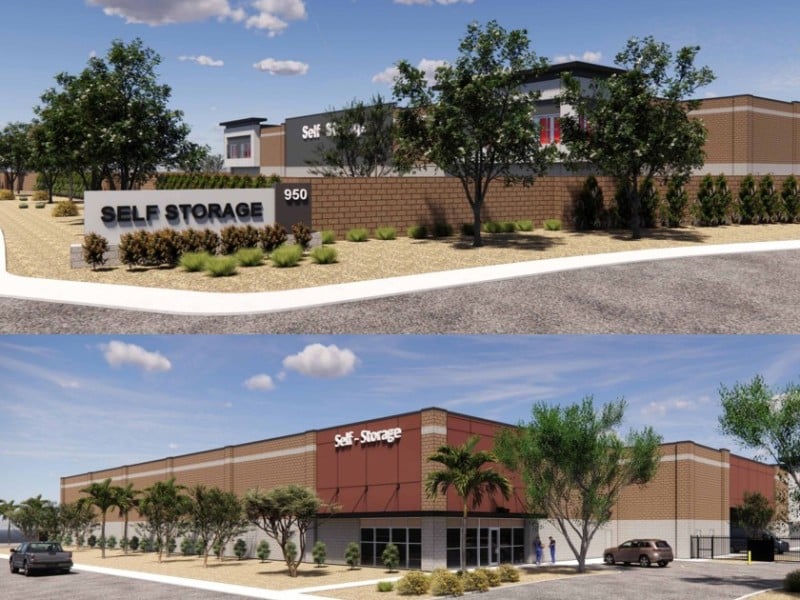
Palm Springs design panel rejects storage facility’s facade, sends plans back for revision
Commissioners took issue with a prominent glass display case meant to signal the building’s use, calling it a “low-effort solution” that disrupts the structure’s symmetry.