
Palm Springs Human Rights Commission revisits troubled awards program
Commission considers new scoring system, clearer criteria, and staff-led vetting process following last year’s controversy over rescinded awards and possible Brown Act violations.
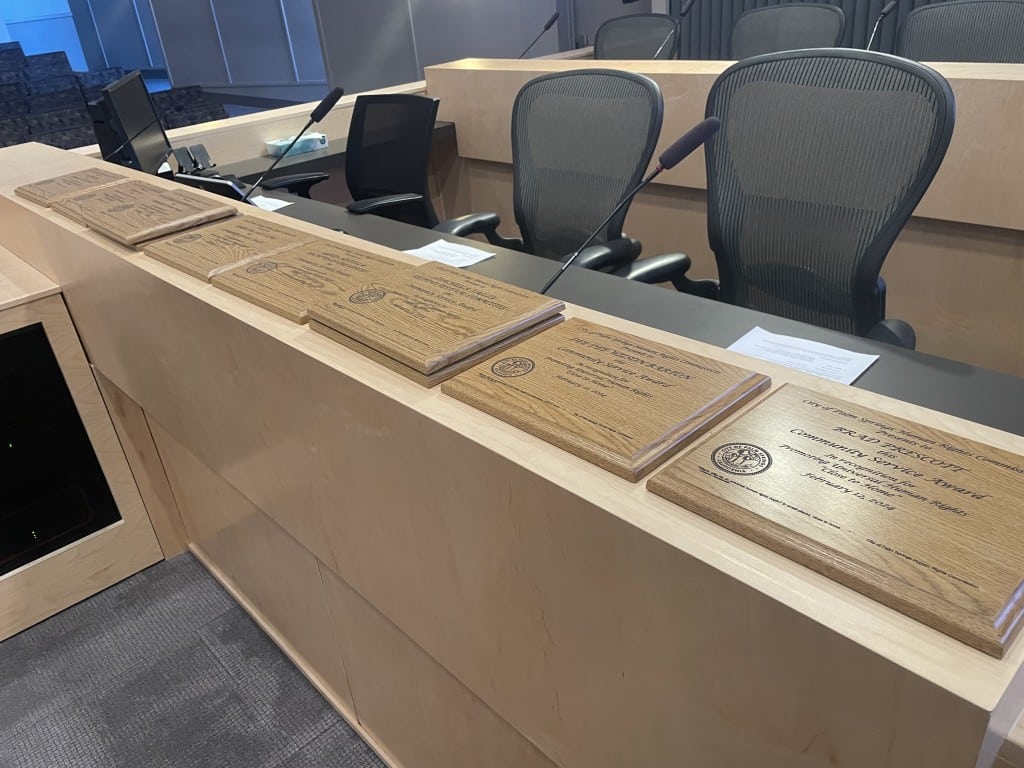
The Palm Springs Human Rights Commission discussed the future of its community service awards on Monday — the same awards that prompted a months-long hiatus and concerns over possible Brown Act violations last year.
After returning from a nine-month pause, the commission has spent this year considering ways to revamp the program. Proposed changes include establishing measurable selection criteria and strengthening vetting procedures.
Local reporting and journalism you can count on.
Subscribe to The Palm Springs Post
The 2024 awards became controversial after some commissioners decided privately to rescind one recipient’s award — a move that raised legal questions because it occurred outside a public meeting.
The Community Service Awards are a long-standing commission tradition dating back to the body’s founding in 1992. In February 2024, seven individuals and two organizations were honored.
Reporting by The Post detailed how one 2024 award was rescinded after complaints were made to Commission Chair Hugo Loyola. He and others reportedly decided to withdraw the award without public discussion, leading to scrutiny over whether the action violated the state’s open-meeting law.
In March 2024, the commission disbanded its three-member executive committee amid similar concerns. The committee had been meeting privately to review agenda items, even though the Brown Act requires advance public notice and in-person meetings.
“The media got involved. The Post got involved. They blew it out of proportion,” Loyola said at Monday’s meeting.
Commissioners Carlotta Rinke and Michael Horne have drafted new criteria for selecting honorees. Their proposal — contained in this staff report for Monday’s meeting — suggests a five-point scoring system designed to simplify the process, reduce staff time, and clarify that the City Council — not the commission — makes the final award decisions.
Entries would be scored in five categories: an introductory statement; a description of activities and accomplishments related to human rights and social justice; an explanation of community impact; a vision for Palm Springs’ human rights future; and any interactions with city government. The latter could serve as a disqualifier if a conflict of interest exists.
During the meeting, Rinke suggested that commissioners could evaluate applicants in closed session, but Loyola reminded the group that deliberations must occur in public — a point underscored by the previous controversy.
The commission also discussed a new vetting process that would involve city staff reviewing nominees after the commission’s selection. Deputy City Manager Jeremy Hammond said the city attorney, communications team, and other departments are still determining how that review will work.
In past years, applications were accepted in November, with awards presented in February.
“Right now, obviously we’re not there,” Loyola said. “It doesn’t have to be February. It could be March, it could be April, it could be May — as long as we get this right.”
The commission is expected to revisit the awards process at its December meeting.
Author

Related Articles

Vote counts are rolling in. Here’s where major races stand in Palm Springs
Vote totals for city, county, state and federal races are being released. While it could be some time before winners are declared, here’s the latest that we know.

Waste subcommittee favors promoting reusable bottles over a ban
Members of the Sustainability Commission’s panel on waste reduction also discussed a short-term rental “resource smart” badge as they resumed work after not meeting since June.

Election Day is Tuesday: What Palm Springs voters need to know
Voting locations are open from 7 a.m. to 8 p.m. Local contests include City Council, healthcare district and school board seats, with eligibility determined by where you live.