
Palm Springs Human Rights Commission disbands executive committee following questions over its actions
The decision follows controversy involving the reversal of an award nomination made outside public meeting guidelines. In addition, a new ad-hoc committee will now meet to review the nomination process.
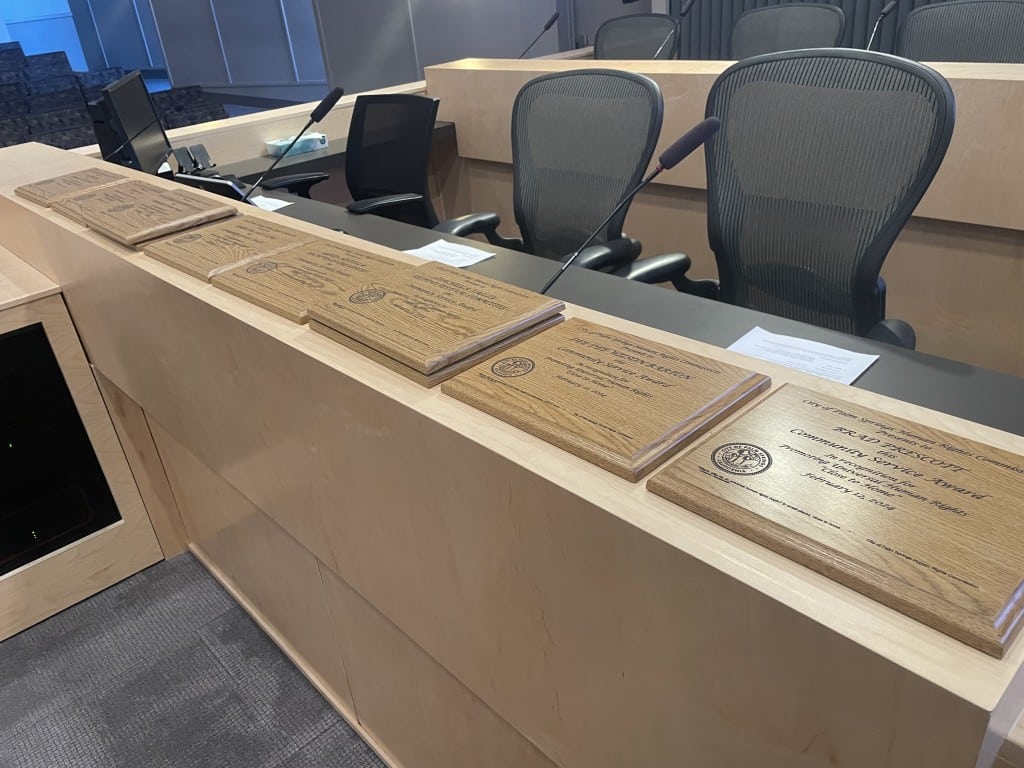
Acting on advice from the city attorney, the Palm Springs Human Rights Commission voted to disband its executive committee Monday evening, one month after The Post reported it may have violated state open meetings rules in reversing a decision about an award nominee.
The decision comes after Chair Hugo Loyola and two other commissioners who were committee members reportedly chose to work behind the scenes to retract a Community Service Award that the full commission had already unanimously approved.
Local reporting and journalism you can count on.
Subscribe to The Palm Springs Post
None of the discussions and the decisions that followed occurred in an open public meeting, which is a possible violation of the Brown Act, which governs how the HRC must conduct its business.
During Monday’s meeting, Loyola explained that the three-person executive committee’s purpose was to meet prior to the full commission meeting to discuss agenda items and consult the calendar for upcoming events.
However, because the committee consisted of three commissioners, any meeting between them was pursuant to the Brown Act, meaning they had to post an agenda for their committee meeting 72 hours in advance and, as of this year, had to meet in person.
Commissioner Beverly Greer, who was on the committee along with Loyola and Vice Chair David Vignolo, called the rules “cumbersome” and noted that they were the only commission in the city using an executive committee for that purpose.
Greer also mentioned that the decision to dissolve the committee was made “under the advice of the city attorney” and that the city attorney was a party to the discussion.
From now on, the entire commission will discuss future agenda items at the end of each meeting.
Mayor Jeffrey Bernstein, also in attendance during Monday’s meeting, gave brief remarks to the commission, thanking them for their hard work and offering himself as an unofficial liaison between the City Council and the commission.
“Many commissions could use more council advice or feedback, or at least, someone to bounce ideas off of, within the limits of legality,” he said. Bernstein told the commission he would be available for future meetings.
In addition, the commission also voted to create an ad-hoc committee of two commissioners who will meet and review the Community Service Award nomination and selection process.
Vignolo said that after the “challenges” the commission faced regarding the Community Service Awards, he took it upon himself to contact other cities’ Human Rights Commissions to learn more about their award nomination and evaluation processes.
No specific recommendations were made during Monday’s meeting, but commissioners discussed requiring more vetting or investigating nominees. “Currently, the process is that a person nominates themselves or someone else, fills out the form, and submits it by a certain date,” said Vignolo.
The two-person committee will work with the city attorney to determine what, if any, changes should be made to the process and return in September with recommendations for the commission.
Author

Related Articles
City leaders, public thank retiring city manager and fire chief, list their accomplishments
Council members and residents praised Scott Stiles and Paul Alvarado Wednesday for storm response and public service. Both men gave the credit to their staffs and the community.

Temporary dog park approved for Victoria Park; Demuth Park project progressing
Parks commissioners backed a pop-up pilot with Blue Zones Palm Springs that will open Dec. 11 and run through about the end of January, with a resident survey to gauge interest in a permanent site.
This week at City Hall: Planning Commission to weigh delivery hub; City Council postpones underground utility hearings
A proposed warehouse on 19th Avenue, a pop-up dog park and a canceled public hearing on a nearly $10.1 million utility project top meeting agendas this week.