
Where should new Fire Station 1 go? Right where current one is, fire chief says
The fire department evaluated three alternative locations, but each option resulted in significant losses in coverage area that could be reached in the optimal amount of time.
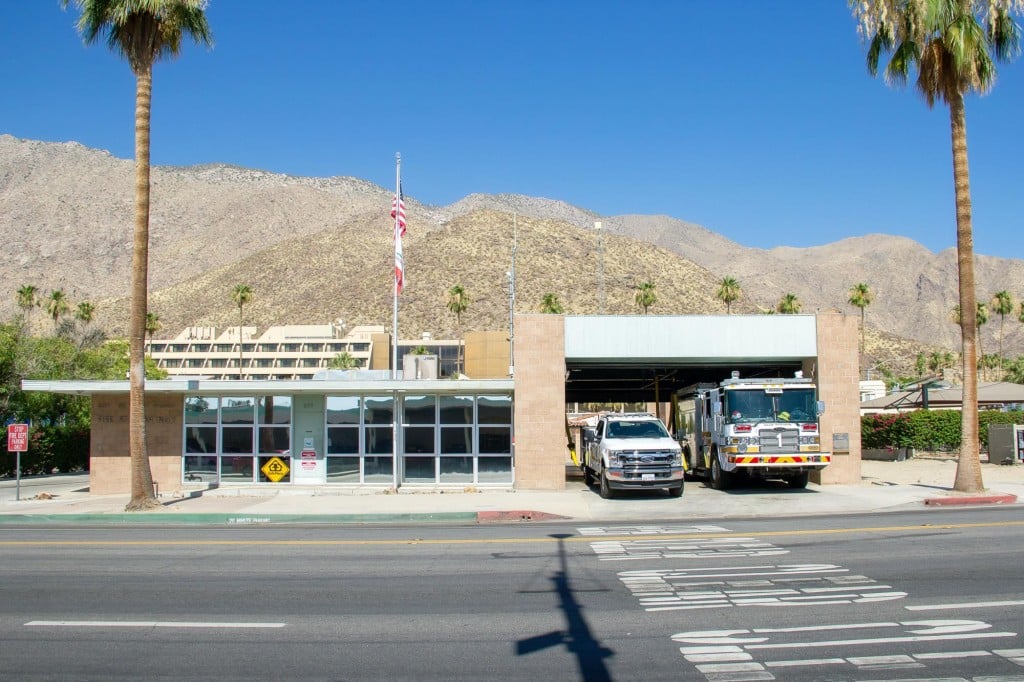
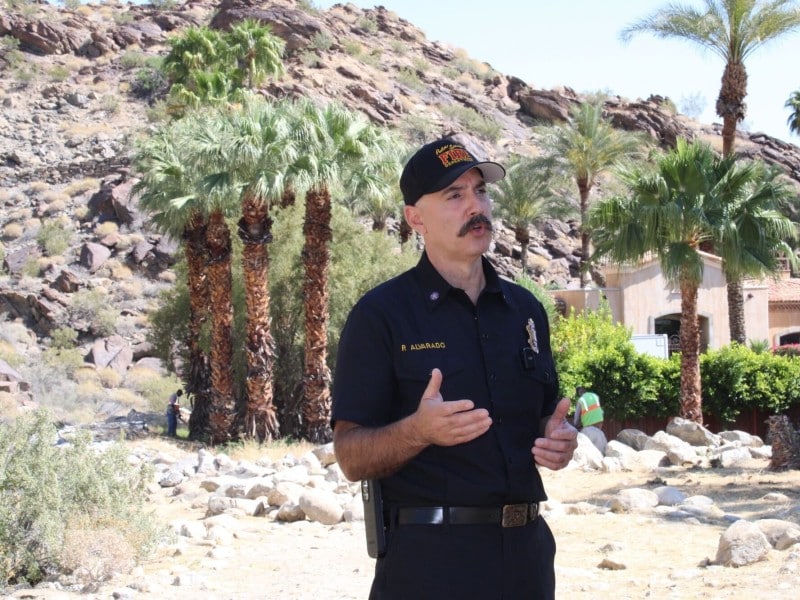
Palm Springs Fire Chief Paul Alvarado doesn’t know who decided to locate the city’s five fire stations where they currently sit, but he’d like to shake the hands of anyone involved. That’s especially true of those who elected to place Fire Station 1 in its downtown location decades ago.
Speaking at a recent meeting of the Organized Neighborhoods of Palm Springs (ONE-PS), Alvarado said that even with advances in mapping technology and the ability to gather sophisticated data, when trying to determine where a new Fire Station 1 should be built, officials landed on one very familiar location.
“Fire Station 1 is in a fantastic location. Don’t move it,” Alvarado said, referring to the building at Indian Canyon and East Amado Road. While a final decision has yet to be made or approved by city officials, the chief went on to present a detailed analysis showing that building a new Station 1 even directly across the street would result in reduced coverage.
Local reporting and journalism you can count on.
Subscribe to The Palm Springs Post
According to Alvarado, the department evaluated three alternative locations for the station, but each option resulted in significant losses in coverage area that could be reached in the optimal amount of time. Moving the station across the street would lose 4% of Station 1 coverage area that can be reached within minutes, while relocating to Sunrise and Alejo would reduce that coverage by 8.2 miles of roadway.
Exactly how the city might build a new station at or near the current Station 1 — an Albert Frey designed Class 1 historic structure — will need to be addressed. But as it approaches 70 years old, the facility no longer meets the needs of both a growing city and a busy fire department.
The department’s comprehensive five-year strategic plan notes a 20% increase in service calls over the past five years, jumping from about 10,000 calls in 2019 to 12,000 in 2023. Calls are continuing to increase at a rate of 3-4% annually.
“Emergency medical service incidents represent 79% of what we do,” Alvarado said, noting that in Station 1’s response area, there’s a 42% chance another call will come in while firefighters are already responding to an incident.
The strategic plan presented by Alvarado includes several key recommendations, including adding a fourth firefighter to the last remaining engine company operating with three personnel, remodeling and expanding Fire Station 3 to add an EMS squad, rebuilding Fire Station 1 at or near its current site, and planning for a future sixth station in the northeast area of the city.
Alvarado also highlighted significant supply chain issues affecting the department’s equipment replacement schedule. New fire engines, which once could be delivered within a year of ordering, now take four to five years to arrive.
“Last year we ordered four pieces of equipment,” Alvarado said. “Those are still three years out.
“We just ordered another fire engine this year. The City Council’s doing what they need to do. These manufacturers are killing us.”
The chief emphasized the department’s goal of having a one-to-one ratio of front-line apparatus to spare vehicles, which would require acquiring at least one more fire engine. The five-year plan also focuses on improving response times, which currently fall slightly behind industry standards.
According to Alvarado, the department aims to arrive on scene within seven minutes and 30 seconds of a call, but geographic challenges and limited major thoroughfares in Palm Springs make this goal difficult to achieve consistently.
Still, he said, as the city continues to grow – 2,557 new residential units are projected to be built by 2035 and 2.6 million square feet of distribution warehouses are planned north of Interstate-10 – maintaining adequate emergency response times will become increasingly challenging without strategic investments in the fire department.
“Overall growth and more so in the northern area of the city will pressure response times upwards,” Alvarado said. “We need to make sure we’re monitoring how fast we respond and how quick we’re getting on scene.”
Author

Related Articles

Palm Springs names Jeff Van Lierop interim fire chief
Van Lierop, a 25-year department veteran, will succeed retiring Chief Paul Alvarado.
Palm Springs Fire Chief Paul Alvarado to retire Nov. 2
Alvarado, who has led the department for three and a half years, oversaw record staffing and an improved fire protection rating.
Palm Springs police defend Flock camera program as residents raise privacy concerns
Police officials cited arrests and recovered vehicles, but speakers at Wednesday’s council meeting said the benefits don’t outweigh the risks. The $4.5 million state grant ends in December 2027.