
Residents weigh in on Palm Springs’ ambitious bike lane initiative
In the third and final meeting of its type, residents expressed mixed reactions to proposed plans for Little Tuscany segment, citing safety concerns and traffic calming measures.
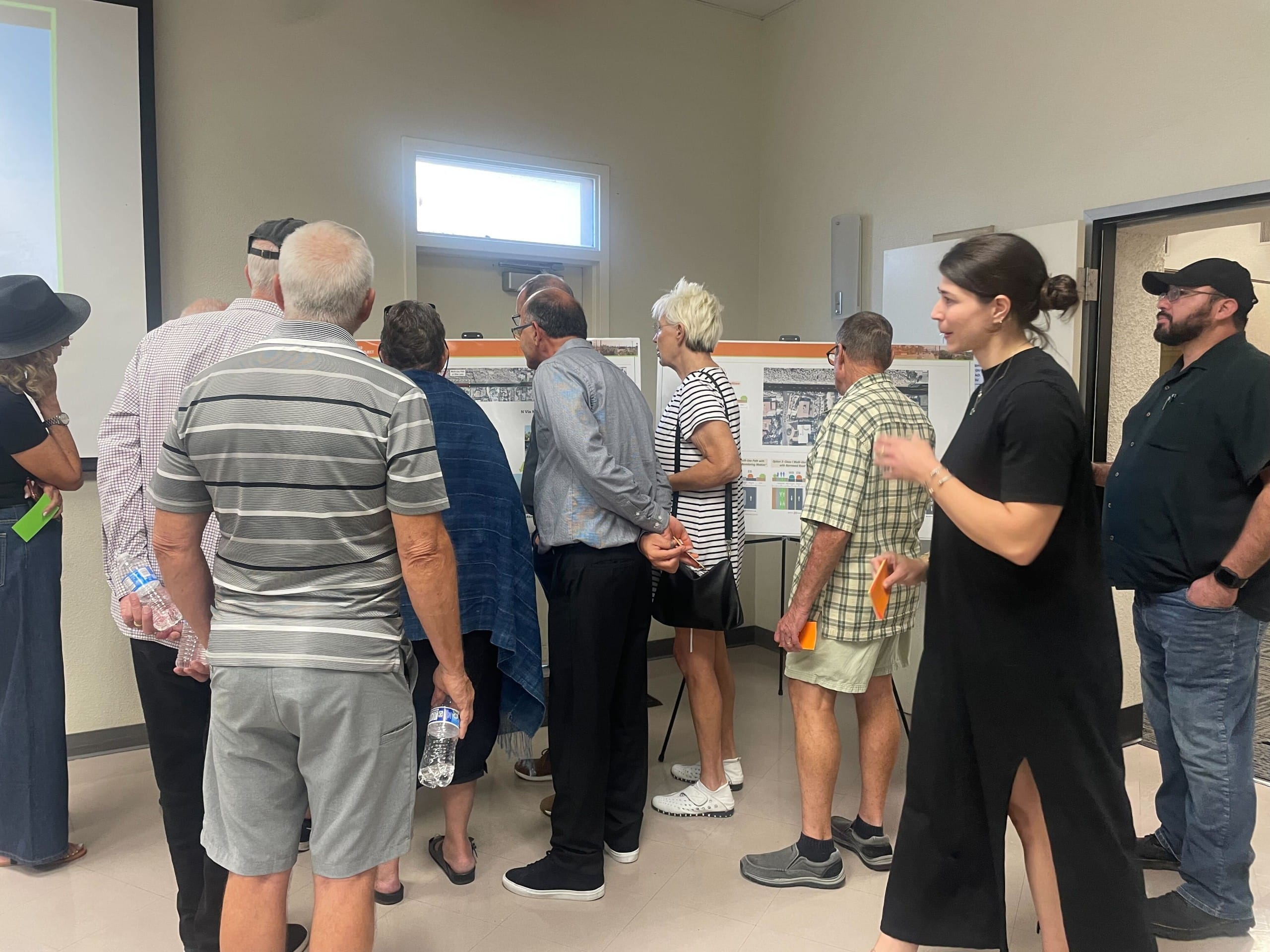
City officials and engineering, planning, and design consultants from Kimley-Horn gathered Monday evening at the James O. Jessie Desert Highland Unity Center for their third meeting to solicit feedback and suggestions from residents on the city’s proposed bike lane project design. The initiative aims to enhance the city’s cycling infrastructure, increase active transportation options, and improve traffic calming measures for residents.
While Palm Springs plans to install bike lanes on two miles of South Palm Canyon Road and three miles of Racquet Club Road (find details here), this meeting was focused on the Little Tuscany segment of the project, which begins at the Little Tuscany area from Tuscany Heights Drive, and extends down Racquet Club Road down to Farrell Drive, and terminates at Vista Chino.
Local reporting and journalism you can count on.
Subscribe to The Palm Springs Post
The meeting began with an introduction to the project team and a brief introductory presentation highlighting general announcements, an overview of the purpose of the project, and an update on where the project stands. The presentation also highlighted a plan for scheduled future events before giving attendees instructions for the open house portion of the meeting, which was the night’s main focus.
Maya Bouchet, a project manager with Kimley-Horn who led the meeting, introduced some of the main goals of the city the team had in mind when designing the proposed plan: improving safety and visibility within the corridor, introducing bicycle facilities to connect to residential communities within Palm Springs, and creating better connectivity to commercial areas, parks, and schools.
The city also aimed to balance all modes of transportation, focusing on safety for bicycles and pedestrians while also considering traffic operations and vehicles along the corridor.
Bouchet explained that the project is still early on. It is in the conceptual design and planning stage, which includes community outreach, such as the series of meetings it is holding to engage with the community.
Other community outreach efforts included creating an interactive map-based tool for the community, which has been active for 4 months and received about 70 comments, established a project email where they have received several emails with comments and questions from the community, mailing out about 200 flyers to residences and businesses on the corridor and distributing 200 more door-to-door, and contacting community groups and businesses through email.
“They need to do a lot more work on traffic calming. What they were directed to do, and in my opinion, failed, was that it should be multimodal and traffic calming and look good, look natural… and I think they somewhat missed the mark, so hopefully they’ll be able to tool it and come back a little stronger.”
— Dennis Woods, former city councilmember and Little Tuscany resident
According to city officials and the project team, community input significantly influenced the initial proposed design introduced at the meeting. Key concerns and suggestions from residents included:
- Addressing the speeding along the corridor, specifically where there is curvature in the road and downhill slopes.
- Creating safety and visibility enhancements at intersections.
- Strategically conserving on-street parking for pedestrian safety.
- Improving pedestrian access and crosswalks.
- Considering traffic impacts on E Racquet Club Rd.
- Implementing traffic calming measures in the Little Tuscany/Racquet Club West neighborhood.
Following the presentation, the meeting transitioned to its open house format, where residents were invited to explore information displays and share input with project managers, who would use it to refine the design.
Informational displays included a station for project overview and limits, project data and benefits, Little Tuscany Traffic Calming measures, and large maps and graphics that showcased different design options for five different segments, with different options for things like bike lane width and medians.
About 20 residents attended, and many were excited about the project, including Palm Springs resident Jim Flannigan, an avid bike rider.
“First off, this is super exciting because we started this about five years ago, and it just kind of disappeared into the black hole of funding and capital budgets take forever, and so all this just showed up,” said Flannigan, adding that he’s seen the designs and drawings, and he thinks they’re great. He says he’s especially excited to give e-bikers a lane on the road so they aren’t riding on the sidewalk. He expects we will see more and more cyclists in Palm Springs in the coming years.
“And if you don’t put them on bike paths, they’re going to start riding on sidewalks, and they’re going to ride with traffic, and then tourists are going to get run over, and that’s not what we want in Palm Springs, not to mention the people who live here. So I think that’s the big thing I’m looking forward to.”
Others felt like their suggestions weren’t heard, including resident Dennis Woods, a former city councilmember who is part of a neighborhood committee of nine people within Little Tuscany who are especially concerned with traffic calming in the area. He says their committee got together at the beginning of the planning stages to create a sketch of what they suggested for the design.
“They need to do a lot more work on traffic calming,” said Woods. “What they were directed to do, and in my opinion, failed, was that it should be multimodal and traffic calming and look good, look natural… and I think they somewhat missed the mark, so hopefully they’ll be able to tool it and come back a little stronger.”
In response, Francisco Jaime, senior civil engineer for the city, said the team looked into many options for traffic calming. They initially evaluated speed cushions, but the feedback from residents was that they didn’t want them. They also assessed installing traffic circles, but it wasn’t feasible. They also looked at using chicanes or deviations in the road.
“Unfortunately, we can’t just slap them down everywhere,” said Jaime. We had to be cognizant of driveways, emergency access, and potentially trailhead access. So we can’t just do a long continuous strip down the middle, but, you know, we can put them in strategic locations that can sort of help reduce speeds, especially as people are coming downhill.”
But he says this was the purpose of the meeting: to hear from the community and refine the design based on community opinion using all the modes of community outreach they have created, including a new round of meetings starting in mid-November and another round in the new year.
“We’re going to take the comment cards and what my team wrote down here, we’re going to take that and filter it so that way is not just one voice speaking – we get the whole community. That’s what we really want to see is what is the majority opinion about what people want to see where they live.”
Author

Related Articles
What’s the status of $322 million in Palm Springs bridge projects? City engineer provides updates
At least six different bridge projects are currently planned or under construction in the city. When complete, they’ll hopefully reduce road closures due to events like blow sands and flooding.
Regional traffic signal network to double in size as Palm Springs pushes safety upgrades
CVAG’s synchronization program will pass 500 intersections this fall while city crews use federal grants to add protected left turns at crash-prone locations.
Palm Springs airport official details emergency prep gains as new earthquake study surfaces
A multi-agency training exercise and new disaster supplies were discussed Wednesday, days after a study found rising seismic stress near a Southern California fault junction.