
Planning Commission to weigh golf course-to-housing rezoning, with strings attached
Staff wants a General Plan Amendment for the closed Bel Air Greens golf course to take effect only alongside a full development plan — a compromise commissioners first floated in 2022.
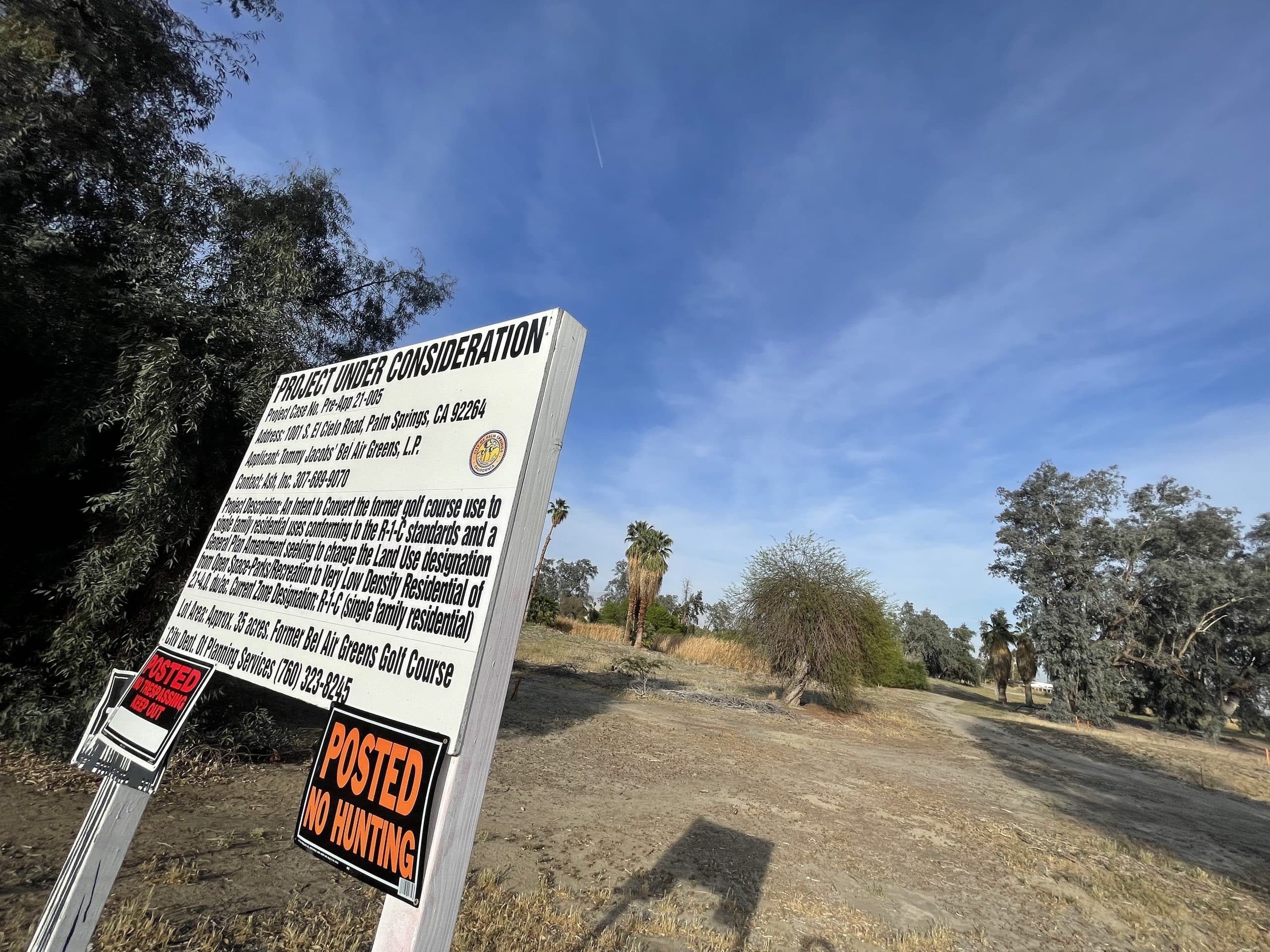
The Palm Springs Planning Commission on Tuesday will consider a General Plan Amendment that would allow residential development on the closed Tommy Jacobs Bel Air Greens golf course, though city staff is recommending the change take effect only once a separate, more detailed development plan is approved.
The amendment would redesignate roughly 35 acres from open space to Very Low Density Residential, allowing 2.1 to 4 dwelling units per acre. The property, held in federal trust for allottees of the Agua Caliente Band of Cahuilla Indians, has sat idle since the golf course closed in 2014.
Local reporting and journalism you can count on.
Subscribe to The Palm Springs Post
The vote is the first application to move through Palm Springs’ Golf Course Conversion Ordinance since the City Council adopted it in 2019 to regulate development on shuttered golf courses while preserving open space.
The applicant, Tommy Jacobs Bel Air Greens LP, first floated a conceptual 74-lot subdivision in 2021 that fell well short of the ordinance’s requirements: it set aside 5.5 acres of open space against a required 17.5 acres, and placed that buffer along the flood-prone north edge of the property rather than along the southern boundary where existing homes sit.
Commissioners flagged that same shortfall when they first reviewed the concept at a July 2022 study session.
“I’m perplexed that the applicant made no attempt to comply with that requirement,” Commission Chair Kathy Weremiuk said at the time. Commissioner Lauri Aylaian suggested a middle path: “I think that with some creative design that a good residential product that has a small footprint … would work for most parties.”
That 2022 session also surfaced a limit on the city’s leverage over the outcome.
Because the land is owned by tribal members, a city attorney advising the commission said an appeal of any city rejection could ultimately be decided by the Agua Caliente Band of Cahuilla Indians Tribal Council — something staff said they could not recall happening before.
One of the property’s owners, John Andreas, told the commission the land’s tribal owners want it developed. Neighbors and environmental advocates, including Oswit Land Trust, had pushed for the site to remain open space.
“The bottom line is that’s our land,” Andreas said. “That belongs to us, the natives. …We’re going to do with it what we see fit. And what we’re going to do is develop it. We’re not going to keep it open space.”
The applicant submitted only the General Plan Amendment in its formal 2022 application, without the tract map, specific plan or development permit that would let the city evaluate a specific housing layout against the ordinance’s open-space and buffer requirements.
Staff wrote that it cannot yet determine whether any future project on the site would conform, and is recommending the amendment’s effective date be tied to approval of that future zoning application rather than taking effect now. Tuesday’s hearing is limited to the land-use designation change; the commission is not being asked to evaluate or approve any site plan.
Under the requested designation and the property’s existing R-1-C zoning, the site could theoretically support up to 70 homes if half the acreage is preserved as open space, though staff noted the flood plain on the northern parcel and the ordinance’s buffer placement requirement would likely reduce that number.
Staff also recommends the commission adopt a Mitigated Negative Declaration under the California Environmental Quality Act. The document drew 147 comments during a 20-day public review period last August, and staff wrote that none required revisions.
Author

Related Articles
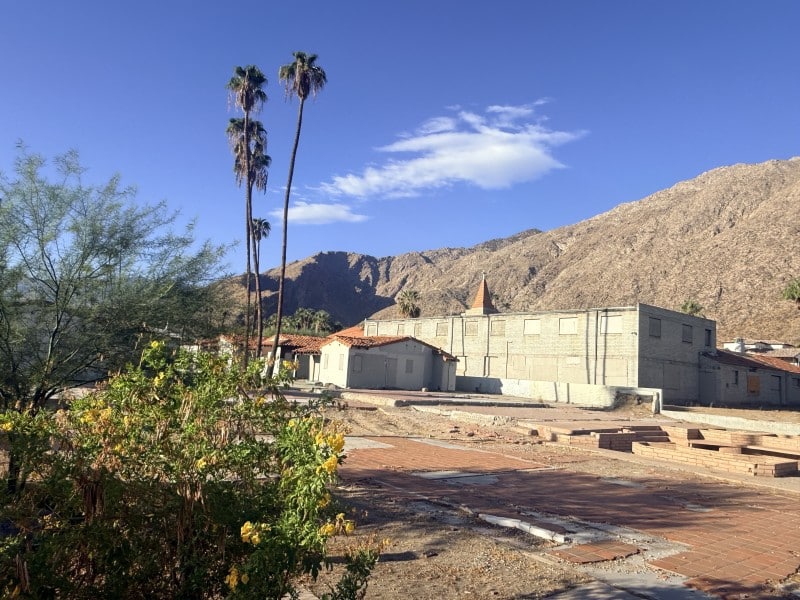
Preservation board delays decision on latest Orchid Tree hotel plans, sends four items back for restudy
Members want four staff-recommended changes restudied, including the location of a pool cabana, a step city planners said will add time to the Orchid Tree Resort & Spa schedule.

Planning Commission approves 16-unit townhome project at Sunrise Way and Amado Road after July delay
City staff noted that some of the commission’s earlier requests conflicted with state housing laws, though the developer did add a walkway so pool cleaners and landscapers can reach backyards.
Planning Commission pulls Bel Air Greens housing plan from agenda after tribe acquires half the site
The property’s new tribal trust status means only part of the closed golf course would remain under city land-use review, commissioners learned Tuesday.