
Palm Springs weighs the pros and cons of an elected mayor as landmark Supreme Court voting rights ruling reshapes legal landscape
The Supreme Court’s dismantling of a key provision of the federal Voting Rights Act has injected new uncertainty into Palm Springs’ ongoing discussion about shifting to a directly elected mayor.
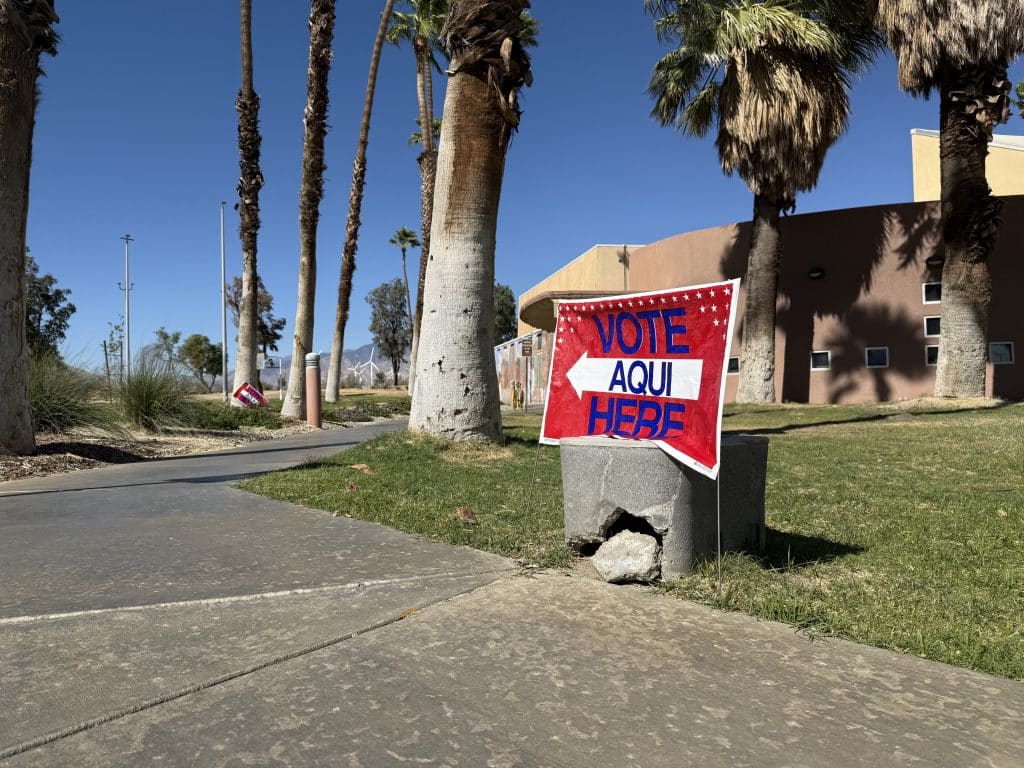
A U.S. Supreme Court ruling that struck down a central protection of the 1965 Voting Rights Act is casting a shadow over Palm Springs’ debate about whether to shift to a directly elected mayor, with the city’s own attorney warning that the decision adds legal uncertainty to the process even as it may reduce one category of litigation risk.
The Supreme Court ruled April 29 in Louisiana v. Callais that Louisiana’s second majority-Black congressional district was unconstitutional, with a 6-3 majority holding that race-conscious redistricting under Section 2 of the Voting Rights Act violates the Equal Protection Clause. Writing for the majority, Justice Samuel Alito said evidence of racial disparity in earlier maps was too weak to justify the use of race in drawing a new map.
Local reporting and journalism you can count on.
Subscribe to The Palm Springs Post
All three liberal justices joined a dissent by Justice Elena Kagan, who read portions of her opinion aloud from the bench, “Under the Court’s new view … a State can, without legal consequence, systematically dilute minority citizens’ voting power,” Kagan wrote.
Palm Springs City Attorney Jeffrey Ballinger told the council the ruling has direct implications for how Palm Springs should approach its mayoral discussion, particularly as it relates to the California Voting Rights Act.
Ballinger said the California Voting Rights Act, which is aimed at ensuring that members of protected minority classes can elect candidates of their choice, relies heavily on race-based district drawing as its primary enforcement tool — and that the Callais decision puts that tool in question.
“The primary remedy historically employed in the CVRA cases involved the drawing of election districts using race to achieve the CVRA goals,” Ballinger said. “It appears that the Callais decision substantially limits the most commonly used remedy under the CVRA, namely, drawing electoral districts based on race or ethnicity.”
“Further litigation regarding the CVRA will almost undoubtedly ensue. Therefore, the city should proceed with caution,” Ballinger concluded.
Rich Gordon, chair of the Citizens for an Elected Mayor, told the council his group had issued a press release that day denouncing the Supreme Court ruling, and urged the council to use the moment to reaffirm its commitment to district representation.
Gordon said his group supports both district elections and a shift to a citywide directly elected mayor, describing the two goals as compatible.
Councilmember Grace Garner, a member of the ad hoc subcommittee on the mayor position, affirmed the city’s commitment to district elections, “As far as we’re concerned, there’s no interest in changing or removing districts at all,” she said. “No one on the council is interested in taking away districts.”
Garner offered additional detail on how the working group would operate, drawing a distinction between its internal meetings and its broader public engagement.
“There will be regular working group meetings, but then they will also hold larger public meetings within the community,” Garner said.
Garner also clarified that the working group’s meeting schedule had not yet been finalized.
The item was received and filed. The council is expected to receive a further report on the mayoral position at its June 10 meeting.
Author

Related Articles

Palm Springs Homeless Navigation Center wins two national architecture awards
The American Institute of Architects honored the facility with a 2026 Architecture Award and a Housing Award in the Specialized Housing category.

Palm Springs names former Anaheim city manager as interim leader
Jim Vanderpool, who resigned in Anaheim in February, starts Thursday. He will work alongside City Manger Scott Stiles before Stiles’ retirement takes effect Nov. 1.

Preservation board recommends Class 1 landmark status for two homes from different eras
A 1936 Spanish Colonial Revival residence and a 1967 house designed by architect William F. Cody up for consideration were unanimously approved.