
City Council approves tourism infrastructure district despite short-term rental owner opposition
STR owners argued fees would mostly benefit hotels; protests reached just 4.58% of the threshold needed to block the district’s formation.
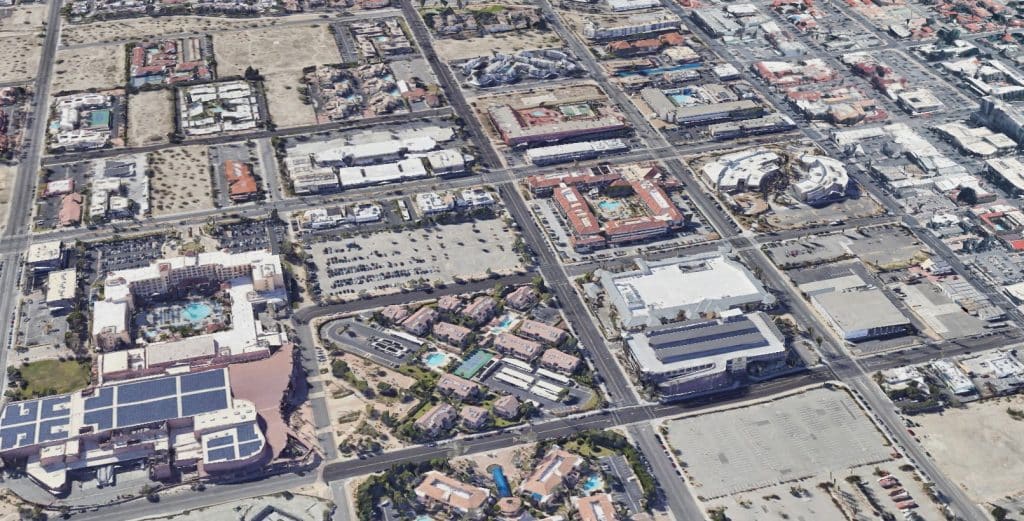
The Palm Springs City Council on Wednesday approved a new tourism infrastructure district after protests from short-term rental owners who opposed the district failed to reach the required threshold to stop the district’s formation.
The Palm Springs Tourism Infrastructure District (TID) will levy a 1% fee on gross revenue from hotels and short-term vacation rentals to finance convention center improvements. The district is expected to generate an estimated $4.1 million annually over a 30 to 40-year term.
Local reporting and journalism you can count on.
Subscribe to The Palm Springs Post
The council approved a resolution of intention to establish the district in April, starting a formal procedure with a 45-day period for opponents to file protests. PS Resorts, a local hoteliers association, initiated the process last year. Bringing the plan to city council consideration required businesses representing more than 50% of the proposed assessment to sign petitions in favor.
But some short-term rental owners opposed the district, arguing that they shouldn’t have to help fund convention center improvements they believe will mostly benefit hotels. Others stated that even if the convention center improvements fueled increased visitors to the city, they might not be able to benefit due to current annual caps on vacation rental stays.
In order to halt the process, state law dictates that opponents needed to submit protests from businesses representing 50% or more of the total expected assessment amount before May 27. On Wednesday, after collecting any final protests submitted during the city council meeting, finance director Kris Mooney calculated the total protests: 4.58% of the total assessment amount.
Because this percentage didn’t reach the 50% threshold, the city council was allowed to vote on the district, and unanimously voted to approve its formation. The new fee was initially scheduled to take effect as early as July 1, but now won’t be implemented until Dec. 1 to give impacted businesses more time to implement the process.
Compared to a transient occupancy tax, a tourism infrastructure district “holds more accountability, more focus, containing this revenue specifically for this project,” said Mayor Naomi Soto.
“This was something that was really appealing to our hospitality partners, and that’s something that we take very seriously from the city. You are agreeing to self-assess, and we are agreeing to being responsible stewards of those dollars and investing those dollars in the ways that we have agreed to together,” Soto continued.
Soto also said she’d be open to future conversations about making sure short-term rentals can capture some of the anticipated increased demand from the convention center improvements, as did city councilmember Ron deHarte.
“I suspect that a lot of the opposition is an effort to increase the STR contracts, and they’re two different conversations. I certainly would be open to entertaining a conversation about the whole STR, the contract limits and the caps and opportunities for growth, but that’s a much bigger conversation. It’s a different conversation than what we’re having here tonight,” said deHarte.
Author

Related Articles
Old Las Palmas property owners ask City Council to delay utility assessment hearing
Residents who spoke Wednesday evening cited six-figure assessments, short notice and unsettled costs. The council took no action, but staff said it could give owners more time.
Palm Springs police defend Flock camera program as residents raise privacy concerns
Police officials cited arrests and recovered vehicles, but speakers at Wednesday’s council meeting said the benefits don’t outweigh the risks. The $4.5 million state grant ends in December 2027.
Commission approves live entertainment permit for one-man science and music show downtown
Planning commissioners on Tuesday signed off on a conditional use permit for a building that will house Patrick Olson’s “The Art of Science,” which is expected to open in December or January.