
Palm Springs airport joins others declining to show Noem video blaming Democrats for shutdown
The video, released last week by the Department of Homeland Security, begins as a standard public service announcement about airport security but quickly turns political.

Palm Springs International Airport has joined a growing list of U.S. airports refusing to display a video from Secretary of Homeland Security Kristi Noem that blames Democrats for the federal government shutdown.
The airport will not play the video on terminal screens because California law and federal Hatch Act principles prohibit using public facilities for partisan political messaging, according to a statement released Tuesday by a spokesperson for the airport.
Local reporting and journalism you can count on.
Subscribe to The Palm Springs Post
“We remain committed to providing a welcoming, neutral space for all travelers, while respecting the responsibilities of our federal partners during the government shutdown,” the spokesperson said.
The video, released last week by the Department of Homeland Security, begins as a standard public service announcement about airport security but quickly turns political. “However, Democrats in Congress refuse to fund the federal government, and because of this, many of our operations are impacted, and most of our TSA employees are working without pay,” Noem says in the video.
At least 18 major airports across the country have declined to show the video, citing concerns about political messaging and potential violations of the Hatch Act. The 1939 law prohibits political activities of federal employees to ensure government programs are administered in a nonpartisan fashion.
Airports from New York to Oregon are among those declining to show the video, citing similar concerns as those voiced in Palm Springs. At Harry Reid International Airport in Las Vegas, for example, a spokesperson told CNN that the video contains “political messaging that did not align with the neutral, informational nature of the public service announcements typically shown at the security checkpoints.”
Authors


Related Articles
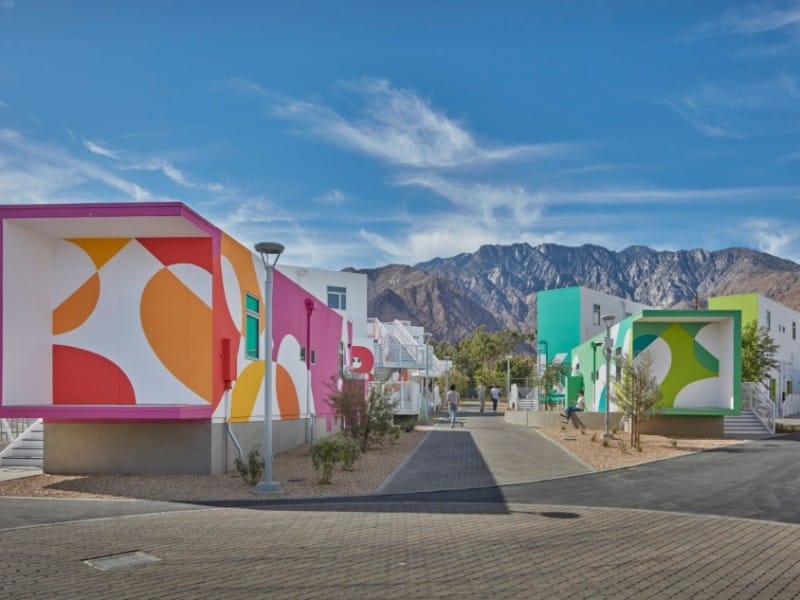
Palm Springs Homeless Navigation Center wins two national architecture awards
The American Institute of Architects honored the facility with a 2026 Architecture Award and a Housing Award in the Specialized Housing category.

Palm Springs council candidates weigh in on Flock cameras, stalled hotels, more at forum
Five candidates for three seats also addressed traffic safety and the library renovation at a forum hosted by Organized Neighborhoods of Palm Springs.
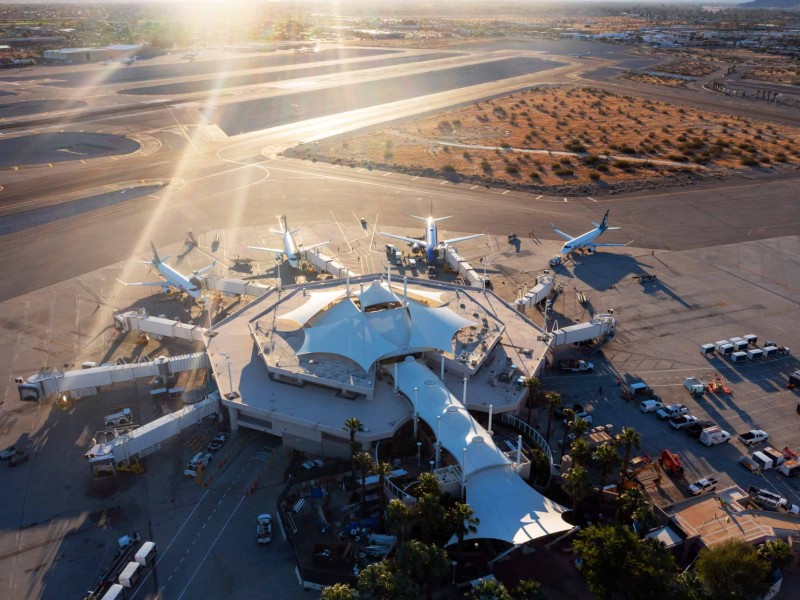
Palm Springs airport study finds economic impact tops $2.55 billion
Nearly 97% of the airport’s overall economic impact stayed within the Coachella Valley, the study found, and more than half occurred within the city of Palm Springs.