
New DWA water rules create compliance challenges for HOAs despite conservation goals
The regulation specifically excludes single family homes and areas using recycled water, meaning individual homeowners will not be affected by the new restrictions.
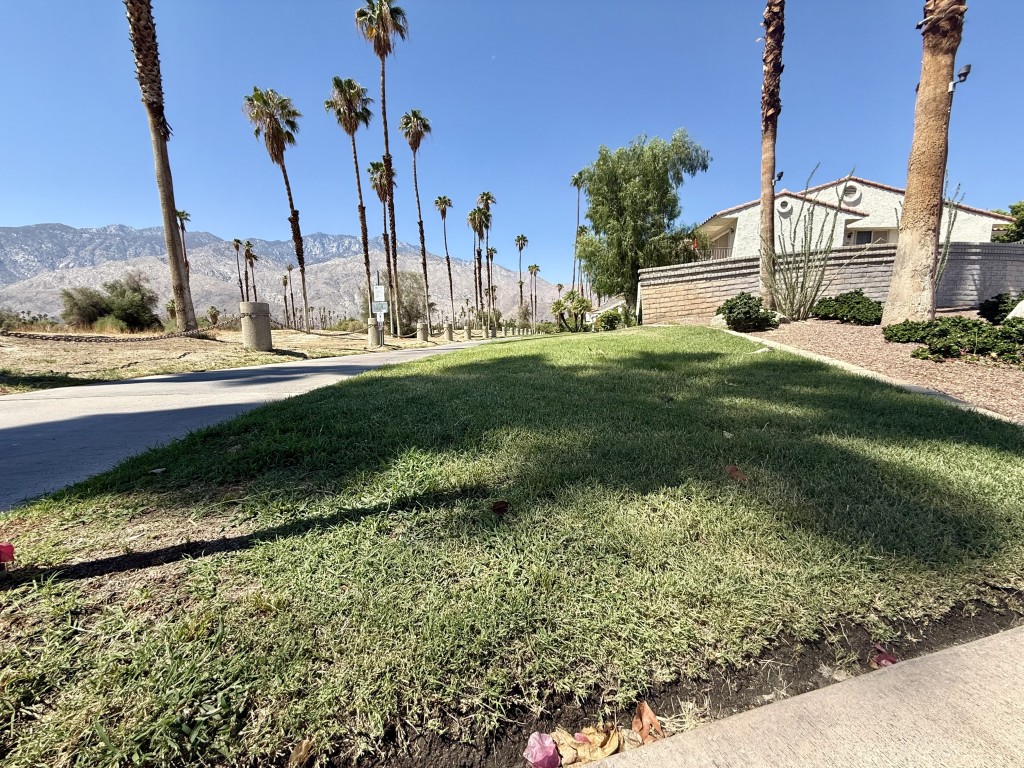
Desert Water Agency (DWA) has adopted a new ordinance banning potable water irrigation on non-functional turf to meet state conservation mandates, but property management companies warn the rules could create financial hardships for HOAs unprepared for costly landscape conversions.
Ordinance number 80, adopted in early August in response to California Assembly Bill 1572, specifically targets grass areas that are not regularly used for recreational or community events, said Clark Elliott, conservation manager with DWA, during an Organized Neighborhoods of Palm Springs (ONE-PS) meeting earlier this month.
Local reporting and journalism you can count on.
Subscribe to The Palm Springs Post
The bill, signed into law in October 2023, prohibits the use of water used primarily for drinking to irrigate non-functional turf on certain properties. DWA adopted the ordinance as part of broader state regulations requiring the 40% reduction by 2040 under the “Making Conservation a California Way of Life” legislation.
“The simple definition of non functional turf is turf that’s not regularly used for recreational or community events,” Elliott said. “When we have grass out there, we want people to actually be using it.”
The regulation specifically excludes single family homes and areas using recycled water, meaning individual homeowners will not be affected by the new restrictions. Non-functional turf includes small strips of grass in HOA common areas, medians and other decorative grass spaces where people do not regularly gather or play, including those outside their gates.
Functional turf that remains protected includes parks and golf courses, which typically use recycled water, Elliott said. These areas must have a clear, dedicated function, be used regularly, provide recreational benefit to the community and have a history of programmed events.
However, property managers question whether the distinction between functional and non-functional turf is clear enough for practical implementation. Bobbie Gaffney of The Gaffney Group, which manages 30 properties in the desert including several in Palm Springs, said the definition creates uncertainty for HOAs trying to comply.
“Almost all greenbelt area other than that that’s outside of gates or has a steep incline that couldn’t be used for recreation, could be considered recreational,” Gaffney said. “Kids can go out and throw a ball back and forth.”
The ordinance establishes staggered compliance deadlines based on property type. Government properties must comply by Jan. 1, 2027, while commercial, industrial and institutional businesses have until Jan. 1, 2028. HOA common areas and mobile home parks have the longest timeline, with a Jan. 1, 2029 deadline.
Property managers warn the timeline may not provide enough time for HOAs to address the financial burden of landscape conversion. Gaffney said conversion costs run $7 to $9 per square foot, plus expensive design plans, and most associations have not budgeted for such expenses.
“Conversion now is expensive,” Gaffney said. “Associations haven’t budgeted for that. They just don’t have that kind of money.”
Property owners must self-certify their grass usage six months before their compliance deadline through a form that will be available on the agency’s website. For HOAs, the self-certification deadline is June 30, 2028.
Elliott warned that penalties for violations can reach $2,000 per verified violation, though DWA prefers to work with property owners making good faith efforts to comply.
“I don’t want to fine anyone $2,000,” Elliott said. “We are really trying to say, if you are making a good faith effort to comply, we will work with you within reason.”
The ordinance’s complete ban on potable water irrigation creates additional challenges for HOAs, preventing even minimal watering to maintain dormant grass or preserve irrigation systems. Gaffney said HOAs typically use about one minute of daily watering to keep “golden” grass from completely dying and to prevent irrigation valves from drying out.
“If it can’t be watered, that means we can’t even just let it go golden. Which means either we’re going to have dirt all around our outside perimeter and entry to our properties, or it’s going to have to be converted.”
— Bobbie Gaffney, The Gaffney Group
“If it can’t be watered, that means we can’t even just let it go golden,” Gaffney said. “Which means either we’re going to have dirt all around our outside perimeter and entry to our properties, or it’s going to have to be converted.”
Both Elliott and Gaffney agree that communication and education are key to successful implementation.
While DWA typically faces challenges reaching property managers and HOA boards, which often control decisions about common area landscaping, Elliott said Palm Springs area managers have generally been more cooperative than those in other regions.
“We in this area actually have more success with property managers than most areas, but there are some resistant ones, definitely,” Elliott said during the meeting. “So we are working to hopefully help more outreach with specifically that group.”
The agency plans “H2 over HOAs” presentations to educate community leaders about water-related requirements affecting their properties. Elliott said these meetings address all water regulations, not just the turf ordinance, to help HOA board members understand their obligations.
Gaffney said her HOAs “have always been willing to comply with whatever mandates or restrictions were in place,” but expressed concern that most affected areas would be frontage spaces outside community gates, which could leave dirt patches visible along city streets if HOAs cannot afford conversions.
“I don’t think Palm Springs wants all of their frontage in the city to be dirt,” Gaffney said.
Recognizing these financial challenges, Elliott emphasized that DWA prefers collaboration over enforcement. The agency has found that most property managers in the Palm Springs area are willing to work with water conservation requirements, even when facing implementation difficulties.
“We are really trying to say, if you are making a good faith effort to comply, we will work with you within reason,” Elliott said, noting that DWA will take cooperative efforts into consideration when evaluating potential violations.
Author

Related Articles
Palm Springs prepares for strong El Niño with growing CERT ranks
Hundreds of residents have already received emergency training, and demand remains high as the city and volunteer groups brace for possible flooding and other severe weather.

Desert Healthcare District board to gain at least three new members after Nov. 3 election
Board President Kimberly Barraza and longtime Director Carole Rogers are stepping down, and a seat vacated by Greg Rodriguez’s resignation also awaits a new occupant.
Palm Springs airport commission reviews EV charger rollout, escalator closure and taxi dispatch update
Staff also flagged a $1 million restroom expansion still lacking funding, a sharp drop in noise complaints and revenue running ahead of budget in the maintenance fund.