
Mosquito control operations set to start following West Nile virus detection
The Coachella Valley Mosquito and Vector Control District will begin larvicide treatments Saturday in Palm Springs and elsewhere.
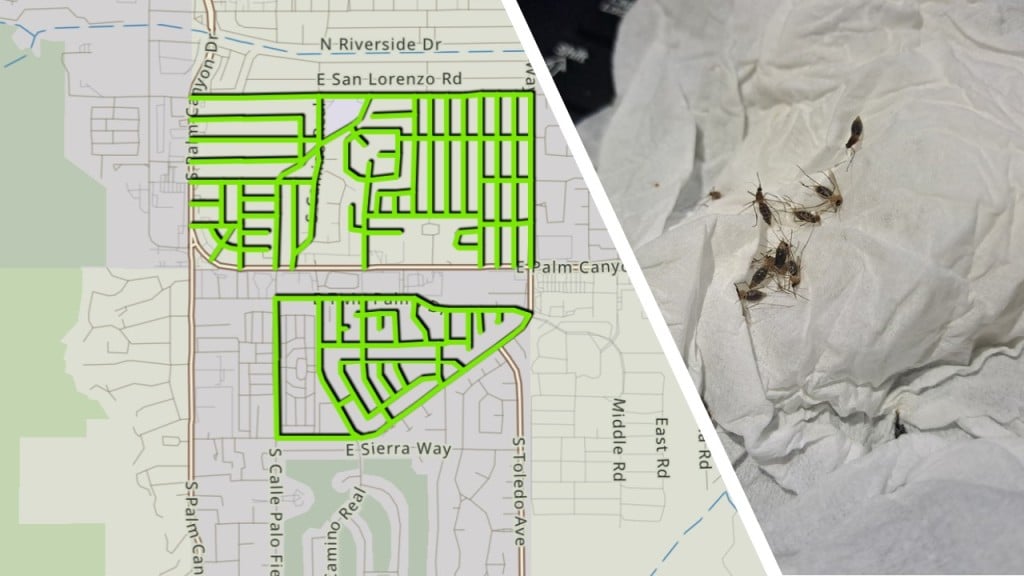
The Coachella Valley Mosquito and Vector Control District is launching a series of mosquito control operations in the coming weeks after West Nile virus was detected in mosquitoes near the North Shore area.
In response to the detection, the district is planning targeted truck-mounted ultra-low volume adulticide treatments and aerial adulticide applications designed to reduce populations of adult mosquitoes capable of transmitting the virus.
Local reporting and journalism you can count on.
Subscribe to The Palm Springs Post
Beginning Saturday (June 6), the district will also initiate its annual Wide Area Larvicide Treatment program in selected areas of the Coachella Valley, including Palm Springs, Desert Hot Springs, and the North Shore community.
The preventative treatments target immature mosquitoes before they develop into biting adults and are based on historical surveillance data, mosquito abundance trends, environmental conditions, and risk assessments.
The district uses a truck-mounted sprayer that combines high volumes of air with a fine mist of larvicide diluted in water, a method that allows the product to reach small and hard-to-find breeding sites across a wide range of mosquito habitats.
The larvicide used is VectoBac WDG, an organic product approved by the Organic Materials Review Institute. It contains a naturally occurring bacterium — Bacillus thuringiensis subspecies israelensis, or Bti — that, when ingested by mosquito larvae, releases protein crystals that damage the larvae’s gut lining and kill them.
The district says VectoBac is safe for people, pets, wildlife, aquatic life, and beneficial insects including honeybees when applied as directed. Residents are not required to go indoors during spraying, though they may choose to do so.
The spray may leave behind small dried droplets that can appear as a fine dust on outdoor surfaces. The district says those residues are harmless, easily washable, and will not damage homes, gardens, outdoor furniture, or vehicles.
Applications will be conducted during overnight and early morning hours — between 1 a.m. and 7 a.m. — on Saturdays, June 6, 13, 20 and 27, Thursday, June 18, and on Saturdays, Sept. 12, 19, 26 and Oct. 3.
“These activities represent different tools within our integrated mosquito management program,” said Jennifer Henke, laboratory manager for the district. “Whether we’re responding to virus activity, preventing mosquito development, or implementing innovative technologies to reduce invasive mosquito populations, our goal remains the same: protecting the health and quality of life of Coachella Valley residents.”
Residents within planned treatment routes should receive a mailer before the first application. Updates are also available through the district’s social media platforms at @cvmosquito.
Residents are encouraged to dump and drain standing water around their homes, clean containers that hold water, wear EPA-registered insect repellent when outdoors, ensure doors and windows are properly screened, and report mosquito problems to the district.
More information is available at the Coachella Valley Mosquito and Vector Control District website.
Author

Related Articles

Palm Springs council candidates weigh in on Flock cameras, stalled hotels, more at forum
Five candidates for three seats also addressed traffic safety and the library renovation at a forum hosted by Organized Neighborhoods of Palm Springs.

Palm Springs airport study finds economic impact tops $2.55 billion
Nearly 97% of the airport’s overall economic impact stayed within the Coachella Valley, the study found, and more than half occurred within the city of Palm Springs.

New Palm Springs airport escalators ready for final inspection, on track to open by month’s end
The Sonny Bono Concourse project aims to cut noise and improve reliability, with a ribbon-cutting celebration expected within weeks.