
‘A starting point’: Planners stress zoning maps aren’t finalized at virtual meeting
Following a heated in-person meeting last week, city staff emphasized Wednesday that controversial proposals for building heights and density remain in the draft stage.
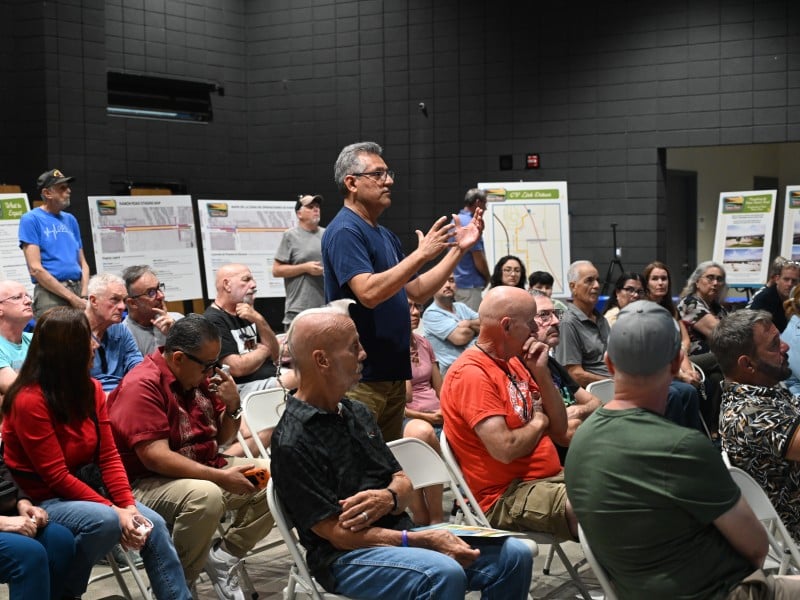
Palm Springs officials emphasized the draft nature of proposed zoning code changes during a virtual meeting Wednesday afternoon, following an in-person session Jan. 26 that saw heated exchanges over property values and building heights.
Director of Planning Services Christopher Hadwin told the roughly 30 participants in the Zoom meeting that the zoning code update remains subject to extensive public input as the city works to modernize regulations that haven’t been updated in nearly 45 years.
Local reporting and journalism you can count on.
Subscribe to The Palm Springs Post
“This is very much in a draft form,” Hadwin said. “Everything that has been released is draft. It’s really the starting point of a conversation.”
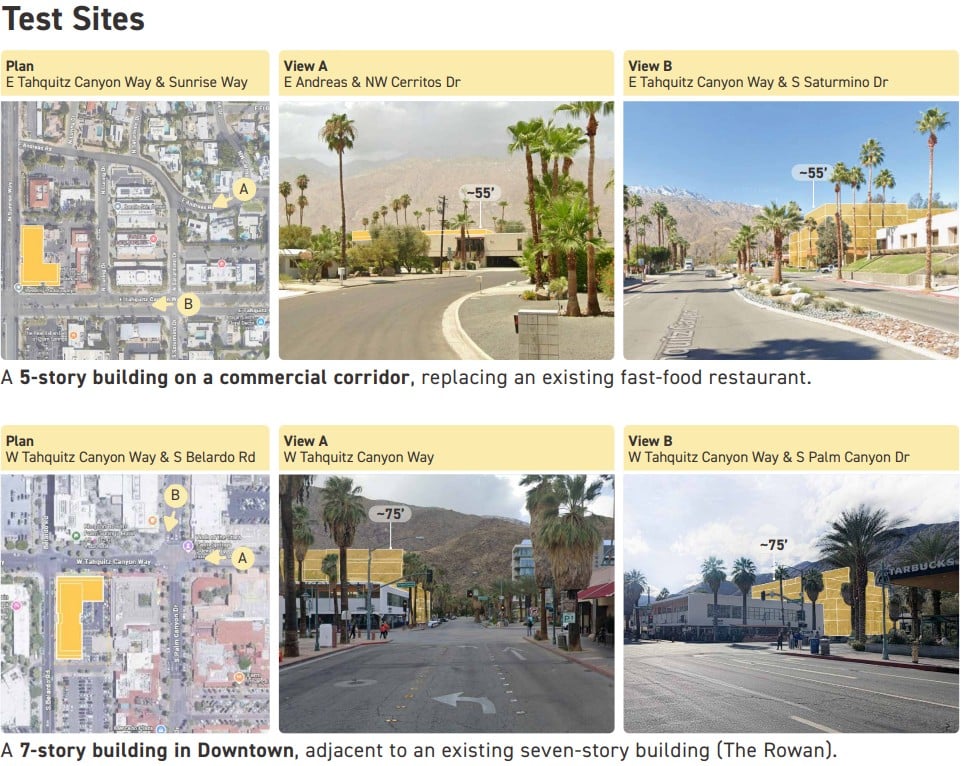
The virtual meeting served as a companion to the Jan. 26 in-person session at the Palm Springs Convention Center, where roughly 60 residents voiced sharp criticism of proposals that could bring five-story buildings to commercial corridors near single-family neighborhoods.
Questions from participants on Wednesday focused heavily on interpretations of state housing law, parking requirements, development opportunities in the northern part of the city, and whether the changes would actually produce affordable housing for workers.
Hadwin clarified that the city is not proposing to eliminate parking requirements, despite earlier materials suggesting parking might be waived in certain locations under state law.
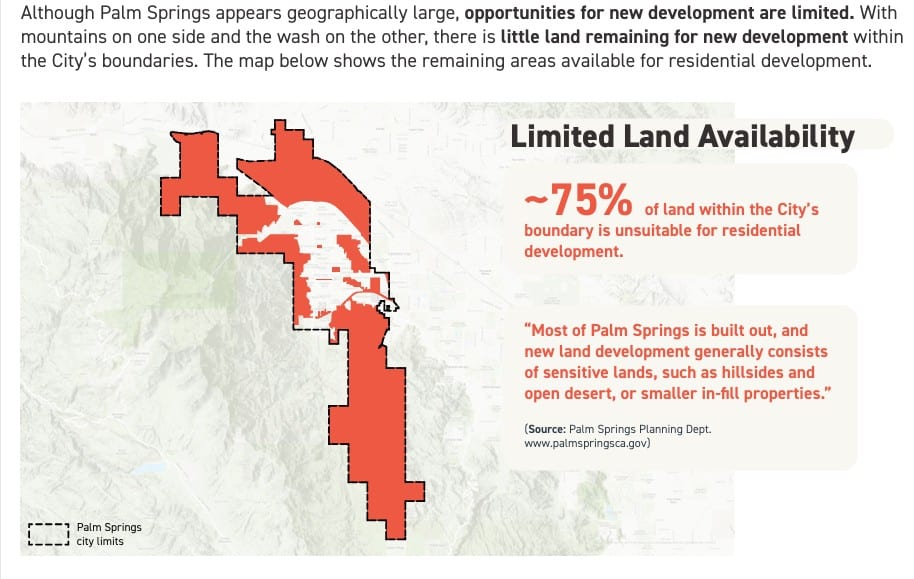
One resident from the Upper West Side neighborhood challenged the city’s assertion that development north of the freeway faces insurmountable obstacles, noting the city recently approved changes to accommodate a warehouse distribution center in that area.
“I really want to challenge that it is impossible to do that up there, because we’ve already seen that it isn’t impossible,” he said, referencing the plans for a mega warehouse in the city north of the freeway.
Another participant asked whether the city would implement tools to ensure workforce housing remains affordable rather than becoming luxury condos. Hadwin responded that the city is considering an inclusionary housing policy that would require a certain percentage of units in some new developments to be priced as affordable housing.
“Typically, that’s the working population we’re talking families, who make $70,000 a year,” he said, “We’re not talking public housing necessarily. We’re talking affordable housing to families.”
The zoning update has five main goals: creating a modern, user-friendly code; bringing diverse housing options to the city; addressing climate change and water management; maintaining design integrity; and reducing barriers to equity and accessibility.
The city’s decision makers have not endorsed the draft maps or proposals, and the City Council has not weighed in on the changes, according to Hadwin.
Data presented at the Jan. 26 meeting showed housing costs in Palm Springs have risen 83% in five years while wages increased only 30%, and that 84% of people who work in the city cannot afford to live here. The city must plan for 1,700 additional housing units by the end of 2029 to meet state requirements, having completed only 848 of the required 2,600 units so far.
“This is not just about cramming more buildings or more people into the city,” Hadwin said. “It is about maintaining the city’s ability to thrive over time.”
The project, which began with open houses in 2024, is about halfway through a two-year process. Colin Scarff of Code Studio, the city’s consultant on the zoning project, joined Hadwin in Wednesday’s presentation.
Officials said the city has not yet developed the actual code language or rules that will dictate what development looks like, which will be the focus of the next phase of work.
California law requires the city to use objective standards rather than subjective design review for residential projects. Scarff explained that objective standards must use clear, definitive numbers or metrics rather than subjective language. As an example, Scarff said if there were rules that a building taller than three stories has to be set back five feet, that is allowed under California law.
“What you can’t say is ‘Building should be stepped back to accommodate views to the mountains,'” he said.
The proposals will undergo formal public review with the Planning Commission before going to the City Council for consideration, a process that Hadwin said is many months away. Officials said they anticipate another round of community meetings in the coming months.
More information: Find maps, previous meeting recordings, and other materials at the Zone PS website here.
Author

Related Articles

Demuth Park’s long-awaited pickleball expansion opens in Palm Springs, nearly doubling court capacity
An estimated 300 picklers of all ages turned out to celebrate and test out the 22 new courts on Wednesday.
$47M Ramon Road bridge widening brings two years of traffic headaches, CV Link detour
Project officials warned residents to prepare for delays starting in December as crews widen the critical Palm Springs corridor while rerouting cyclists onto surface streets.
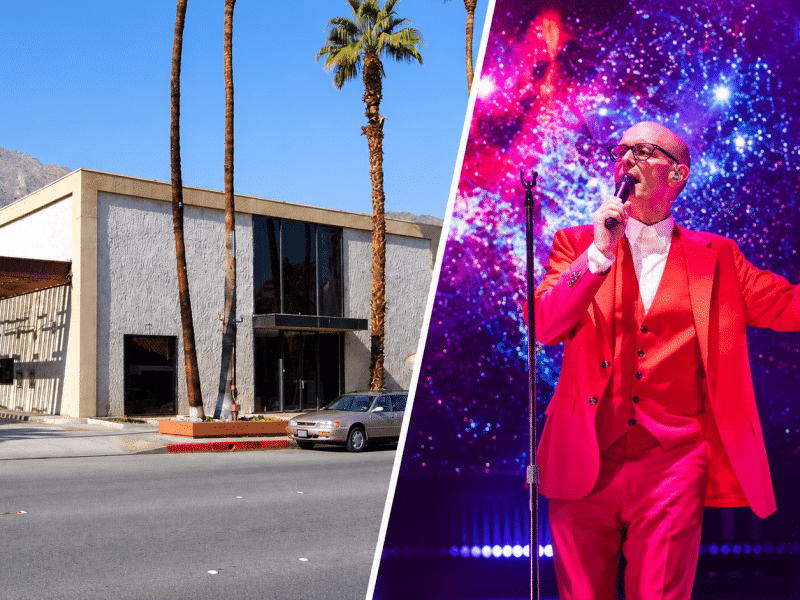
Commission approves live entertainment permit for one-man science and music show downtown
Planning commissioners on Tuesday signed off on a conditional use permit for a building that will house Patrick Olson’s “The Art of Science,” which is expected to open in December or January.