
Historic board approves of home near cabin ruins, with conditions, suggestions
The board approved building a large home near the remains of the Avery Field Cabin after more than two hours of debate, noting issues with its height, scale and materials.
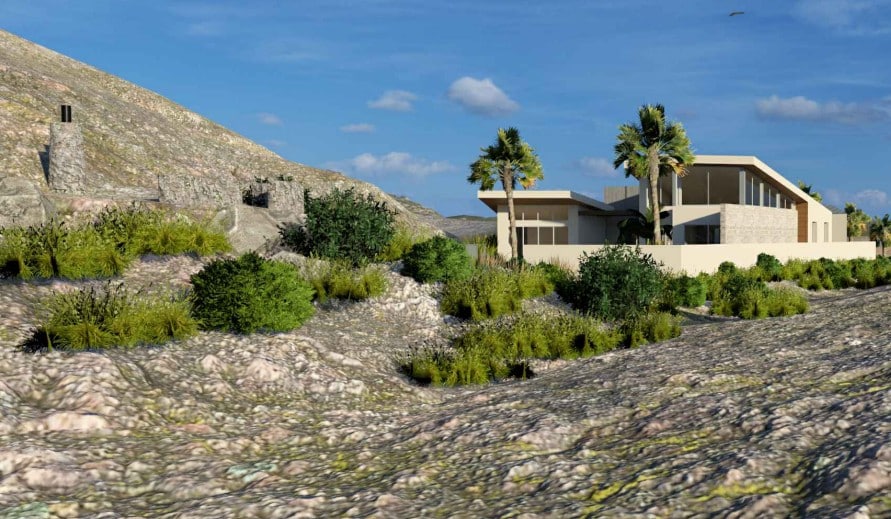
The Palm Springs Historic Site Preservation Board voted 6-1 Tuesday to approve construction of a nearly 5,000-square-foot home near the city’s only designated historic ruins, despite some community opposition and concerns about the project’s impact on the landmark site.
The board granted a certificate of appropriateness for the single-family residence near the Avery Field Cabin ruins after more two hours of deliberation, but attached extensive conditions addressing community concerns about the building’s height, scale and materials.
Local reporting and journalism you can count on.
Subscribe to The Palm Springs Post
The project would place the new home on the eastern portion of the 1.56-acre hillside property, approximately 65 feet from the ruins of a cabin built in the 1910s by commercial photographer Avery Edward Field. The ruins, located at the western terminus of Santa Rosa Drive, were designated as a Class 1 landmark in 2019.
Board Chair Jade Nelson said the project represented “one of the largest single family residences in the immediate area” and raised concerns about its impact on the historic setting.
“That dramatic flying butterfly roof line would be visible to folks that are living in the tennis club neighborhood,” Nelson said during deliberations. “If it was built as currently proposed, the feeling of that ruin is completely altered forever.”
Several community members spoke against the project during public comment, including Kitty Kieley Hayes, who said her family has lived in Palm Springs since 1890 and her grandmother Nellie Coffman visited the cabin as a child.
“I was hoping that whatever gets built there would rather match the ruins and not take away from it,” she said. “I think it should be something that enhances it or coordinates with it.”
One speaker, representing neighbors to the project, raised concerns about the building’s scale and proximity to existing homes. He noted the proposed structure would sit on a building pad 8 feet above street grade, with the 24-foot building creating a total height of 32 feet.
“It’s a massive building,” he said. “That massing also dwarfs the scale of the historic site.”
The project returned to the board after an initial review on May 6, when members unanimously voted to continue the hearing while requesting additional information about archaeological significance, boundary definitions and design impacts.
The board’s approval came with multiple conditions addressing design concerns, including recommendations to the Architectural Review Committee for reduced building height and massing, changes to exterior materials to better complement the natural setting, and restrictions on non-native landscaping outside the development’s perimeter wall.
Board member Janet Hansen noted the ordinance criteria were challenging to apply to ruins versus intact buildings.
“The ordinance is very much sort of geared towards buildings, both individual and historic districts,” Hansen said. “It was probably an interesting process and a good discussion process to talk about a ruin.”
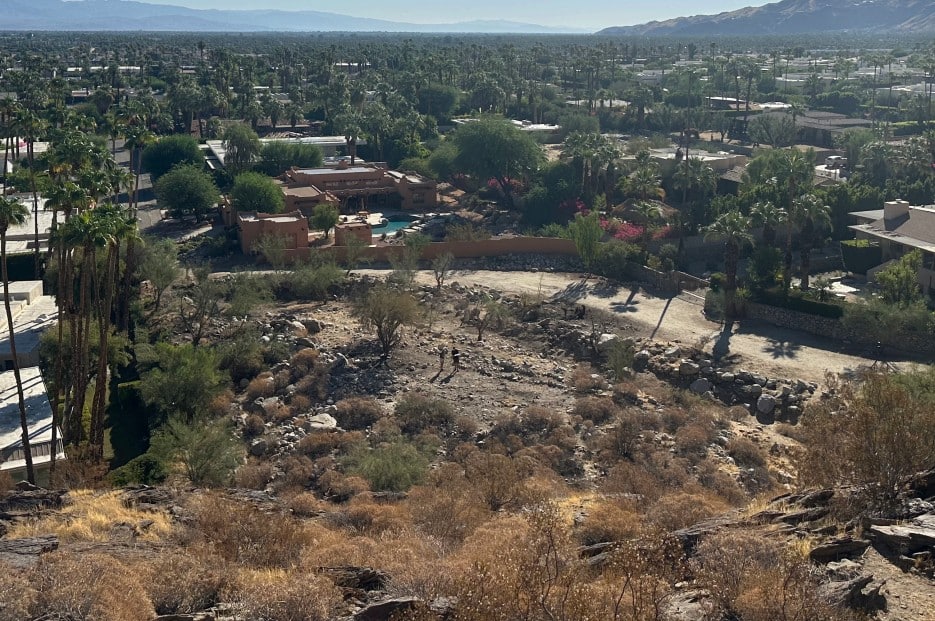
The board also required the applicant to submit a long-term maintenance plan for the ruins, expand the protective buffer around the historic resource, and complete conservation treatments before construction begins.
Developer Mark Temple, who has built extensively in Palm Springs, said the project would help protect the ruins from ongoing damage.
“We’ve had some homelessness issues and things up there,” Temple said. “I think with the development it’ll actually kind of enhance the longevity of the ruin and the historical site because there’ll be somebody there and can monitor it.”
While one board member argued that the project’s scale would destroy the historic setting, others acknowledged the difficulty of balancing preservation with property rights. Board member Peter Peter Moruzzi noted that denying the application would send it to City Council for final determination without the conditions the board had negotiated.
The project now proceeds to the Architectural Review Committee (ARC) for design review before construction can begin.
The board’s recommendations to the ARC include reducing the new home’s height from a proposed 23 feet and decreasing the overall square footage. Members also called for changes to exterior materials, specifically replacing the proposed silver stacked travertine with actual rock from the site and reconsidering the gray color scheme to better complement the natural terrain and Mount San Jacinto backdrop.
Additional recommendations include requiring greater setbacks on the north elevation, restricting hedge heights to no more than eight feet to preserve canyon views, and prohibiting non-native landscaping outside the development’s perimeter wall. The board emphasized that the roof line should be lowered to ensure the view from the historic ruins remains unobstructed.
Author

Related Articles
Palm Springs design panel rejects storage facility’s facade, sends plans back for revision
Commissioners took issue with a prominent glass display case meant to signal the building’s use, calling it a “low-effort solution” that disrupts the structure’s symmetry.
Palm Springs commission reviews plans for a minimalist amphitheater in Downtown Park
Consultants presented four design options ranging from $1 million to $4 million for Downtown Park’s amphitheater, commissioners favored the less costly options.
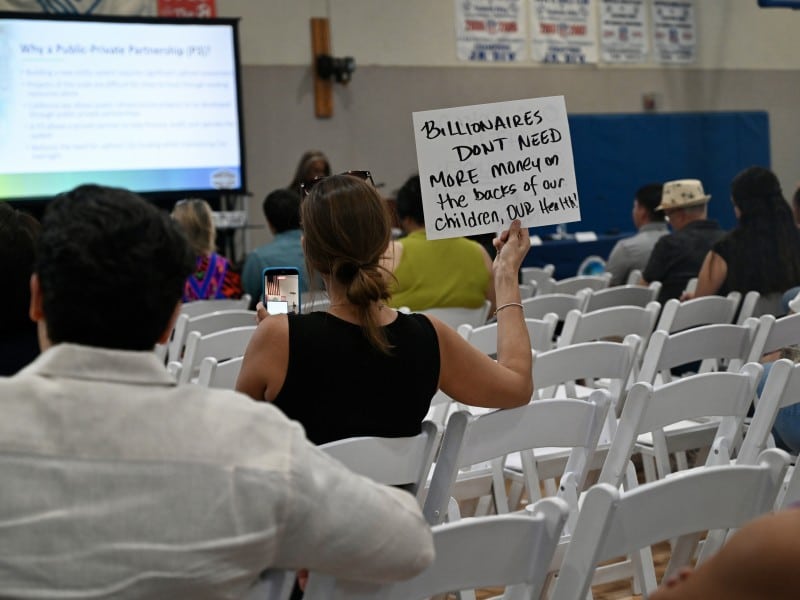
Valley residents confront officials at data center town hall over unanswered questions
Residents from as far as Palm Springs packed a meeting in Coachella this week to challenge a proposed 450-acre project, pressing for specifics on water, noise and climate impacts.