
Desert Healthcare District Board of Directors votes to put Tenet deal on November ballot
The proposed 30-year deal, involving a $650 million payment and $220 million for seismic improvements at the Palm Springs hospital, has sparked board debate on its impact on future healthcare investments.
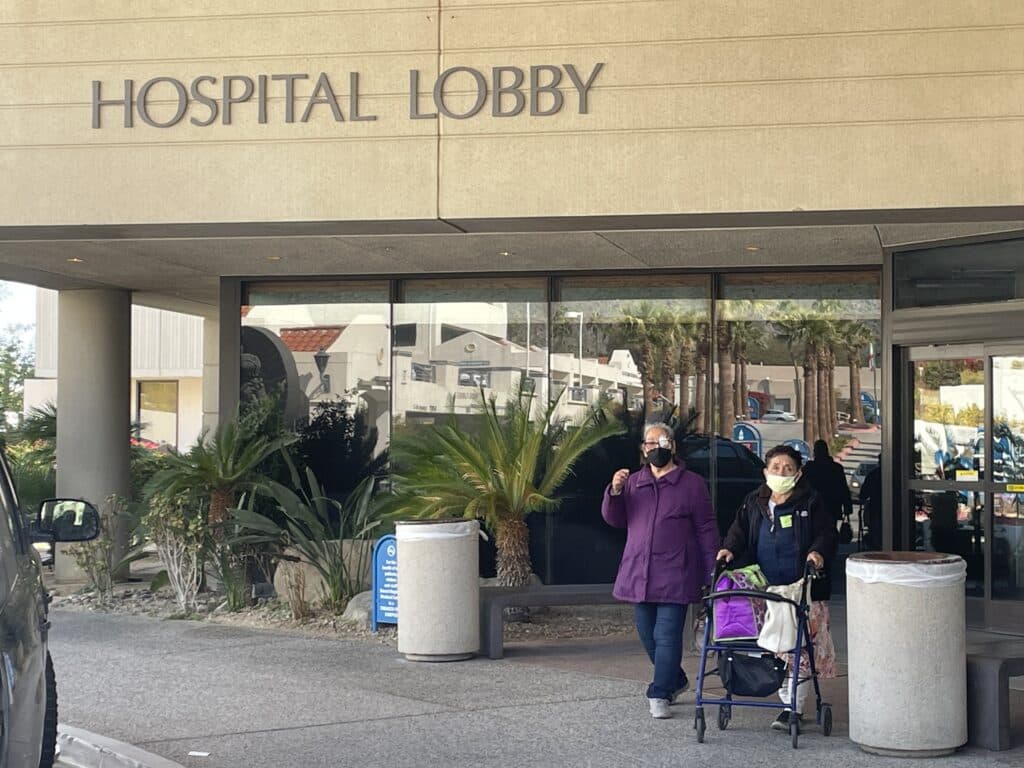
Desert Regional Medical Center’s future is now in voters’ hands after the Desert Healthcare District board members voted 5-1 on Tuesday to approve a resolution placing a lease-purchase agreement with Tenet Healthcare on the November ballot, despite concerns from some board members about non-compete restrictions.
The proposed 30-year agreement includes a $650 million payment to the district and $220 million for seismic upgrades at the Palm Springs hospital. However, the deal has sparked debate among board members over its potential impact on future healthcare investments in the Coachella Valley.
Local reporting and journalism you can count on.
Subscribe to The Palm Springs Post
Board member Kimberly Barraza expressed reservations about the non-compete clause, stating, “I am in favor of moving forward with Tenet … but cannot accept the non-compete clause restrictions imposed on the board.”
Before voting against the resolution, Barraza argued that approving the agreement would ask voters “to restrict their strength or authority as taxpayers.”
Director Leticia De Lara acknowledged the compromise in the negotiations, saying, “This is not what I was hoping for, but I understand that there are opportunities here.”
De Lara highlighted a provision allowing the district to invest in medically underserved areas, including the ability to lease property to other healthcare providers like Eisenhower Medical Center.
“It does allow me to be able to support it, even though I’m not entirely happy, but I guess that’s part of the compromise,” De Lara said.
Director Les Zendle strongly advocated for the agreement, arguing that rejecting it would be fiscally irresponsible.
“I believe that no government entity in their right mind would deny District residents $650 million from a private entity that can be used to improve health care in the district, especially for the medically underserved,” Shorr said.
He concluded his statement by referencing Eisenhower Medical Center, whose representatives have spoken out against the non-compete clause.
Zendle said that no government entity would risk all of the benefits of the Tenet deal “to possibly be able to give a small amount of money to a wealthy private hospital, who, in the opinion of many, has never delivered their fair share of services to lower-income residents in the Coachella Valley.”
The board’s legal counsel clarified that the non-compete clause allows the district to invest in and lease property in medically underserved areas. This includes building facilities like urgent care centers or professional buildings and leasing them to any provider, including competing hospitals.
The decision to place the agreement on the ballot comes after six years of deliberation and negotiations that intensified at the end of last year. Board members emphasized the extensive research and public input that informed their decision-making process.
“Although voters will ultimately vote on whether to accept or reject this proposal, very few will have the time or expertise to understand all the details and ramifications,” Zendle said.
Zendle said it’s up to the board to effectively communicate the deal’s pros and cons and the consequences of it falling through if voters turn down the lease agreement.
De Lara stressed the importance of compromise in reaching this point.
“If it had been our agreement that was here, it would have been different. But this is not one-sided,” she said. “It’s two partners going into this. This is the best that we can do.”
The issue is now in the hands of voters, who will decide whether or not to accept Tenet Health’s lease agreement.
Author

Related Articles
Desert Healthcare District approves $3.5 million in grants, overhauls nonprofit sponsorship program
The District also announced an overhaul of its community sponsorship program, introducing a streamlined application process and two annual deadlines for nonprofits seeking event funding.

Palm Springs airport unaffected as ICE agents deploy to U.S. airports amid TSA staffing crisis
PSP says no immigration agents are on site and security wait times remain under 15 minutes, even as airports nationwide struggle.

Airport Commission backs parking system overhaul amid cost, operational questions
Commissioners cite aging system and customer experience gains, while raising concerns about costs, staffing impacts and how parking reservations would work during peak demand