
Committee clears pickleball complex, gives green light to eight-home development
After months of revisions, the Architectural Review Committee gave unanimous approval to both a 16-court pickleball facility near the airport and an eight-home residential project.
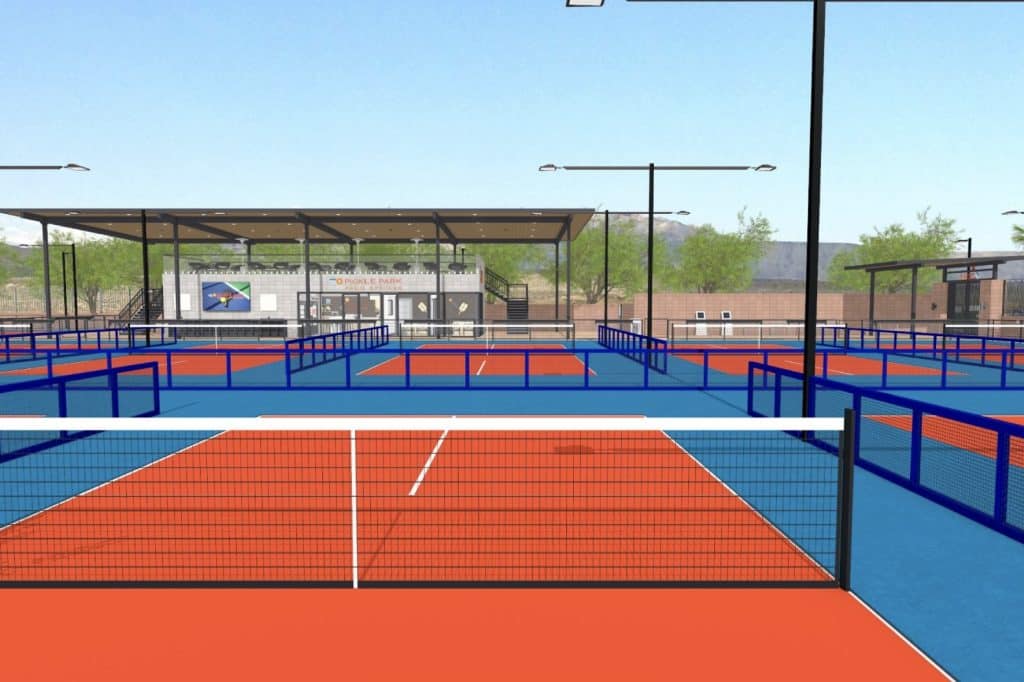
The Palm Springs Architectural Review Committee on Monday unanimously approved a 16-court commercial pickleball complex near the city’s airport and gave final design approval to an eight-home residential development on East Alejo Road, capping months of back-and-forth between applicants and city reviewers on both projects.
The pickleball complex, proposed by PPUSA, LLC at the southwest corner of Avenida Evelita and Airport Center Drive, won approval after the applicant spent more than two years navigating the city’s planning process, redesigning the project three times and addressing a long list of architectural concerns raised at a January committee meeting.
Local reporting and journalism you can count on.
Subscribe to The Palm Springs Post
About a dozen residents filled the meeting room to express their support for the project.
“Pickleball is more than a game,” one resident said. “It’s a way of connecting with people. Most of my family of choice are here tonight, and [we met] through pickleball. So the gift to the community that [the developers] are proposing is more than just a business — it’s a way for people to connect to each other.”
Todd Dickey, who identified himself as one of the owners of PPUSA, LLC, said the project has required a couple million dollars in investment and that he and his husband were eager to move forward.
The revised design addressed nearly all of the committee’s January concerns. The roof of the entry pavilion and concessions building roof were both redesigned from a hipped profile to a gently sloping flat roof.
Columns were revised for consistency and masonry piers were eliminated. Solar studies were submitted to demonstrate adequate shading at the second-floor viewing terrace, and restroom doors were relocated from the south facade to the west side of the building.
“This is a great leap in aesthetic evolution of this building,” Vice Chair John Walsh said, comparing it favorably to Mies van der Rohe. “I think the minimalism of it and the crispness of it — you’ve delivered a very nice design, and it looks like it will be very successful, and it’s also very functional.”
The committee then turned to the Pueo Palm Springs project, a proposal to build eight detached single-family homes at 2700 East Alejo Road. The application had been continued from a March 2 meeting, when the committee directed the applicant to address seven design concerns.
The revised plans incorporated most of the committee’s direction — including south-facing pools on all eight homes, narrowed driveway curb cuts, a mix of solid and glass garage doors, varied breeze block patterns, and the restoration of the original white-wall color scheme in place of the accent colors the Planning Commission had previously recommended.
The developer also disclosed a change in the project’s scope: accessory dwelling units and three-car garages, originally planned as standard features on select lots, will now be offered only as optional upgrades for buyers.
The vote on the Pueo Palm Springs project was also unanimous, with the committee approving the application 6-0.
Author

Related Articles
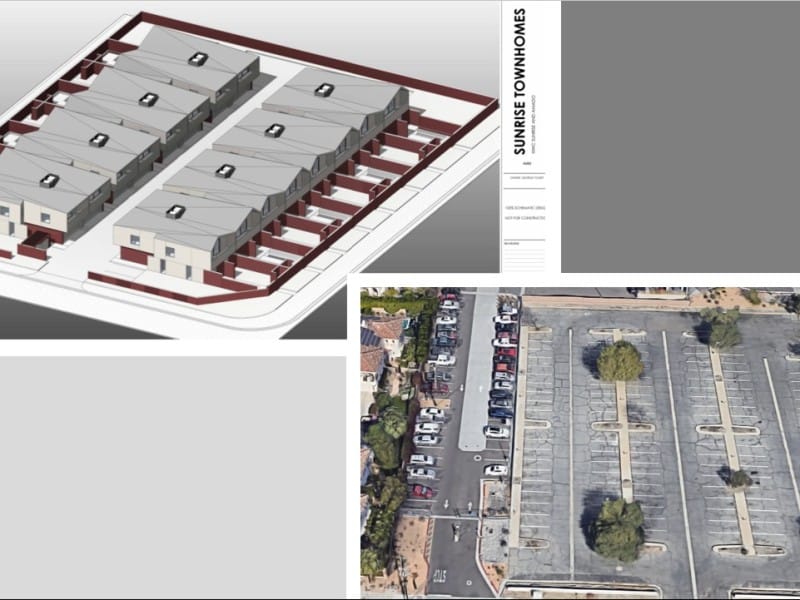
Planning Commission approves 16-unit townhome project at Sunrise Way and Amado Road after July delay
City staff noted that some of the commission’s earlier requests conflicted with state housing laws, though the developer did add a walkway so pool cleaners and landscapers can reach backyards.
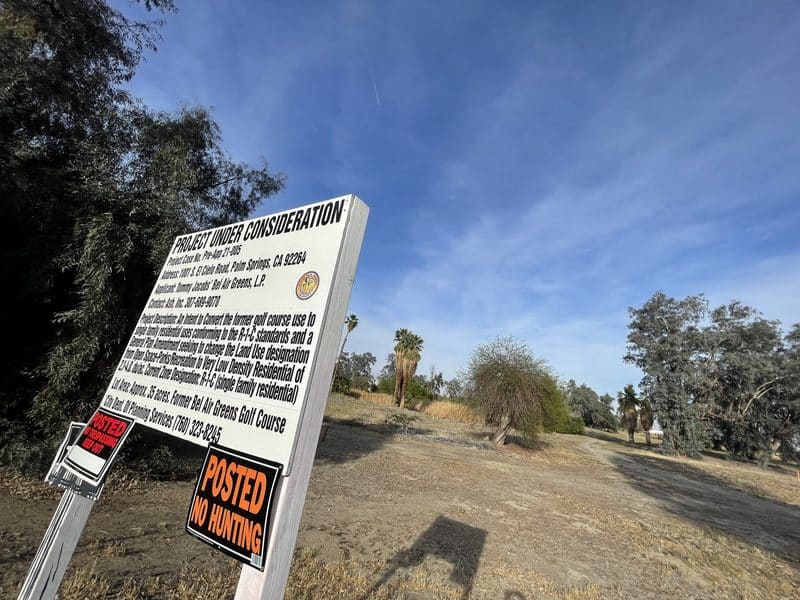
Planning Commission pulls Bel Air Greens housing plan from agenda after tribe acquires half the site
The property’s new tribal trust status means only part of the closed golf course would remain under city land-use review, commissioners learned Tuesday.
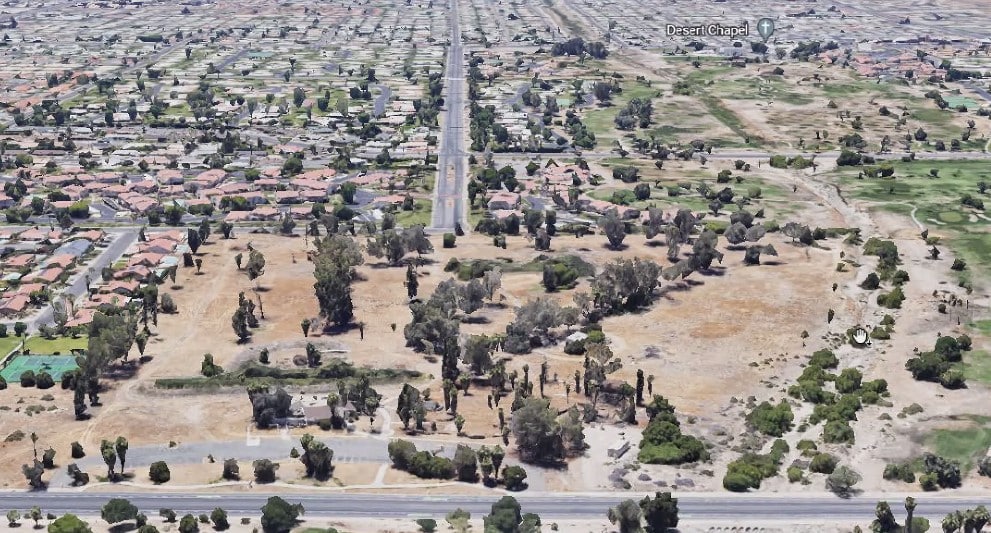
Planning Commission to weigh golf course-to-housing rezoning, with strings attached
Staff wants a General Plan Amendment for the closed Bel Air Greens golf course to take effect only alongside a full development plan — a compromise commissioners first floated in 2022.