
College of the Desert campus nears construction milestone; early work hours approved
Building foundations for all facilities are now underway, with the campus support building scheduled to go vertical first.
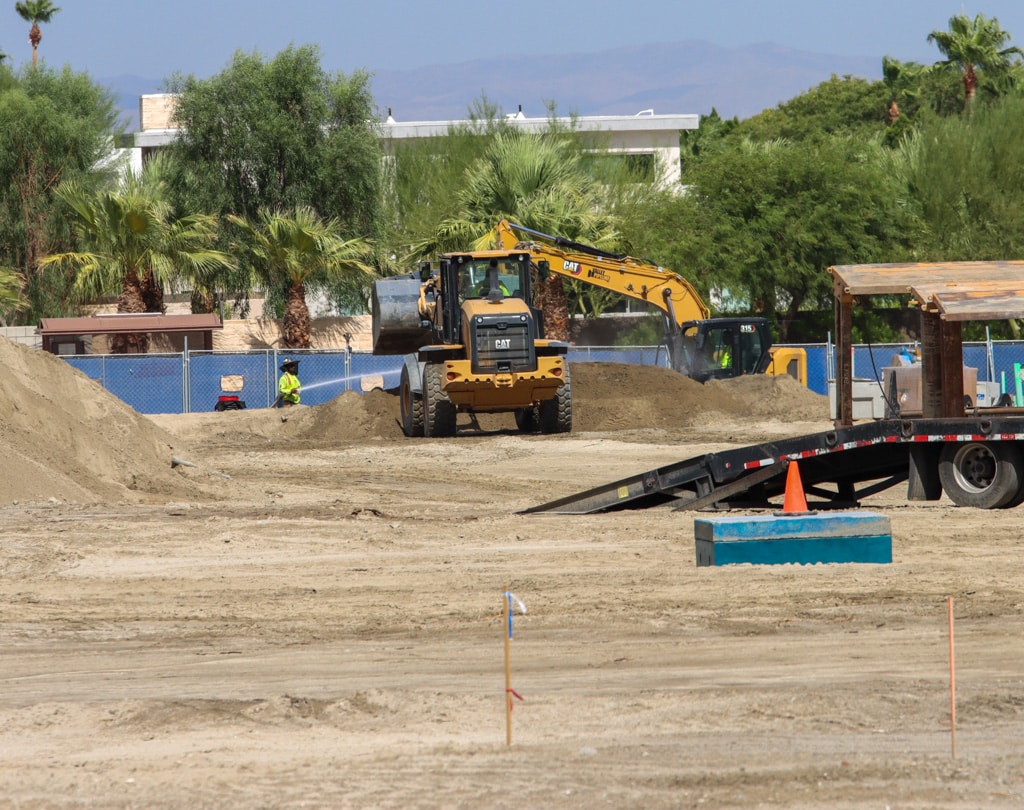
College of the Desert’s $405 million Palm Springs campus project is approaching a significant milestone, with underground utilities and infrastructure work expected to be completed by mid-September, college officials reported at Wednesday evening’s City Council meeting.
The project, described as the largest investment in higher education infrastructure in the West Valley, will support more than 3,000 students, faculty and staff when fully operational in 2027. Building foundations for all facilities are now underway, with the campus support building scheduled to go vertical first.
Local reporting and journalism you can count on.
Subscribe to The Palm Springs Post
“After more than two decades of visioning, planning and perseverance, this moment will mark the shift from groundwork to skyline, when steel begins to rise and the communities can finally see what has long been believed can transform this community,” said Val Martinez Garcia, superintendent/president at COD.
The campus will offer core academic programs in hospitality and tourism, digital media, film and technology including an AI hub, culinary arts, allied health and healthcare, and architecture and sustainable design.
Officials also announced they are exploring the feasibility of launching the nation’s first casino management degree at a community college, with a consultant guiding the proposal through the chancellor’s office.
Later in the meeting, to expedite construction of the campus during the extreme summer heat, the council approved special early morning work hours for the project. Construction crews will be permitted to begin work at 5 a.m. and continue until 4 p.m. during the hottest months from July through September this year and May through September 2026.
Some neighbors of the project had raised concerns that language in the original request indicated construction could happen for 14 hours a day — between 5 a.m. and 7 p.m. But that issue was cleared up by Mayor Ron deHarte during discussion of the request, and it was made clear by the construction company that they did not want to work those hours in the heat.
“In the hot summer months, any time we work over 10, 11 hours, the productivity is horrible, and it just is not safe,” said Jonathan Keene, senior project manager with C.W. Driver, the construction contractor for the campus project.
The early start times mirror similar arrangements the city has made for other major construction projects, including recent work on State Route 111 and the Thompson Hotel. Councilmembers acknowledged the temporary inconvenience to nearby residents while emphasizing the importance of worker safety and project timeline.
“This is some pain for the residents, but hopefully this near-term pain will be a long-term gain for everybody,” said Councilmember Jeffrey Bernstein.
The campus project represents a key partnership between the college and the city, with programming specifically aligned with Palm Springs’ economic development goals around innovation, arts and creativity. Plans include a community AI initiative to position Palm Springs as a regional hub for ethical AI innovation and expanded workforce training programs matching local labor market demands.
Scott Atkins, COD’s director of educational centers for the West Valley, said a “going vertical” ceremony is planned for later this year to mark the transition from foundation work to above-ground construction.
The project is funded through a combination of state and local sources, representing what officials called “an investment in students, families and local businesses and the long-term economic growth of the valley.”
Author

Related Articles
School district, COD launch new program for high schoolers to earn college credits and even a degree
The new program will let students earn high school and college credit together and will coincide with the opening of the COD Palm Springs campus next year.

College of the Desert earns full reaffirmation of accreditation through 2031
The Accrediting Commission for Community and Junior Colleges closed out a yearlong follow-up review focused on the college’s governance practices, officials said.

Two candidates announce for PSUSD Trustee Area 4 seat in November election
Incumbent Charlie Ervin seeks a second term while retired superintendent Tony Signoret enters the race, setting up a contested election for the Palm Springs Unified School District board seat.