
City holds first of two public meetings on a new tourism fee that could bring in millions
The money raised would go toward a massive renovation planned for the convention center, but some vacation rental owners say they don’t see the benefit.
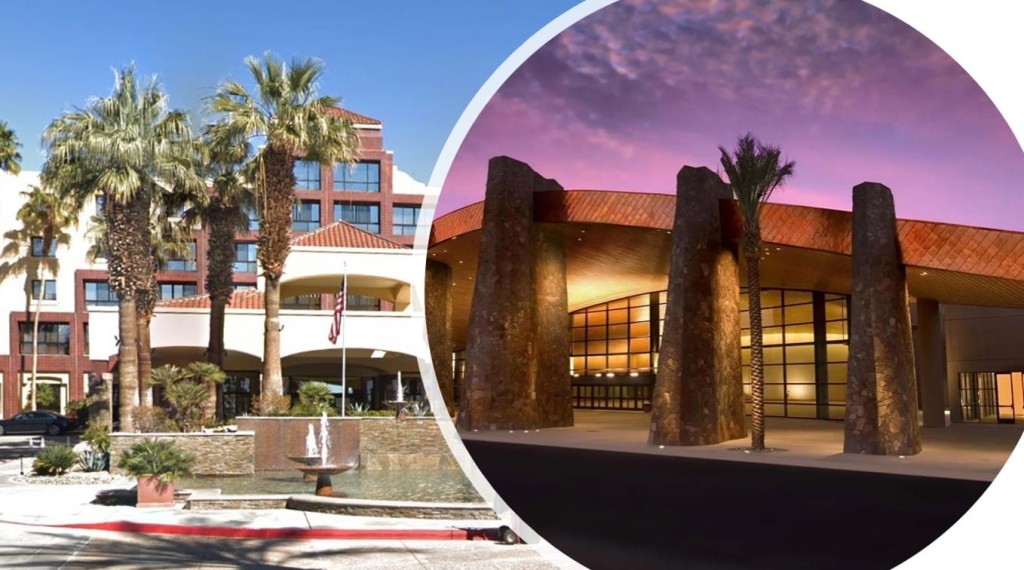
The Palm Springs City Council on Tuesday held the first of two required public meetings before making a decision on a new tourism infrastructure district.
Last month, the council approved a resolution of intention to establish the Palm Springs Tourism Infrastructure District, starting a formal procedure that could add a new fee on hotel and short-term vacation rental revenue to finance convention center improvements. The tourism infrastructure district would levy a 1% fee on gross revenue, and could generate approximately $4.1 million annually over a 30 to 40 year term.
Local reporting and journalism you can count on.
Subscribe to The Palm Springs Post
The April resolution marked the start of a series of steps required by state law before such a district is created, including a 45-day protest period and two public hearings. The fee assessment would apply to hotels, motels, inns and vacation rentals in Palm Springs city limits, but wouldn’t be collected on stays longer than 28 consecutive days.
Over the past few weeks, some short-term rental owners have argued that the process of creating the district didn’t include input from individual short-term rental owners, and that they shouldn’t have to help fund convention center improvements they believe will mostly benefit hotels. Those complaints continued in the public comments section of Tuesday’s meeting, when over 15 short-term rental owners spoke in opposition to the new district.
“I think it’s pretty shady that the local hotel industry, who most likely will get 99% of convention-goers business, thinks that my home-share customers should participate in this plan. The hotel industry does not speak for me. I’m not a business,” said Michael Lampton, who rents out his backyard casita. “None of my customers have ever stayed at my house to attend a convention, and they shouldn’t have to pay for the updates for the convention center.”
City officials, meanwhile, have described the proposal as industry-driven. Even getting the plan to council consideration required businesses representing more than 50% of the proposed assessment to sign petitions in favor. Those petitions in support included around 520 lodging operators, including about 480 short-term rental owners.
Francine McDougall, speaking on behalf of the board of Vacation Rental Owners and Neighbors of Palm Springs, said VRON’s board has remained neutral “because we genuinely see merit on both sides of this issue.”
“We strongly support investments that benefit the broader good of our city, particularly those that strengthen Palm Springs’ tourism economy. At the same time, we recognize that vacation rental properties are likely to be the segment that will benefit the least from any convention center improvements,” said McDougall.
An FAQ document produced by Civitas, a consulting firm hired by PS Resorts described by PS Resorts board chair Peggy Trott as “the industry leader in tourism formation of districts,” states that the district will help ensure that amenities STR guests rely on, such as “a dynamic downtown, world-class dining, and thriving arts and culture” remain robust. The FAQ also states that short-term rentals will benefit due to “the compression factor,” which happens when lodging demand exceeds what any one segment (such as large hotels) can accommodate. For example, while Palm Springs has around 1,243 hotel rooms within a half-mile of the Convention Center, major events like ESRI’s annual conference can draw as many as 4,500 attendees.
The FAQ also cites a study from Visit Greater Palm Springs that found 79% of convention visitors say they’re likely to return for leisure travel. “This creates a clear pipeline: visitors first come for a convention, then return later on their own—and at that point, many choose STRs for a more personalized and flexible stay,” states the document.
Given this expected increase in demand from an enhanced convention center, McDougall asked the city council to reconsider the current annual caps on vacation rental stays if the tourism district does pass.
While short-term rentals and small hotels (49 rooms or less) would see a 1% fee, larger and group meeting hotels would carry a 3% fee. This would bring the total assessment amount (including TOT) to 13.5% for short-term rentals and small hotels, 15.5% for hotels with more than 50 rooms, and 17.5% for group meeting hotels.
City councilmembers offered some comments on Tuesday, but weren’t taking any action or offering direction. The second required public hearing is May 27. If the city council approves the district then, it could take effect as early as July 1.
However, if the city receives written protests from businesses representing 50% or more of the total expected assessment amount before May 27, the process will be halted for one full year. State law dictates that this support is weighted based on each business’s share of total lodging revenue, not by the number of operators, so large hotels (who have already shown support for the district) have a proportionally bigger say. Ryan Fischer, a short-term rental operator in Palm Springs, called this threshold “essentially impossible to ever overcome.”
Author

Related Articles
Old Las Palmas property owners ask City Council to delay utility assessment hearing
Residents who spoke Wednesday evening cited six-figure assessments, short notice and unsettled costs. The council took no action, but staff said it could give owners more time.
Palm Springs police defend Flock camera program as residents raise privacy concerns
Police officials cited arrests and recovered vehicles, but speakers at Wednesday’s council meeting said the benefits don’t outweigh the risks. The $4.5 million state grant ends in December 2027.
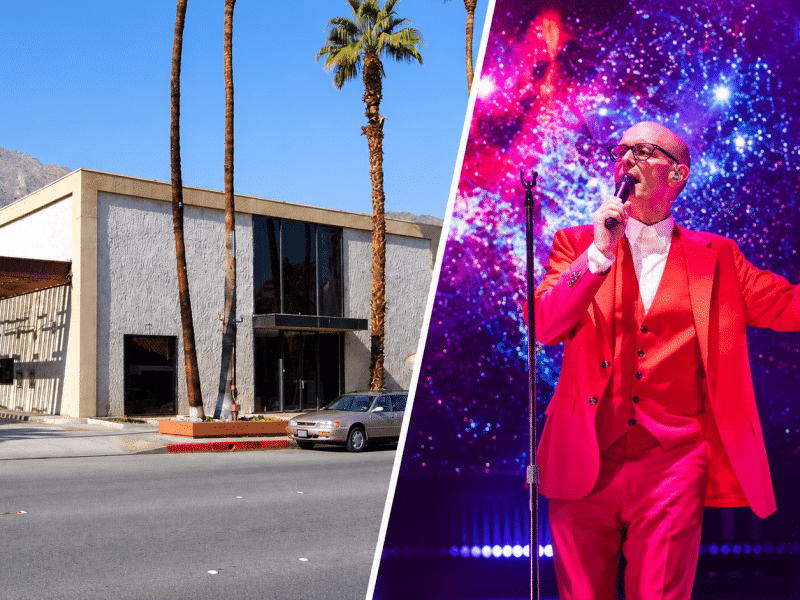
Commission approves live entertainment permit for one-man science and music show downtown
Planning commissioners on Tuesday signed off on a conditional use permit for a building that will house Patrick Olson’s “The Art of Science,” which is expected to open in December or January.