
City: Bridge project faces minimum 2-year delay amid environmental lawsuit
An organization has filed suit challenging the city’s approval of a flood-control bridge design on South Palm Canyon Drive. The move will threaten federal funding and push back a project nearly two decades in the making.
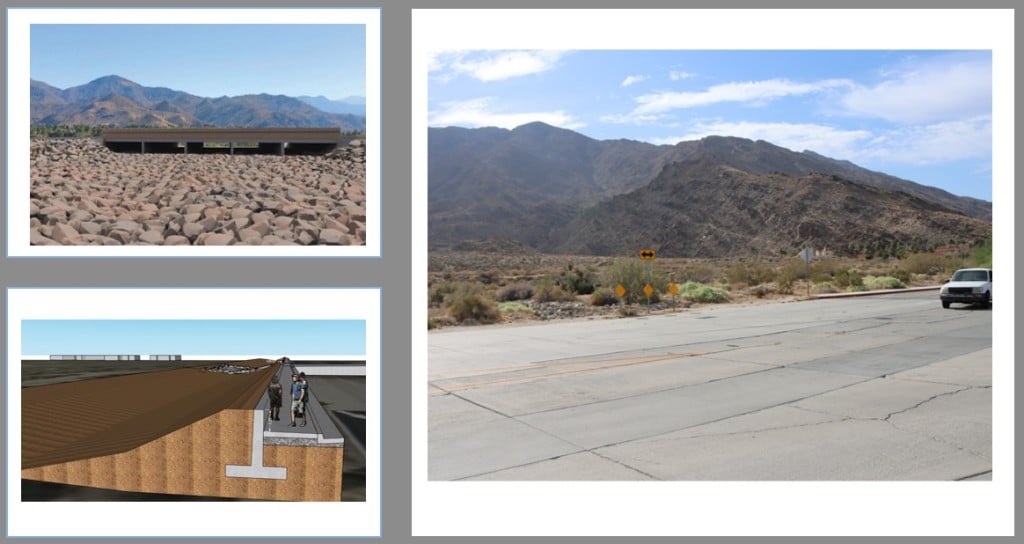
A long-planned flood-control bridge on South Palm Canyon Drive near East Bogert Trail is now facing a delay of at least two years after an environmental organization filed a legal challenge under the California Environmental Quality Act (CEQA).
In an email update sent Friday afternoon, the city outlined the litigation and its potential impact on the project’s timeline.
Local reporting and journalism you can count on.
Subscribe to The Palm Springs Post
The Center for Biological Diversity filed suit on Aug. 20, 2025, contesting the Palm Springs City Council’s July 21, 2025, vote to reject a competing design submitted by Oswit Land Trust and proceed with the city’s own plans for an elevated roadway and reinforced drainage system at the low-water crossing near East Bogert Trail.
The lawsuit claims the city failed to prepare a legally sufficient CEQA document assessing potential impacts on Oswit Canyon, Peninsular bighorn sheep, Casey’s June Beetle, and other sensitive resources, and asks the court to require the city to study alternative designs and incorporate feasible mitigation measures before moving forward.
If the court sides with the plaintiffs, the city would be required to conduct additional CEQA studies — adding significant time to an already lengthy project timeline.
South Palm Canyon Drive serves as the only direct road into the portion of the city which terminates at Indian Canyons, providing access to roughly 700 homes in the Andreas Hills and adjacent neighborhoods. The road has been closed multiple times over the past two decades when floodwaters overtop the low-water crossing, most recently in February 2019.
City data shows the area generated 590 emergency calls in 2024, and officials note the neighborhood’s population skews older than the broader Palm Springs community.
The project carries financial stakes as well. Approximately half of the estimated $9 million project cost is covered by the federal Highway Bridge Program, which allocated $4.5 million when the city first secured authorization in 2006. Those funds could expire if construction does not begin by December, and the city has filed a waiver request with Caltrans to extend that deadline.
The city has been pursuing the bridge project for nearly 20 years. Preliminary studies began in 2006, an initial environmental review was completed in 2012, and design work advanced through subsequent years before litigation and community feedback periods created additional delays.
City officials have pointed to a cautionary example from 2012, when the Araby neighborhood successfully pushed to rescind federal bridge funding — only to experience repeated flooding afterward. That funding was never restored and the project was never built.
Author

Related Articles
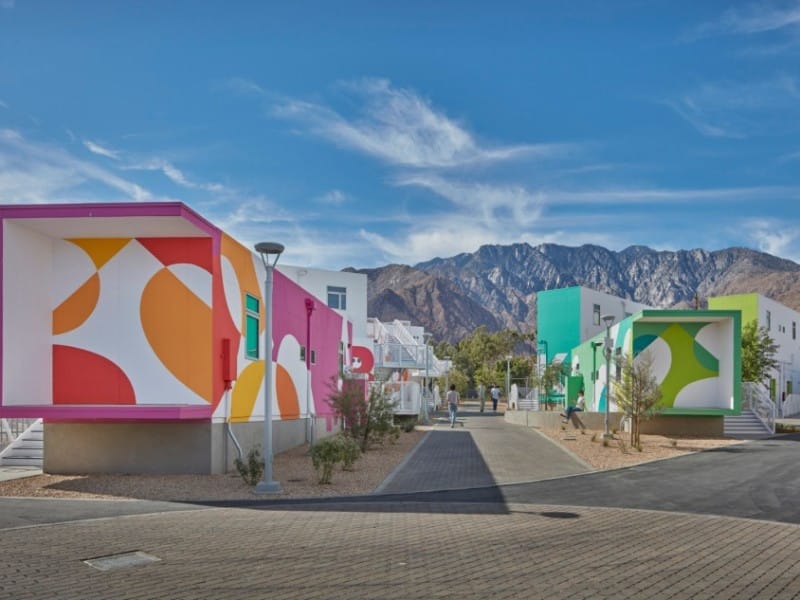
Palm Springs Homeless Navigation Center wins two national architecture awards
The American Institute of Architects honored the facility with a 2026 Architecture Award and a Housing Award in the Specialized Housing category.

Palm Springs council candidates weigh in on Flock cameras, stalled hotels, more at forum
Five candidates for three seats also addressed traffic safety and the library renovation at a forum hosted by Organized Neighborhoods of Palm Springs.
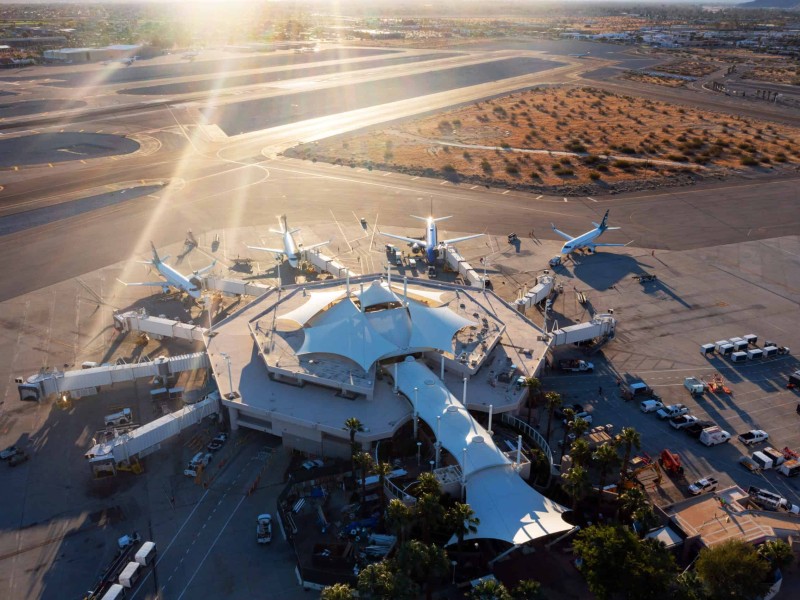
Palm Springs airport study finds economic impact tops $2.55 billion
Nearly 97% of the airport’s overall economic impact stayed within the Coachella Valley, the study found, and more than half occurred within the city of Palm Springs.