
Palm Springs projects general fund surplus as Measure J sales tax runs ahead of budget
Third-quarter reports show broad revenue strength across the city, though airport deficit and looming cost pressures temper the outlook.
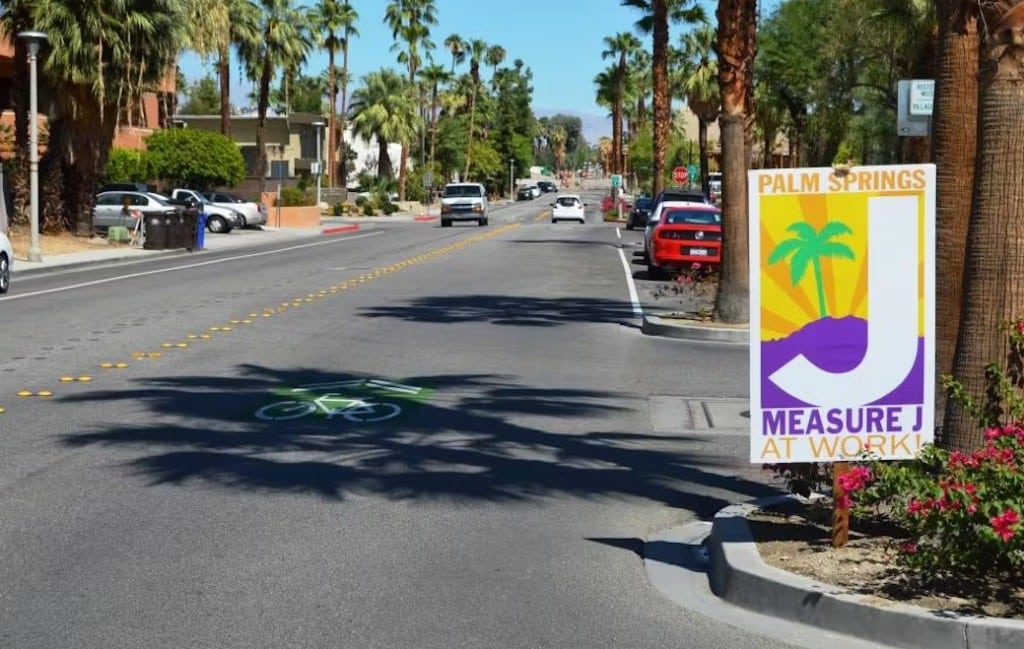
Palm Springs is heading into the final stretch of its fiscal year with sales tax revenues running ahead of projections across both its general fund and the voter-approved Measure J infrastructure fund, according to budget updates presented this week to the city council and earlier this month to the Measure J Oversight Commission.
Finance Director Kristopher Mooney presented the city’s third-quarter budget update to the city council Wednesday, reporting that the general fund is trending toward a $10.9 million surplus on projected total revenue of $176.4 million. Three of the general fund’s major revenue lines are tracking ahead of the prior fiscal year.
Local reporting and journalism you can count on.
Subscribe to The Palm Springs Post
Sales tax revenue through March totaled $23.8 million, up 4.1% from $22.8 million during the same period last year. Transient occupancy tax came in at $38 million year to date, a 2.8% increase over the prior year’s $37 million. Property tax revenue was also revised upward, with the city now forecasting $38.7 million for the full year.
“We’re cautiously optimistic,” Mooney said, noting the city still needed to see April and May numbers before confirming whether revenue would beat the full-year budget.
The Measure J fund is showing similar strength. The most recently available data — covering March sales activity — shows the fund collected $2.586 million that month, a 5.4% increase over the same month last year and nearly 28% above the same month in fiscal year 2024. Through nine months of the fiscal year, the fund has taken in $16.69 million, running 5% ahead of the prior year’s pace.
Staff told the Measure J Oversight Commission at its May meeting that if the trend holds, the fund is likely to finish the year around $22.5 million — roughly $700,000 above its $21.822 million budget.
Not every month has been smooth. January sales activity came in 8.6% below the prior year, with staff attributing the dip to slower restaurant business and weaker auto sales, which they identified as the two largest drivers of Measure J receipts. But the broader trend has remained positive, with several months posting double-digit gains, including a 22.4% jump in September sales and a 19.4% surge in December.
Measure J interest income is also running well ahead of expectations. The fund budgeted $750,000 in interest for the year but has already recorded $1.258 million through nine months. Staff projects one more quarter of interest income will push the total to approximately $1.6 million — about $850,000 above budget. Combined with the sales tax overage, the fund could finish the year as much as $1.5 million over its total revenue budget.
Despite the good news on revenue, Mooney cautioned the council that upcoming obligations would likely consume much of the general fund surplus. He cited at least $4 million for the navigation center, an estimated $4 million to $6 million in salary and benefit increases, and resumed fleet vehicle funding in the next two-year budget cycle. He also flagged an unexplained overrun in CalPERS pension costs for the fire and police departments.
“We use all of the percentages that the CalPERS actuarial report uses, so we were very surprised to see this trend this way,” Mooney said, adding that staff is still working to identify the cause.
The airport presented a more complicated picture. Total operating revenue is forecast at $58 million — up from $51.9 million in the prior fiscal year — largely driven by higher airline rates and charges. But airport payroll climbed from $16.8 million to a projected $25 million, reflecting the addition of roughly 50 positions over the past two years. The airport is projecting an operating surplus of $6.8 million, but a transfer of nearly $8 million to fund capital projects pushes the bottom line to a projected deficit of $1.1 million.
Mayor Pro Tem David Ready questioned why the city was making a transfer that would produce a deficit, suggesting it could be reduced if capital expenditures would not be fully paid out before fiscal year end. Mooney acknowledged the point and said staff was in discussions with interim Airport Executive Director Victoria Carpenter about the issue.
Carpenter told the council the airport is projecting a 7% increase in passenger traffic for the coming quarter compared to 2025, anticipating roughly 100,000 additional passengers. Two airlines — Porter, which served Toronto, and Allegiant, which served Bellingham — had ended service to Palm Springs, but each represented only about 1% of the airport’s total passenger count.
“It’s still a positive outlook,” Carpenter said.
On the Measure J side, total expenditures to date stand at $18.48 million against a full-year forecast of $72.5 million — though the latter figure includes roughly $46 million in carryover budget from prior years that staff said would not be fully spent in the current fiscal year. The fund is currently running a deficit of $529,000, which staff said was expected given the volume of active projects currently underway.
The council’s third-quarter budget update was received and filed. Mooney is scheduled to present a continuation budget proposal covering the second year of the city’s two-year budget at the June 10 city council meeting.
Author

Related Articles
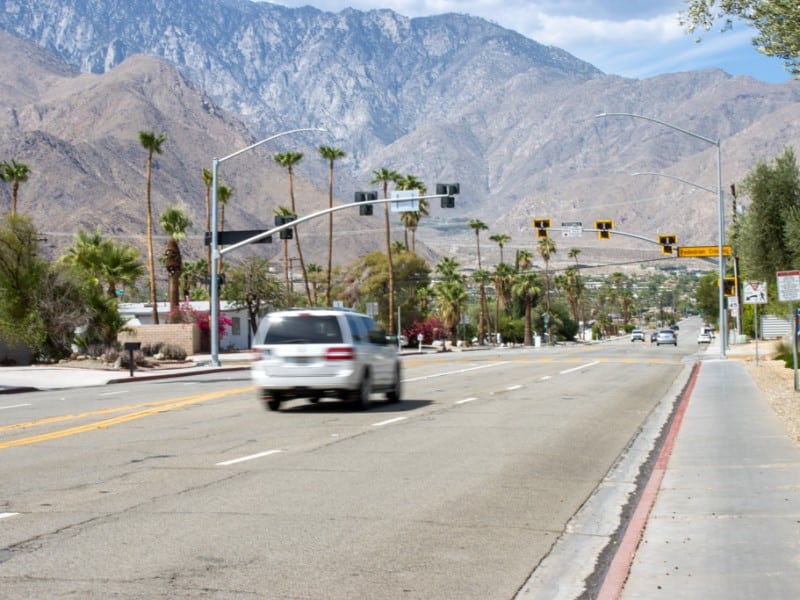
Council approves Racquet Club Road lane reduction, despite fire response concerns
Buffered bike lanes and a center turn lane are part of the $3.45 million reconfiguration; officials said they will explore signal pre-emption technology to offset potential increases in emergency response times.
City Council approves tourism infrastructure district despite short-term rental owner opposition
STR owners argued fees would mostly benefit hotels; protests reached just 4.58% of the threshold needed to block the district’s formation.
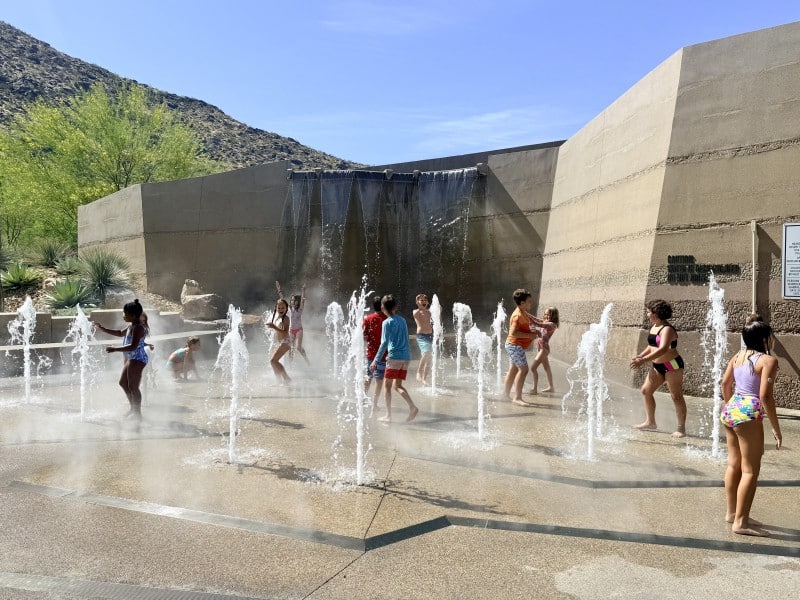
Palm Springs reopens Downtown Park splash pad after years-long contractor dispute
The city officially opened the faucet Tuesday on the long-delayed Downtown Park splash pad, capping a years-long effort to fix a water feature that had been out of service since shortly after a $7.6 million park opened in 2021.