
As temperatures start to climb, Palm Springs residents receive crucial heat safety tips from Red Cross expert
With thermometers registering north of 105 degrees outside, those who gathered at City Hall Tuesday evening learned vital information about staying safe during extreme heat events.
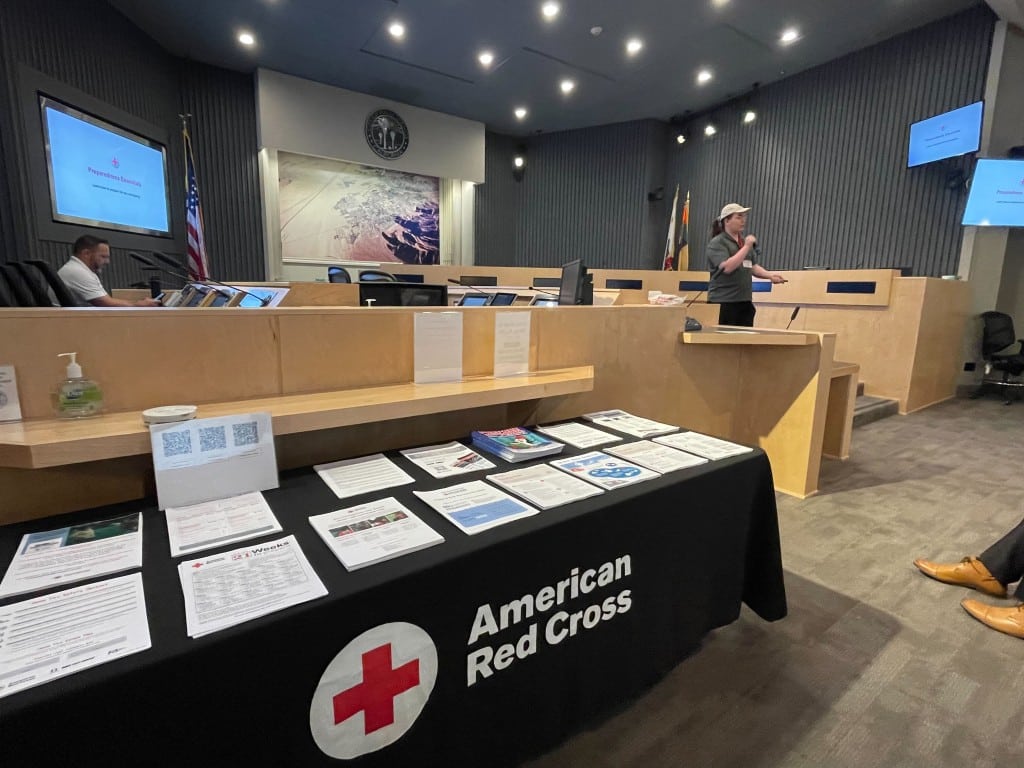
Desert dwellers are used to the heat, and the associated warnings, watches, and advisories that come with it. But what does it all mean, and what action should you take? Those questions and more were answered Tuesday evening during a presentation sponsored by the city and the Racquet Club West Neighborhood Organization, part of ONE-PS.
With temperatures hovering north of 105 degrees outside, residents gathered at City Hall to learn vital information about staying safe during extreme heat events. Nick Toller of the American Red Cross delivered a comprehensive presentation on recognizing and treating heat-related illnesses, as well as preparing homes for scorching temperatures.
Local reporting and journalism you can count on.
Subscribe to The Palm Springs Post
After explaining the difference between a heat watch (be alert that a prolonged period of high heat may be arriving), a heat advisory (actively take precautions and be aware that illness could occur), and a heat warning (it will be above 105 degree fahrenheit for a prolonged period of time), Toller emphasized the importance of understanding the difference between heat exhaustion and heat stroke, two potentially dangerous conditions that can occur during periods of extreme heat.
“Heat exhaustion affects the entire body, not just the muscles,” Toller explained. “And then it will go into heat stroke if it is left untreated. And this can cause permanent organ damage if left untreated.”
The key distinction between the two conditions, he said, lies in the body’s ability to sweat. During heat exhaustion, a person will sweat profusely as their body attempts to regulate internal temperature. In contrast, heat stroke is characterized by a complete cessation of sweating.
“Once they get in a heat stroke, they stop sweating entirely, typically,” Toller said. “… And that is something that you should be concerned about. That’s not a sign that they are getting better.”
Other symptoms of heat exhaustion include faintness, dizziness, cool and clammy skin, elevated heart rate and breathing, nausea, and fatigue. Heat stroke symptoms progress to include red and warm skin, rapid shallow breathing, vomiting, confusion, and possible loss of consciousness.
Toller stressed the importance of immediate action when someone exhibits signs of heat-related illness. For heat exhaustion, he advised moving the person to a cool place, loosening their clothing, applying cool wet towels, and having them sip water or an electrolyte drink slowly.
In cases of suspected heat stroke, Toller urged attendees to call 911 immediately and focus on cooling the person down while waiting for emergency responders. He cautioned against giving fluids to someone experiencing heat stroke, as it could cause more harm than good.
The presentation also covered preventative measures and home preparation for extreme heat events. Toller recommended several strategies to keep homes cool and energy-efficient during heat waves.
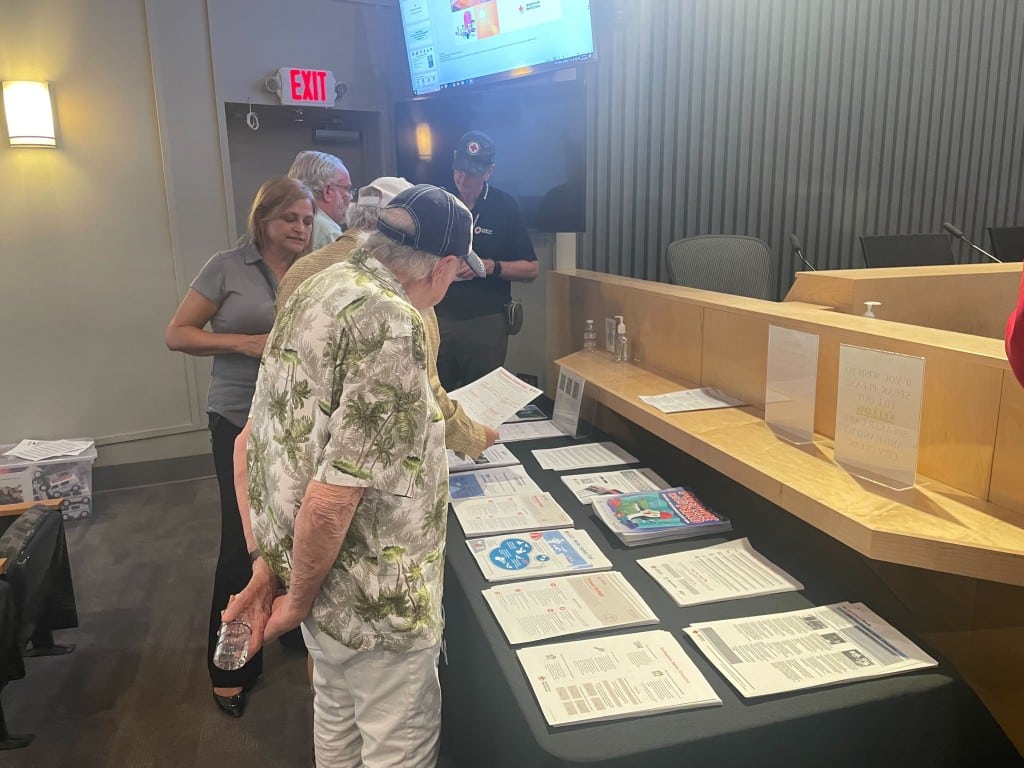
“Cover the windows, close windows, anything like that,” he advised. “Use window reflectors to reflect heat back outside so that it’s not coming in and staying inside your bouncing it back out.”
Additional suggestions included installing weather stripping, adding insulation, using attic fans, and considering window air conditioners for homes without central air conditioning.
Toller emphasized the importance of staying informed about weather conditions and heat advisories. He encouraged residents to monitor local news and social media for updates and to familiarize themselves with nearby cooling centers.
“Monitor the temperature and heat index, especially during certain times of year,” Toller said. “Make sure even if you’re inside you’re keeping an eye on if it’s 105 outside. You should probably know if that’s the case and listen for updates.”
The presentation also touched on the importance of checking on vulnerable populations during extreme heat events, including elderly neighbors, young children, and pets.
“If you’re warm, they’re warm,” Toller said, referring to pets. He advised providing access to fresh water and shade, limiting pet exercise, and never leaving animals in parked vehicles.
As the presentation concluded, Toller urged attendees to take immediate action to prepare for extreme heat events.
“I want you to take some kind of action today, even if it’s the smallest thing,” he said. “If it means writing down a list of things you need to go to the store and buy, if that means picking up one thing on your way home, if it means open up the old emergency kit and see what’s expired, do something today.”
More information: The American Red Cross provides comprehensive information on dealing with heat at its website here. It also makes apps available for both iPhones and Android phones. Simply search for “Red Cross Emergency App” in your phone’s app store.
Author

Related Articles

Demuth Park’s long-awaited pickleball expansion opens in Palm Springs, nearly doubling court capacity
An estimated 300 picklers of all ages turned out to celebrate and test out the 22 new courts on Wednesday.

Photographer and Variety editor to be honored at 25th HRC Palm Springs Garden Party
Michael Childers and Marc Malkin will receive awards Nov. 7 at the Dinah Shore Estate. Tickets are available now.
Palm Springs prepares for strong El Niño with growing CERT ranks
Hundreds of residents have already received emergency training, and demand remains high as the city and volunteer groups brace for possible flooding and other severe weather.