
While vigil helped draw attention to trans community’s plight, the fight for equality is far from over
For 27,000 transgender individuals in the Inland Empire, concerns include high rates of bullying, suicidal tendencies, and difficulties finding competent medical or mental health providers.
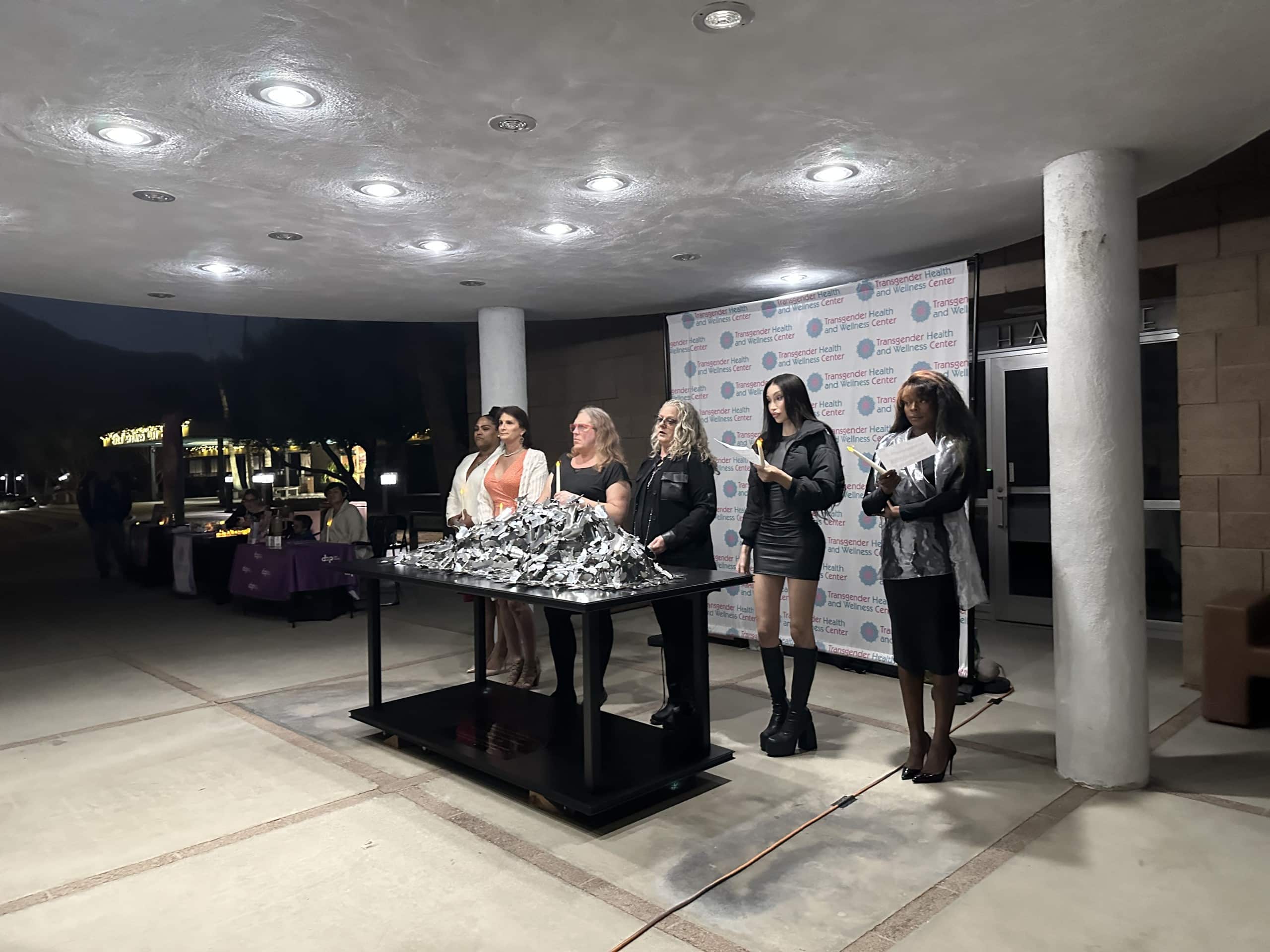
As more than two dozen names and brief tributes were read out to the 100-strong crowd during a candlelight vigil outside Palm Springs City Hall on Nov. 20, attendees affirmed “Their lives matter!”
The lives of 26 transgender individuals tragically taken this year in the United States were honored during the event. Alarming statistics reveal nearly half of the victims were killed by those closest to them — family, partners, or friends — according to a Human Rights Campaign report.
Local reporting and journalism you can count on.
Subscribe to The Palm Springs Post
The annual observance of Transgender Day of Remembrance was founded in 1999 by transgender advocate Gwendolyn Ann Smith. The event marked the murder of Rita Hester, a Black trans woman, the year before and has since become a global tradition to honor the lives of other transgender people lost to violence.
“I am no stranger to the need to fight for our rights,” Smith said. “The right to simply exist is first and foremost. With so many seeking to erase transgender people – sometimes in the most brutal ways possible – it is vitally important that those we lose are remembered, and that we continue to fight for justice.”
The Palm Springs vigil was organized by Thomi Clinton, founder and executive director of the non-profit Transgender Health and Wellness Center. Clinton argues that acceptance is key to tackling trans violence.
“People have perceptions and stereotypes of what trans people are,” said Clinton. “That’s where hate and disinformation starts.
“It’s important to understand that we are a diverse group, and want the freedom to be what we want – women are firefighters, doctors, mechanics, stay at home moms, anything they want to be – but we have a hard time finding employment because of being trans.”
Clinton, who has advised national LGBTQ health and safety policies under both Biden and Bush administrations, has firsthand experience of prejudice. Clinton described herself as an effeminate boy growing up in Arkansas, who was told by teachers to act like a man and tormented by bullies.
“Drew – I’ll always remember his name – wore a thick ring and slapped me in the back of my head,” Clinton recalled. “They threw lit firecrackers into the back window of my car, spit in my face, and yelled, ‘square, faggot.’”
The prejudice took a toll, leading to an attempted suicide. However, Clinton’s determination to help others who have experienced similar struggles has been a beacon of hope.
A report by Aaron Gardner of the Riverside University Health System highlighted the plight of approximately 27,000 transgender individuals in the Inland Empire. Particular concerns included high rates of bullying, suicidal tendencies, and difficulties finding competent medical or mental health providers.
Despite growing visibility and recognition of transgender issues, aided by celebrities like Laverne Cox, Caitlyn Jenner, and Elliot Page, prejudice persists. Although more Americans now personally know someone who is transgender, several laws across various US states discriminate against trans individuals.
Nationwide, 590 bills targeting trans individuals were introduced into state legislatures in the last few years, with 85 signed into law, chiefly in Southern and Midwestern states, according to Trans Legislation Tracker.
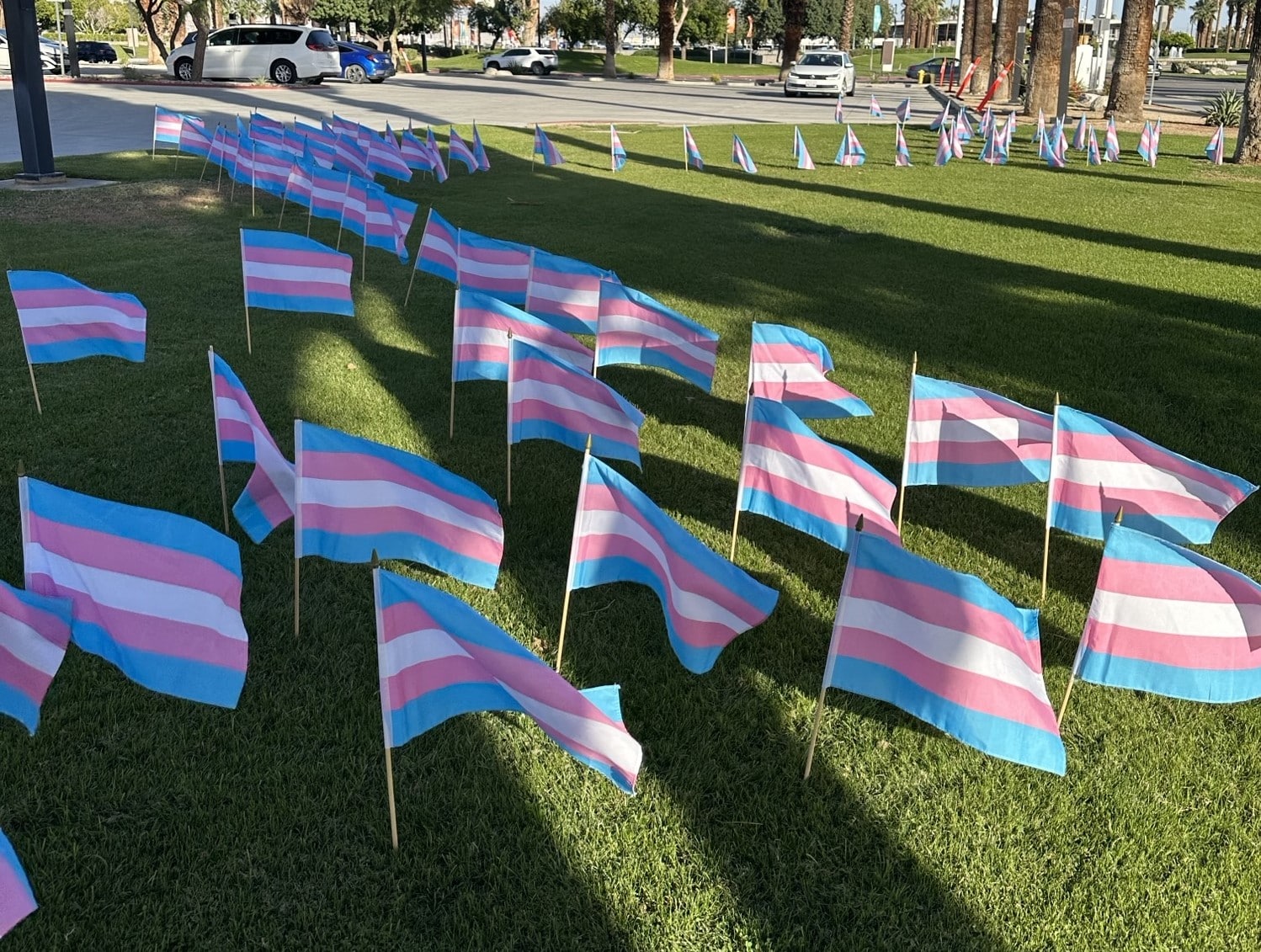
The vast majority of people who transition don’t express regrets. But the few who do – so-called “detransitioners” – are held up by conservative anti-trans legislators as examples and used to deny trans healthcare to minors.
Yet therapist Jacob Rostovsky, a trainer for Transgender, Gender Expansive, Intersex (TGI) community, labors against such generalizations, saying, “I knew when I was four years old that I wanted to be a boy. I never regretted it.”
Living in the relatively safe Coachella Valley, Rostovsky admits he still fears for his life due to his well-known transgender identity and his efforts with The TransPower Project (formerly known as Queer Works), an organization he founded to promote health equity within the transgender and gender non-binary (TGI) community.
“I wake up every day wondering if this will be my last day, especially because I’m pretty well known in the Coachella Valley,” said Rostovsky. “I receive a lot of hate email, telling me this will be my last day, or I should die, or they will find out where I live.”
“I also get comments about my body, what kind of parts do I have, even at events where it’s inappropriate to ask me,” Rostovsky added. “It’s not their business. My body belongs to me.”
Being free from similar fear and questioning is what members of the trans community are working toward with events such as the vigil held Nov. 20 and an annual Trans Pride Fair in Palm Springs organized by the Health and Wellness Center.
“We only want to live our lives, work, and not be terrorized as a group of people,” Clinton concluded. “We just want respect, dignity and truth. That’s what should be the core principles.”
Author

Related Articles

Palm Springs neighborhoods to compete in summer food drive challenge
The Center and ONE-PS are organizing a two-month competition to fight rising food insecurity as donations to the Community Food Bank typically decline during summer months.
For gay fathers, love, loss and the hope of being seen
A Palm Springs support group is helping gay and bisexual fathers navigate estrangement, late-in-life coming out, and the complicated meaning of Father’s Day.

Palm Springs moves forward with road safety study, fresh fixes for CV Link
From sorting out cyclist-pedestrian confusion on the CV Link to a deep-dive safety study on major corridors, city leaders are mapping out immediate and long-term fixes to make streets safer.