
2024 In Memoriam Part 2: Concluding our look back on local luminaries we lost
In the second and final part of his series running during the final days of 2024, Bruce Fessier remembers six more well-known people with local ties we lost in the past year.
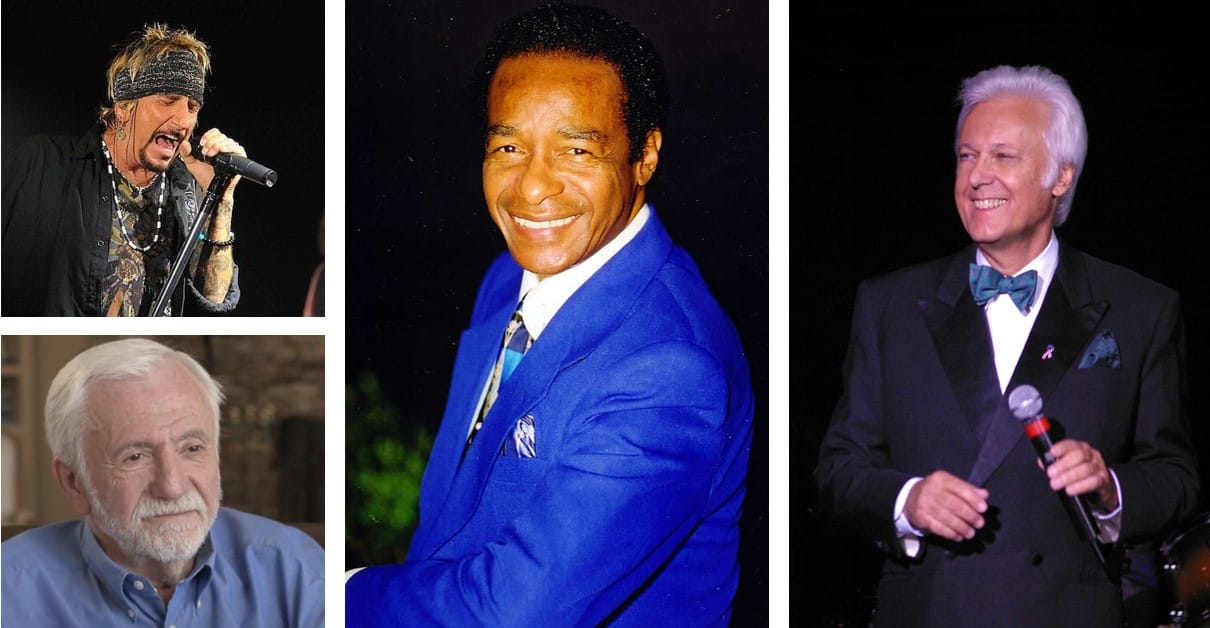
We’re looking back at local luminaries we lost in 2024, and today we conclude with the rest of my list of the top 15 Coachella Valley celebrities to pass. If you missed the first part of this two-part series, you can read that here.
Jack Russell, 63, Aug. 7 from complications of Lewy Body Dementia and Multiple System Atrophy at a family member’s Southern California home. This hard rock vocalist had a successful career with the band, Great White, including the classic “Once Bitten, Twice Shy.” He visited the desert after the band’s 1987 breakout, “Rock Me,” and later moved to Palm Desert.
Local reporting and journalism you can count on.
Subscribe to The Palm Springs Post
But Russell will be forever associated with one of rock’s deadliest tragedies: a 2003 fire at the Rhode Island nightclub, The Station, caused by pyrotechnics used by his band, Jack Russell’s Great White. More than 200 people were injured and 100 people died, including Jack’s bandmate, Ty Longley. I interviewed Jack 10 months after the fire as he faced several civil suits and a criminal investigation. Rolling Stone ultimately reported that Russell wasn’t criminally charged, but he and the band’s corporation, Jack Russell Touring, paid $1 million to the fire victims as part of a $176 million settlement.
Russell was touring to raise funds for a Station Family Fund to benefit fire survivors and their families, and he was prohibited from talking about the case. But he said his manager told him, “Look, why don’t you guys use some pyro to spice the show up,” and that was the first time he ever used pyrotechnics He said he used to do a lot of writing in the desert, but “I haven’t written anything since, you know, before the fire. I just don’t… I’m not in that space yet.”
Jesse Davis, 85, of complications from Alzheimer’s Aug. 26 in San Diego. Jesse Davis was often compared to Johnny Mathis with his silky way with a lyric. They were among the few Black singers who could appeal to conservative white audiences in the early 1960s, and Jesse was actually asked to substitute for Mathis at the fabled Chi Chi club in downtown Palm Springs.
The recent City of Palm Springs settlement with the Section 14 Survivors tells you how rare it was for a young, unknown Black pop singer to break out in Palm Springs in the early ’60s. Many Black entertainers were forced to stay in Section 14 at that time because some local hotels would not admit Blacks. But Frank Sinatra saw him at the local celebrity hot spot, the Howard Manor, in 1963 and was so impressed, he got Jesse an audition at the Sands Hotel in Las Vegas, where he had a residency. That led to Jesse getting hired at Sinatra’s Cal Neva Lodge in Lake Tahoe, gigs from Europe to Australia, and a recording contract with San Diego’s Essence Records.
Jesse was one of the desert’s most popular nightclub acts through the 1970s before making San Diego his primary workplace. I also saw him give a memorable show at the swank Casa del Zorro in Borrego Springs. Jesse fit into that kind of kind of atmosphere without giving a hint of the prejudice he had to overcome in his early days in Palm Springs.
Bill Beck, 86, Aug. 18 in Palm Springs. Bill was involved in so many amazing activities, he could have done a Dos Equis commercial as the world’s most interesting man. He joined the Army after graduating from college in San Diego and wound up training West Point cadets in the art of combat. He moved to Hollywood after the Army and worked for an independent film production company. He shot car racing in Indianapolis and Laguna Seca, and the Running of the Bulls in Tecate, Mexico. But, instead of just filming the bulls, he ran with them. He formed a Beverly Hills “Running of the Bulls” racing team and spent five years trying to escape bulls in Tecate. Then he studied acting at the Pasadena Playhouse and his ad man brother, Bob, got him some jobs in cigarette commercials. He became the Camel Man and the last of the Marlboro men. The Beck brothers co-founded a production team that shot 185 TV commercials. Bill also was responsible, his family said, for putting old-time films in more than 1,000 Shakey’s pizza parlors across the U.S. He took a trip to China and discovered the Chinese didn’t eat popcorn while watching movies. So he made a deal to distribute popcorn to movie theaters in China.
I met Bill in the 1990s when he began investing in projects with his friend, Bill Alexander, including a season-long Frank Sinatra tribute show starring Frankie Randall titled “Sinatra, My Way.” He lived in a house in Palm Springs’ Mesa once owned by Howard Hughes and threw cool Christmas parties. I mean, the man knew how to live.
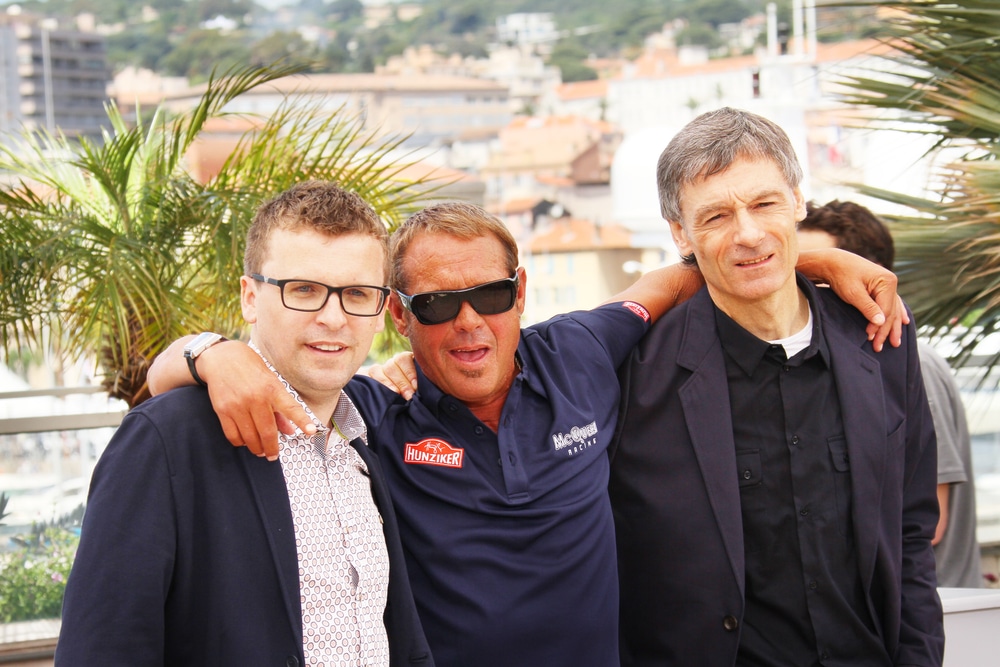
Chad McQueen, 63, Sept. 11 in Palm Desert. Chad was best known as the son of Steve McQueen, the quintessential anti-hero of the 1960s and ’70s. But Chad, who moved to Palm Desert after his mother, actress Neile Adams, bought a home there, had his own successful, eclectic career. He played “Dutch,” the bad-ass jerk from Cobra Kai in the original “Karate Kid” film. But, like his dad, his real love was racing cars and motorcycles. He competed around the world and founded McQueen Racing to develop high performance racing vehicles and accessories. He broke a leg, multiple vertebrae and ribs in a warmup session for the Daytona International Speedway’s Rolex 24 in 2006, which prevented him from ever racing again. It also prevented him from reprising his role in the long-running “Cobra Kai” TV series.
Allan Blye, 87, Oct. 4 at his home in Palm Desert. Allan was one of the Coachella Valley’s great unsung celebrities, and one of the nicest. He was nominated for 16 Emmys, winning twice for producing “Van Dyke and Company,” starring Dick Van Dyke, in 1977, and for writing “The Smothers Brother Comedy Hour” with Steve Martin, Bob Einstein and others in 1969. He wrote some of the greatest, most groundbreaking variety shows of all time. Besides the aforementioned series, he wrote for “The Sonny and Cher Comedy Hour” and Sonny Bono’s ill-fated sequel, “The Sonny Comedy Revue.” He was a writer on “The Andy Williams Show” and also the voice of the cookie-loving bear. He and Einstein wrote and produced “Bizarre,” “Super Dave,” and “Redd Foxx,” which only lasted two episodes before Foxx decided he just didn’t want to do TV.
He also co-wrote Elvis Presley’s 1968 “Comeback Special.” He told me he and his partner, Chris Bearde, interviewed Elvis to build an autobiographical narrative, and afterwards, they’d see Elvis chill with his guys and sing blues and gospel songs. They realized that was the super cool, so they added a scene with that same vibe – Elvis singing with his guys throwing out wisecracks, and that’s what rejuvenated Elvis’ career. Elvis told his manager, Col. Tom Parker, he wanted to play live again, and he played Las Vegas and toured for the rest of his life.
Blye also was a devout Jew with a good singing voice, which he used to good effect as a cantor in Beverly Hills. He also loved Palm Springs. He was an original investor in “The Fabulous Palm Springs Follies,” started by his Toronto friend, Riff Markowitz. It was a huge success, running from 1990 through 2014 in the Plaza Theatre. But most of the attendees came by bus from out of town and they’d get back on the bus when it was over. So The Follies didn’t generate many hotel room nights. Allan then launched a similar show for the older generation called “Senior Class” in the Annenberg Theater. The plan was to package a tour including “Senior Class” and The Follies to get people to book a hotel room and boost tourism. Unfortunately, he couldn’t work out a packaging deal with Markowitz and “Senior Class” didn’t have the Follies’ legs.
I didn’t see much of Allan after that. But he attended this year’s Jewish Film Festival opening at the Palm Springs Cultural Center to hear another Toronto buddy, Alan Hamel, speak about his late wife, Suzanne Somers. It was very nice to see him again.
Jack Jones, 86, Oct. 23 of leukemia at Eisenhower Medical Center. I called Jack “a national treasure and an institution in the Coachella Valley,” in my news obit in October for The Post. He was a two-time Grammy Award-winner in the early 1960s who was touted as the next big jazz-pop singer after Frank Sinatra and Tony Bennett. He never ascended to that — partly, he used to joke, because Bennett kept going into his mid-90s. But great singers always respected his talent and, when he embraced jazz in the late 1980s, critics began touting his greatness, too. Jack, at least outwardly, didn’t seem to care about his lack of mass recognition. He was proud to be called “a singer’s singer,” and he celebrated that in the title song of his 1987 LP, “I Am A Singer,” re-inventing the original recording by soft rock duo Seals and Crofts.
When he moved to the desert a few years after that release, he seemed more concerned about being a good dad to his daughter, Nicole, than being Sinatra’s heir. He embraced the desert community, where he had spent much of his childhood with his movie star parents. He became involved in dozens of charities and served as a spokesman for the McCallum Theatre, where he announced, “I live here now!” He attended the celebration of my 30th anniversary at The Desert Sun and my Desert Sun retirement party 10 years later. We in the Coachella Valley were so lucky that one of the world’s great singers just wanted to just hang with us.
Related Articles

Palm Springs neighborhoods to compete in summer food drive challenge
The Center and ONE-PS are organizing a two-month competition to fight rising food insecurity as donations to the Community Food Bank typically decline during summer months.
For gay fathers, love, loss and the hope of being seen
A Palm Springs support group is helping gay and bisexual fathers navigate estrangement, late-in-life coming out, and the complicated meaning of Father’s Day.

Palm Springs moves forward with road safety study, fresh fixes for CV Link
From sorting out cyclist-pedestrian confusion on the CV Link to a deep-dive safety study on major corridors, city leaders are mapping out immediate and long-term fixes to make streets safer.