
2023 In Memoriam Part 1: Looking back on local luminaries we lost in the past year
In the first of a two-part series running during the final weekend of 2023, Bruce Fessier remembers musicians, athletes, and others who had significant connections to the desert.

There were so many deaths of notable persons from the desert in 2023, we’ve had to narrow them to 20 and turn them into a two-part series.
Here’s the first set of remembrances of people who made a difference in our world, featuring the A to L list in alphabetical order:
Local reporting and journalism you can count on.
Subscribe to The Palm Springs Post
Kenneth Anger, died May 11 in Yucca Valley at age 96. Anger may be best known for his book on Hollywood scandals, “Hollywood Babylon,” which Rolling Stone turned into a 1975 best-seller. But Anger was an enormously influential underground filmmaker who pioneered homoeroticism and helped make Aleister Crowley a pop-cult figure well after his 1947 death. I took a class at San Francisco State University in 1974 on what was then called “decadent film.” It was largely a study of Anger’s movies. “Fireworks” (1947) was such a stark exploration of homoerotica, it not only got him arrested, it earned him a friendship with sexologist Alfred Kinsey, who found it an aid to his study of homosexuality. “Inauguration of the Pleasure Dome” (1954) was a surrealist influence on Stanley Kubrick, incorporating Crowley’s controversial Thelemic philosophy and co-starring Crowley’s prophesized Scarlet Woman, Marjorie Cameron. We missed a chance to hear Anger lecture when he left a message saying it was such a beautiful day, he decided to jump off the Golden Gate Bridge, forcing the teacher to cancel the class and find him. I later interviewed Anger at his cottage behind the Harold Lloyd mansion in Palm Springs. We were talking about Crowley when some neon lights began flickering. A seriously frightened Anger said we couldn’t talk about him anymore because “he doesn’t like that.” Anger was a cultural disrupter back when disruption was a criminal offense.
Read Part 2 in the series here.
Morris Beschloss, May 10, Rancho Mirage. 94. I treasured my talks with Morris because he had such a deep understanding of world events. Look up “natural gas” on Wikipedia and you’ll find a citation from Morrie’s 2014 Desert Sun story on how the U.S. was the world’s leading natural gas producer. He told me he had retired from the PVC industry and was in a “pipes, valves and fittings” hall of fame. That seemed as quirky as, say, a Coachella Valley Media Hall of Fame. But I sat next to a nuts and bolts manufacturer at my high school reunion last year and he said he had heard of Beschloss. Morrie was in the 2002 inaugural class of Wholesaler Magazine’s PVC Hall of Fame. But Morrie always wanted to be a writer. He was sportswriter as a kid and, when he went into the valve manufacturing industry, he started writing for trade publications. He wrote about world news impacting the PVC Industry for The Wholesaler. After retiring to Rancho Mirage, he wrote an economics column on world affairs for The Desert Sun and did segments for local radio and television. His national influence was exemplified by the success of his son, Michael Beschloss, a CNN contributing historian specializing in U.S. presidents.
Leanna Bonamici, July 6, Palm Desert. 68. I last saw Leanna in March when we worked together on audio-visuals for an Amy’s Purpose event at Willie’s Modern Fare restaurant in Rancho Mirage. She looked so good, I had no idea she was still battling cancer and would be dead in three months. She was posthumously lauded as the founder of the Palm Springs chapter of Women in Film & Television, and for her many charitable gifts. But her greatest contribution was probably bringing film and TV production to the desert. Filmmakers have been shooting in the Coachella Valley since the early days of silent movies, but they always had to go back to L.A. to do studio work. Leanna, with help from her father and siblings, bought a defunct post office in Desert Hot Springs and turned it into Casablanca Studios. She formed Bonamici Productions and CV Studios Entertainment and made it her mission to give the many film and TV industry people in the desert a chance to work near their hometowns. She focused on women through her PSWFT chapter, but also produced a Shorts Showcase and shot TV pilots and films in her studio. Her business acumen earned her an Athena Award for Professional Excellence.
Gail Christian, April 12, Los Angeles. 83. Gail gained national prominence as one of the first Black on-air news correspondents, covering the 1976 trial of newspaper heiress-turned-SLA bank robber Patty Hearst for NBC-TV. She said she wanted to specialize in covering Black stories, and she built on that inclusive mission as news director of the Los Angeles PBS station, KCET, channel 28, producing the award-winning investigative series, “28 Tonight.” She and Lucy DeBardelaben, who she married in 2016, developed such a large Black and lesbian following, they began booking the Olivia Cruises and producing special events in San Francisco and Las Vegas before co-founding the Palm Springs Women’s Jazz Festival in 2002. I clashed with Gail when she refused to let women band leaders use their male sidemen. Was the possible sexual tension of a coed band more unsettling than the artistic tension of having to play with women just learning the band’s repertoire? The Women’s Jazz Festival always allowed men at their events. I never felt anything but truly liberating joy while sitting among mostly Black women at their festivals. But I respected Gail’s feelings about keeping the musicians all-female. She and Gail produced one of the best music festivals I’ve ever attended, with headliners including Diane Schuur, Dee Dee Bridgewater and Terri Lyne Carrington. It was devastating to learn that Gail died of complications from an intestinal surgery.
Bob Corwin, Dec. 14 90. Bob was another one I last saw in March, playing piano at Babaloo’s lounge in Palm Desert nine months before succumbing to cancer. He was one of the desert’s finest jazz pianists for 40 years, regularly accompanying Roberta Linn, Rose Kingsley and his talented wife, Samantha. But he also had an illustrious jazz history. He collaborated with such vocal greats as Peggy Lee, Anita O’Day and Carmen McRae. He was the long-time accompanist and musical stenographer for Johnny Mercer, co-founder of the Songwriters Hall of Fame and Capital Records, and a swinging big band singer for Paul Whiteman before settling for being the greatest lyricist of the mid-20th century. Bob married Mercer’s daughter, Mandy, in New York, and followed Johnny to Los Angeles and Palm Springs. Mandy said it was Bob who introduced her to the younger jazz cats he recorded with, including Chet Baker, Herbie Mann, Phil Woods, Jack Sheldon and Bill Evans. Jazzwax magazine called Corwin’s mid-1950s partnership with multi-instrumental Don Elliott “the closest pairing on the East Coast to the West Coast’s Chet Baker and Russ Freeman.” Corwin began playing local lounges at a time when Palm Springs had some of greatest jazz pianists in the country. Bob was always among the cream of the crop.
Conrad Dobler, Feb. 13, Pueblo, Colorado. 72. Dobler graduated from Twentynine Palms High School in 1958, but I was still hearing stories about his football exploits when I moved to Palm Springs in 1979. He was a two-way lineman for the University of Wyoming and he starred as an offensive guard for the then-St. Louis Cardinals, the New Orleans Saints and the Buffalo Bills from 1972-1981. He was named to the Pro Bowl three times in the mid-‘70s but he also earned a reputation as one of the nastiest linemen in football. Rams defensive tackle Merlin Olson, who lived part-time in Palm Desert after retiring from the NFL in 1976, said Dobler once bit him while trying to block him. Sports Illustrated put him on its cover as “Pro Football’s Dirtiest Player.” Dobler didn’t deny it. He thought his reputation might intimidate opposing linemen. He settled in the Kansas City area and was inducted into the Missouri Sports Hall of Fame in 2003.
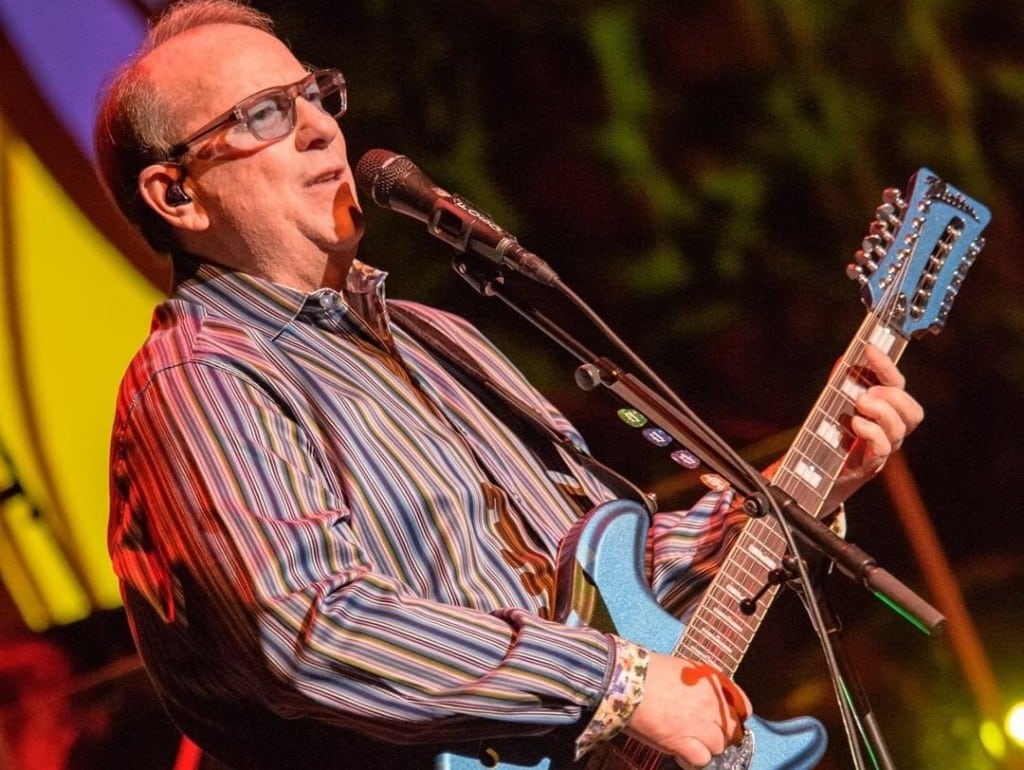
Jeffrey Foskett, Dec. 11. Formerly of Rancho Mirage. 67. Jeff joined the Beach Boys as a singer-guitarist during their “Kokomo” period. He then became the “right-hand man” of Brian Wilson’s solo band before rejoining Mike Love and the Beach Boys – with and without Wilson. It speaks volumes to Jeff’s good nature that he was able to play with Love and Wilson while they were battling in court over Beach Boys business. Jeff was loved by everyone. Actor and bandmate John Stamos said after his death, “Today, I lost more than a friend; I lost a part of my soul, my history – Jeffrey Foskett, my dearest friend, brother, and the brightest light in my life.”
I met Jeff backstage at a concert by original Beach Boy Al Jardine. He recognized me and said he and his wife had moved to Rancho Mirage. We did an interview over lunch and hit it off. I had interviewed Wilson and I told him Brian was probably my toughest telephone interview. So Jeff got me an in-person interview with Brian at his Beverly Hills home to prove he could engage in real conversations. Brian was still difficult, but Jeff and I continued e-mailing one another and doing interviews. In 2014, he told me he had left Wilson. He took a fill-in job with the band, America, and then agreed to rejoin the Love-led Beach Boys. But he said, “I didn’t leave Brian Wilson’s band to go to the Beach Boys.
After the Jeff Beck tour (with Wilson), I was completely stressed and burned out. That whole year, recording that album and that tour – a lot of things fell on me that normally would have been other people’s responsibilities. It was a lot of pressure. So, at the end of that tour, I kind of snapped – literally – and just said, ‘I can’t do this anymore.’” In 2019, after Jeff had been diagnosed with stage IV anaplastic thyroid cancer, we exchanged another e-mail. I can’t find it now, but I recall him being optimistic about undergoing some experimental treatments in Houston. I had left The Desert Sun, but he said whenever he played, I’d always have tickets and be welcome to see him backstage. But I never saw him again.
This month, I’ve discovered he had many warm relationships with people who were just as impressed by his spirituality and integrity as I was. Brian Wilson said he couldn’t have toured without Jeff being, “always there for me.” Then I read his obituary on Legacy.com. It contains what it calls a “Notable quote” that says, “I don’t really care how I’m viewed. As long as Brian knows that I love him and as long as Brian knows I had the time of my life working with him, I really don’t care about anything else.” It attributes the quote to “a 2014 interview for the Desert Sun.” It’s Jeff’s answer to my question. I’m so glad I was able to give Jeff the final word.
Barbara Foster Henderson, Sept. 16. 97. Barbara Foster, as she was known before marrying real estate developer Harry Henderson, always had big ideas. She once lived in a trailer in Section 14, the Agua Caliente land known for its low-income housing for minorities before long-term leases enabled the area to be redeveloped. She also modeled around town with Nelda Linsk and the future Barbara Sinatra, and appeared in the local annual revue, “Insanities.” She grew wealthy with her first husband, developer and 19-year Palm Springs City Councilman Bill Foster.
The Fosters made their first big land deal when they sold five acres they bought for $900 to the developers of Thunderbird Country Club. But Barbara seemed to promote ideas for Palm Springs out of civic pride. She led a 1960s campaign to build a Palm Springs convention center that she said lost support because it didn’t contain plans for a cultural center. In 1976, she led an effort to convert the city-owned Marcuse Auditorium in downtown Palm Springs into the 300-seat Center Theater for the Performing Arts. Former First Lady Betty Ford, who was living in a Thunderbird house built by Bill Foster, raised funds for the professional theater. But it closed in 1980 after box office troubles and playwright Dale Wasserman’s $2 million lawsuit to stop the theater from producing his play, “One Flew Over the Cuckoo’s Nest,” due to lack of royalty payments, according to a publicist. That same year, Barbara launched the nonprofit Cultural Center of Palm Springs, which proposed a performing arts center that would ultimately balloon into plans for a $175 million complex at 600 E. Tahquitz Way with a 3,000-seat theater, a 500-seat “community” theater, a 420-seat IMAX theater, a 10-screen cineplex, a Magic Castle, underground parking and seven atriums for a food pavilion, retail shops and boutiques, office space, luxury condominiums and three rooftop restaurants.
After plans were drawn and bonds were sold in 1985, the Agua Caliente Band of Cahuilla Indians objected to the complex on its land. The city’s redevelopment agency rescued the project by agreeing to buy 5.7 acres of “fee land” (not jointly owned by the tribe) and hold it for the nonprofit for five years. Meanwhile, Barbara launched a desert orchestra called Symphony West in 1983 that morphed into the Palm Springs Desert Symphony in 1984. It faltered in 1986 after singer Robert Goulet canceled his appearance and claimed the symphony didn’t pay 75 percent of his fee or the cost of sound and lighting. Then singer Enzo Stuarti cancelled his appearance due to nonpayment and Tony Bennett’s agent claimed he hadn’t been paid in full. Foster took Desert Symphony to Indian Wells, where it attracted 5,000 people for a concert with Henry Mancini and Mary Martin. But that was the organization’s last gasp before the symphony baton was passed to conductor Ben Benachowski, who rebuilt the symphony in 1989 from a string quartet. Barbara also founded the nonprofit Independent Tourism Council in 1983 to promote tourism “valleywide” with a visitor information center based in northern Palm Springs. That project also failed to sustain.
Meanwhile, the Sonny Bono-led early ’90s city council curtailed city support of the Cultural Center after it failed to materialize following a five-year waiting period. Bill Foster left the council in 1990 and died in 1992. But Barbara married Henderson and served as vice president of his Atrium Enterprises, Inc. In 1997, it announced plans to build a $40 million sports complex at Ramon and Crossley roads, featuring ice skating rinks, an extreme skating and biking park and a 180-foot human slingshot tower. It also failed to launch. But Barbara was instrumental in developing the Palm Springs Walk of Stars and she raised funds for a statue of Palm Springs Mayor Frank Bogert, which was ultimately removed from the front of the town’s city hall.
Bill Geddie, July 20, Rancho Mirage. 68. I didn’t know Bill Geddie. I didn’t even know he lived in my adopted hometown until I heard him interviewed by Patrick Evans and Randy Florence on their podcast, “Big Conversations, Little Bar.” Then I thought he was so interesting, so humorous, I thought, “I have to meet this guy.” And less than a week later, he was dead. Heart attack. It’s such a shame. He was a four-time Emmy winner best known for his work with Barbara Walters. He co-created “The View” with her, earning 13 Daytime Emmy nominations before hanging it up in 2014. He co-produced, wrote and directed Barbara’s “10 Most Fascinating People” and the “Barbara Walters” specials. That meant he procured the interesting people and wrote questions for Barbara to ask. Randy was irreverent enough to note that Bill started in show biz mopping the floors at KOCO-TV in Oklahoma. But Patrick sincerely thanked him for being a fascinating guest. I’m glad Bill got some appreciation from the hometown media.
Johnny Lujack, 98 in Naples, Fla. July 25. This legendary quarterback, who spent his winters at Desert Horizons Country Club in Indian Wells, was one of those guys, who, like Ralph Kiner, sacrificed his athletic prime to fight in World War II but made an indelible impact in a short sports career. Bill Dwyre, the great former Los Angeles Times sports editor now freelancing for Palm Springs Life magazine, captured Lujack beautifully in July when he wrote than Lujack would recount his tales over dinner at The Nest with a twinkle in his eye, adding a tinge of humility. He lettered in football, basketball, baseball and track in his second year at Notre Dame, Dwyre wrote. No one has done that since and no one had done that before. He succeeded Angelo Bertelli at quarterback six games into the 1943 season and carried the Fighting Irish to an unbeaten season. Bertelli got the Heisman Trophy and Lujack got his call to service. He spent two years in the English Channel on submarine duty. Then he returned to win the Heisman in 1947. Lujack went on to star for the Chicago Bears for four years, winning All-Pro honors in two of those years. He retired early to accept an assistant coaching job at Notre Dame. But, in just a few years of tossing the pigskin, Lujack developed a reputation that will forever link him with the greats of the game, guys like Sid Luckman, Otto Graham and Bobby Layne, who gritted it out before quarterbacks became the prima donnas of the gridiron.
Related Articles

Demuth Park’s long-awaited pickleball expansion opens in Palm Springs, nearly doubling court capacity
An estimated 300 picklers of all ages turned out to celebrate and test out the 22 new courts on Wednesday.
Photographer and Variety editor to be honored at 25th HRC Palm Springs Garden Party
Michael Childers and Marc Malkin will receive awards Nov. 7 at the Dinah Shore Estate. Tickets are available now.
Palm Springs prepares for strong El Niño with growing CERT ranks
Hundreds of residents have already received emergency training, and demand remains high as the city and volunteer groups brace for possible flooding and other severe weather.