
With results of investigation looming, city manager outlines plans to tighten financial oversight
Recommendations will include ending large lump sum payments, requiring audits every two years, better oversight of finances, and tougher screening for organizations without a strong history.
Two weeks after Palm Springs officials confirmed that a troubled Universal Basic Income (UBI) program was no longer being operated by a non-profit whose CEO is believed to have misappropriated $700,000 in taxpayer funds, city leaders have released details of new measures and more rigorous vetting they hope to implement to prevent similar incidents.
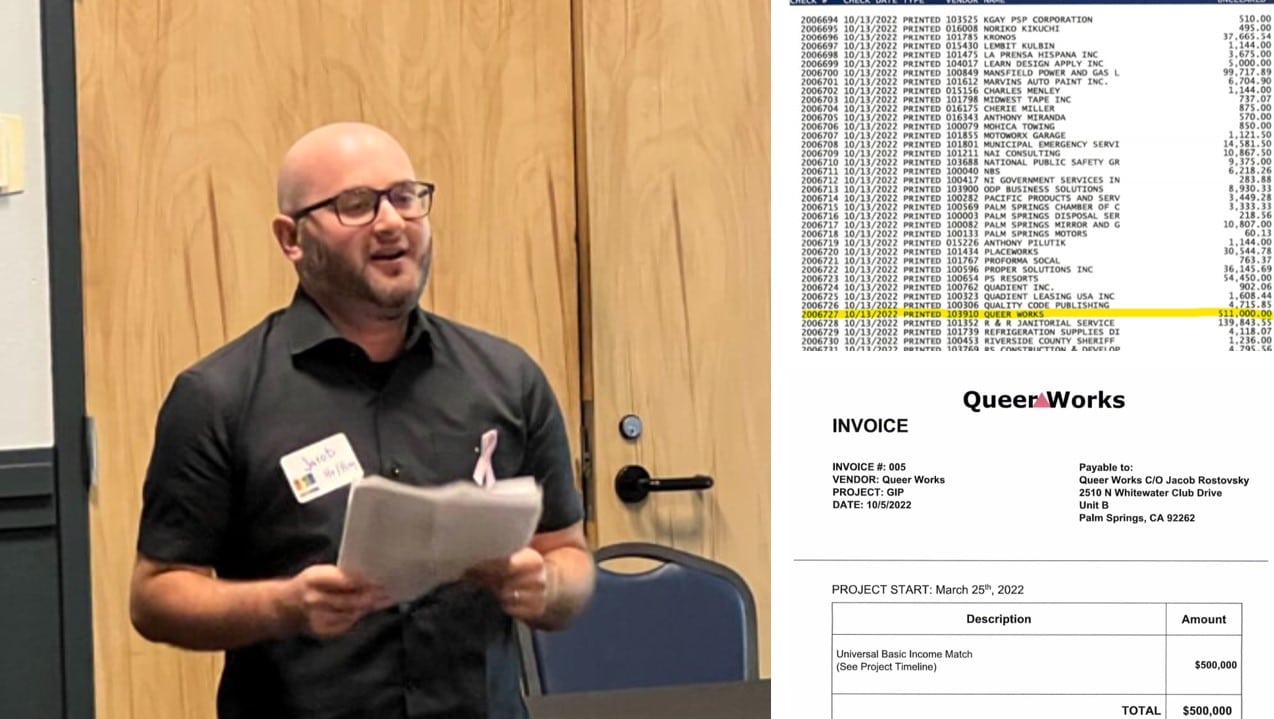
As first reported by The Post on July 19, the project that city funds helped launch and fund in 2022 had mostly failed to be delivered as promised by Queer Works CEO Jacob Rostovsky when questions began to be raised last year. Rostovsky’s actions are now subject to city and law enforcement investigations, including one being conducted by the Riverside County District Attorney.
Local reporting and journalism you can count on.
Subscribe to The Palm Springs Post
At issue is that Rostovsky billed for and received the entire $700,000 approved for the program by the Palm Springs City Council despite an understanding that most of the funds would be set aside for direct payments to program participants.
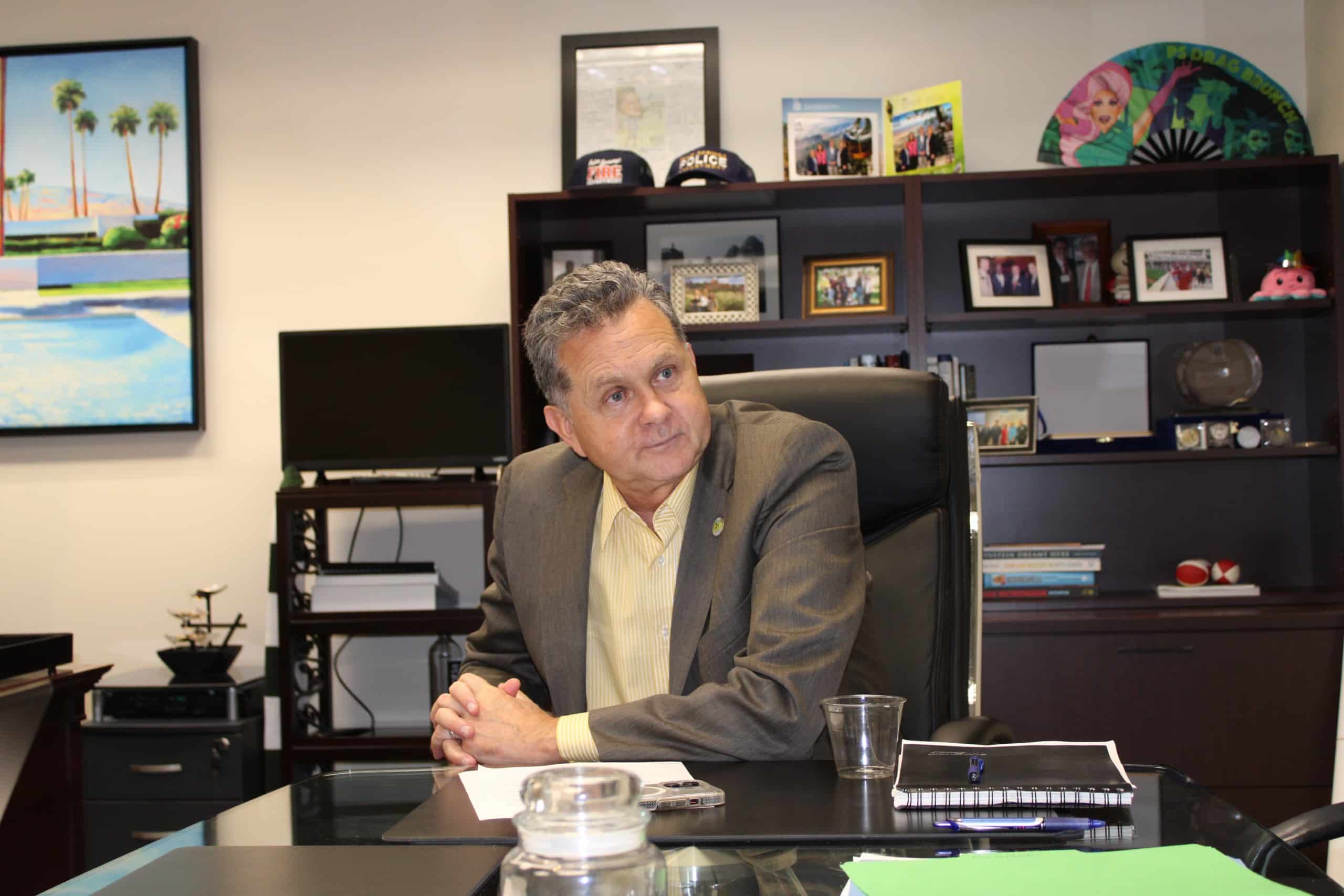
In a statement released Tuesday evening, City Manager Scott Stiles told The Post that he plans to bring forward new policies to the Palm Springs City Council at its first meeting in September, that details of what transpired during the approval and rollout of the UBI pilot program taught officials valuable lessons, and that it “underscores the need for additional best practices when collaborating with non-profits to administer community programs.”
Stiles said he would recommend eliminating lump sum payments for non-profit organizations seeking larger amounts of program grant funding, requiring organizations to submit an independent audit every other year, enhanced monitoring of financial reports, and stronger vetting of non-profit organizations without a proven track record.
All of these policies reflect specific moments where the city apparently failed to act when it came to overseeing Queer Works and the UBI program.
Looking back
In March 2022, the city council unanimously approved an initial $200,000 for the project. That money went to Queer Works with the understanding that it would be spent working toward developing an application for a state grant for more money to bring the pilot program to life.
Four months later, the council split on a decision to allocate an additional $500,000, with then-Mayor Lisa Middleton and Councilmember Dennis Woods casting no votes and Councilmembers Geoff Kors and Christy Holstege, along with then-Mayor Pro Tem and current Councilmember Grace Garner voting yes.
At that meeting, councilmembers were basing their decision on a staff report written in large part based on information from Queer Works and DAP Health, which was partnering with Queer Works to bring the UBI program to life.
“While staff has a basic understanding of guaranteed income projects and the grant opportunities provided by state funding, this staff report largely reflects information provided by DAP Health and Queer Works,” the staff report from 2022 states. “Staff has not conducted any further research but can do so at the request of council.”
That research never happened. Instead, a review of the meeting where the funding was approved shows that the presence of DAP Health CEO David Brinkman – who appeared on screen with Rostovsky – was a crucial endorsement of Queer Works that helped sway elected officials in putting their trust in the relatively unknown organization.
In a proposal for how the $200,000 would be used, Queer Works listed just five bullet points: development costs, two employees, materials and supplies, advisory council costs, and incentives.
None of the categories were further detailed, so Kors and Garner asked Rostovsky and Brinkman to provide more details on the program’s future budget should the state approve much-anticipated grant funding.
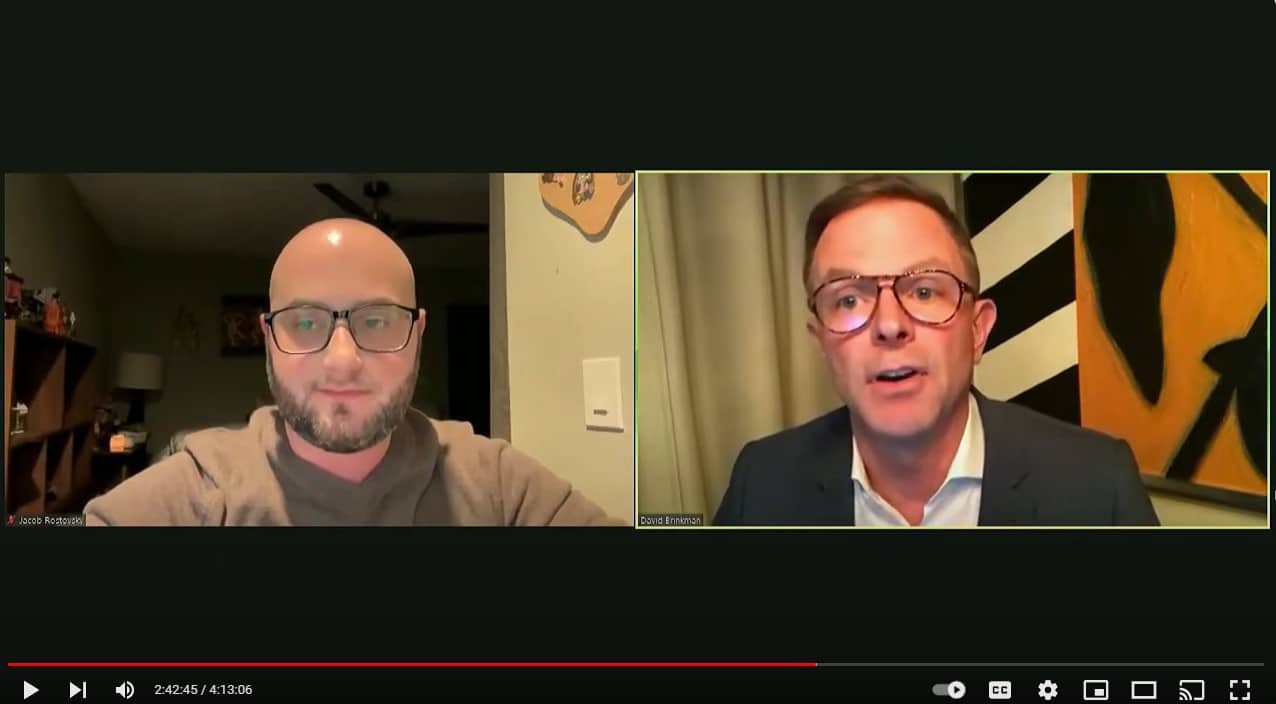
Kors pointed out that the math didn’t add up. At the time, the plan called for $1.8 million in total funding from the state and city to provide $900 monthly payments for 20 people for 18 months. That totaled $324,000 in direct payments, with the remaining $1.5 million used for administration costs.
Kors maintained that level of spending would defeat the purpose of the program, which was to spend more money on direct payments and less money on bureaucracy.
Brinkman told councilmembers that even though there was no detailed budget for the $200,000 or any future money, that would all come later, adding, “Our request is for you to support us in developing this program, including a detailed budget.”
Armed with a staff report based on information from Queer Works and DAP Health, no information about what a detailed budget for the project would look like, and with trust in DAP and Brinkman, councilmembers unanimously approved the $200,000.
Reached earlier this month, Rostovsky said Queer Works transferred the program and any remaining funds to DAP Health. The healthcare organization confirmed taking over the program on July 12. Still, neither its spokesperson nor Rostovsky could offer specifics about how much of the funds from Queer Works might have been available to DAP Health.
Red flag raised
Letters exchanged between the city and Rostovsky’s lawyer suggest that there was little left to transfer.
A back-and-forth exchange between City Attorney Jeffrey Ballinger and Rostovsky’s lawyer, viewed by The Post on Tuesday, shows that the parties were engaged in a bit of a cat-and-mouse game that came to a head in mid-April. It was then that the city gave Rostovsky a deadline to supply information it requested or face cancellation of the UBI program agreement and the return of any remaining monies.
In letters between the attorneys, the city alleges Rostovsky needed to be more forthcoming with the requested documentation.
After the City Council authorized paying Queer Works to implement the UBI program in March and July 2022, Rostovsky had supplied invoices and program updates. However, following an audit of the UBI program that began after a request by Middleton in December 2023, the city sought additional documentation from Rostovsky that Ballinger said was not supplied.
However, one particular exchange between Stiles and Rostovsky on April 2 may have sent shockwaves through City Hall. It was then, Ballinger wrote on April 16, that Stiles learned taxpayer funds that were supposed to be used by Rostovsky for the UBI program had gone elsewhere.
“We are writing with regard to the status of the UBI project, and recent information you have shared, which raises serious concerns with the city,” Ballinger wrote in the April 16 letter to Rostovsky. “Specifically, on April 2, 2024, you indicated to the Palm Springs city manager that you redirected approximately $140,000 of the UBI Project funds to help persons not enrolled in the UBI Project, but who are victims of domestic violence and/or were facing homelessness.
“You indicated that you believe that approximately $60,000 in funds remained in Queer Works UBI Project account, and that you are working to replenish the funding into the UBI Project account via other grant programs or through your own personal efforts.”
“The city can appreciate your desire to assist victims of domestic violence or those facing homelessness,” Ballinger continued. “However, the (agreement with the city) calls for a UBI program; not a general charity program for Queer Works to administer at its choosing.”
Ballinger concluded the letter by giving Rostovsky until the end of business on April 24 to provide the city “all remaining UBI Project funds, all past-due periodic progress reports, and all requested information” or “the city will terminate the (agreement), and shall pursue any and all legal remedies available to it to recover any misdirected funds.”
CEO disputes claims
On April 24, Rostovsky – through attorney Michael Schafler – disputed claims that he had not submitted the necessary progress reports, stating that it was his understanding that after previously submitting monthly reports, only quarterly reports were now due and that the next report was not needed until May.
Schafler also claimed the city had only alerted the Queer Works CEO about the UBI program audit in March and that “it is not accurate or fair to suggest that the request for information from Queer Works had been pending for several months.”
He went on to list documents that Rostovsky had supplied, including Queer Works general ledger reports, monthly and annual financial statements, and copies of bank statements and tax returns.
Additional documents could not be delivered until May, Schafler wrote, “For various logistical and personal reasons,” including the fact that many of the documents “require significant redactions to address privacy concerns.”
“Queer Works appreciated that the city has an obligation to ensure that public funds are being used in accordance with the policy and programs authorized by the City Council,” Schafler concluded. “It is … highly focused on assuring that the program continue or, if it cannot, that the health, safety, and wellbeing of the active program participants … be the highest priority during the transition or termination of the project.”
© 2024 Valley Voice Media
Authors


Related Articles

Palm Springs City Council approves response to grand jury report on $700,000 grant oversight failure
During Wednesday’s council meeting, several members expressed concerns about the city’s response, particularly regarding a key finding about financial losses.
Grand jury: City lacked proper grant oversight when it lost over $700,000 to alleged fraud
In a response, the city acknowledged the grand jury’s findings and said it had already begun addressing the issues identified in the report.
Grand jury indicts Queer Works CEO on multiple fraud charges
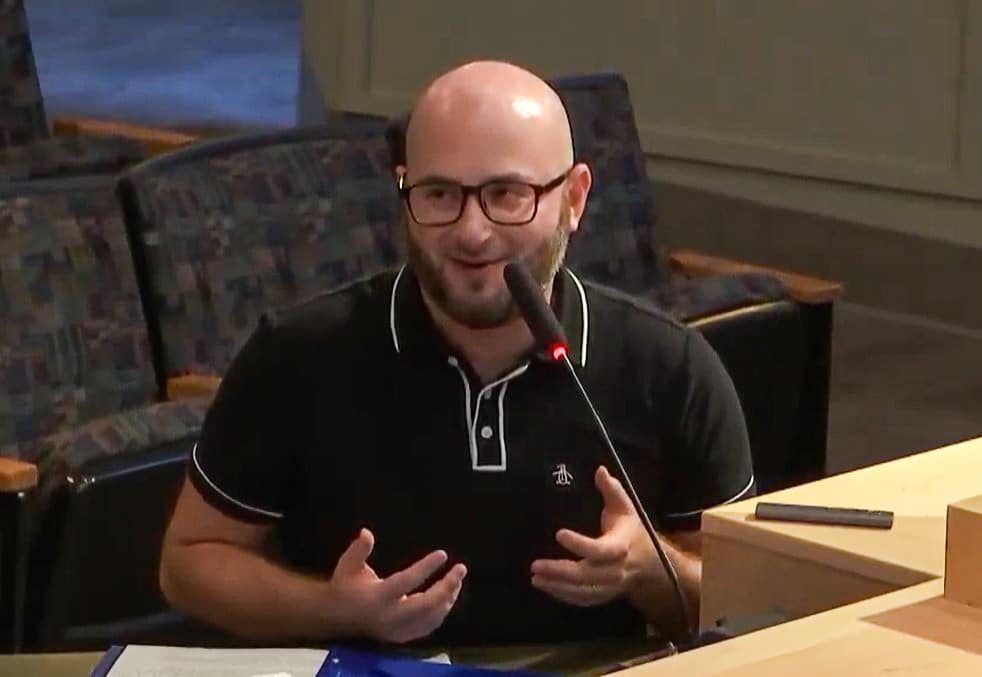
In an announcement made Wednesday, Queer Works founder Jacob Rostovsky is accused of misusing over $840,000 in public funds intended for housing assistance and basic income payments.