
‘This is the vision of the entire tribe’: Agua Caliente museum, plaza opened to public more than five years after breaking ground
For members of the tribe, completion of the project signifies the end of work dating back 30 years. More importantly, it allows them to tell their story in their own voices.

It’s not every day one of the most significant cultural projects in the state opens in the heart of the city’s downtown, but Friday was that day.
More than five years after ground was first broken, the Agua Caliente Band of Cahuilla Indians welcomed the public as it opened the doors to a massive museum and adjoining cultural plaza at the intersection of East Tahquitz Canyon Way and Indian Canyon Drive. Those facilities join a 40,000 square foot luxury spa that opened at the site earlier this year.
Local reporting and journalism you can count on.
Subscribe to The Palm Springs Post
The spa is in its fifth iteration, and the entire project sits on the site is one of the tribe’s most sacred spots. It’s there that a hot mineral spring — known as Séc-he — bubbles to the surface, containing water believed to be more than 12,000 years old.
Inside the 48,000-square-foot museum, visitors learn the story of the original people to call this area home, told in their own voices. Five different display areas chronicle the tribe’s history and tell the story of its connection to the land. Included in the exhibit are artifacts that were unearthed during excavation for the project.
For members of the tribe, completion of the project signifies the end of work dating back 30 years. More importantly, it allows them to tell their story in their own voices.
“This represents our culture, it represents our traditions, it represents our stories, and it represents our history,” said Tribal Chairman Reid D. Milanovich during brief remarks Friday afternoon. “That’s all been passed down generation by generation and told to us by the generations that came before us.”

After receiving proclamations from Palm Springs Mayor Grace Garner and others representing state and federal leaders, Milanovich explained the project is “not just another museum” in that it was built with the input and likeness of more than 500 tribal members.
“This is the vision of the entire tribe,” he said. “Every member is included in the process. In the museum, every face you see in every video are all Agua Caliente people. This is 100% ours.”
Pointing to the earth tones used in the museum and spa, the subtle architecture that helps buildings blend in with their backgrounds, and landscaping that resembles nearby Indian Canyons, Milanovich said it’s no accident that all the tribe’s projects — from resorts and casinos, to spas, golf courses, and even a gas station — share a common aesthetic. All are designed to provide a seamless connection to land the tribe has called home for thousands of years.
“It just goes back to the vision,” he said. “We’re the original people of this land, so we understand this land better than anyone at all.”
If you go: The museum is open from 10 a.m. to 5 p.m. Tuesdays through Sundays. Admission ranges from $5 to $10, and is free for Native American tribal members, active duty U.S. military personnel and U.S. military veterans. Find more information online here.
Author
Related Articles

Palm Springs Speaks to open season eight with Go-Go’s co-founder Jane Wiedlin
Wiedlin will discuss her new memoir, perform a few songs and sign books Dec. 8 at the Palm Springs Cultural Center.
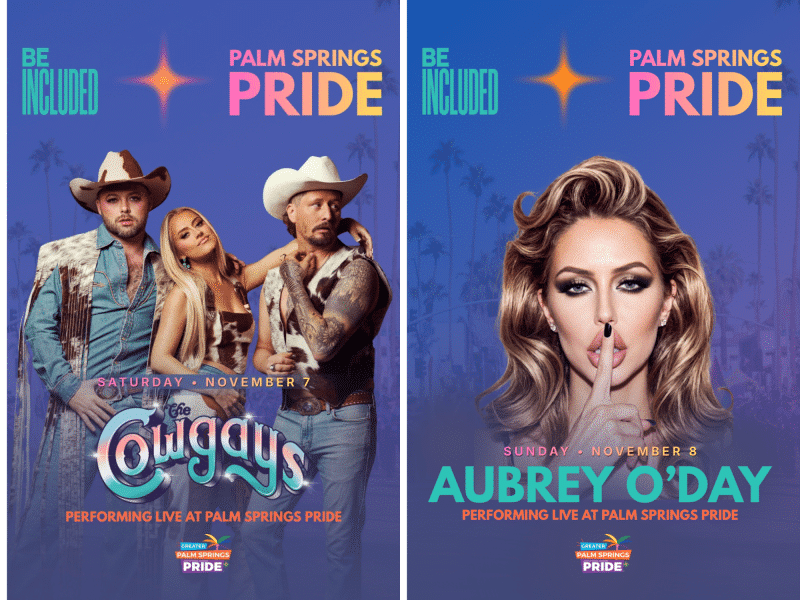
Greater Palm Springs Pride names Aubrey O’Day, The Cowgays as 2026 headliners
The free, three-stage festival marks its 40th anniversary Nov. 6-8 in downtown Palm Springs.

Palm Springs LGBTQ+ book festival announces full lineup, adds Ty Herndon as headliner
Pride on the Page’s 5th annual event is free this year for the first time, with Grammy-nominated country singer Ty Herndon discussing his memoir at the evening program on Nov. 14.