
Solar solutions proposed to reduce Swim Center’s carbon footprint
The city pool is part of Sunrise Park, a 38-acre campus that many hope can not only be an example of sustainability, but also restored, renovated and protected.
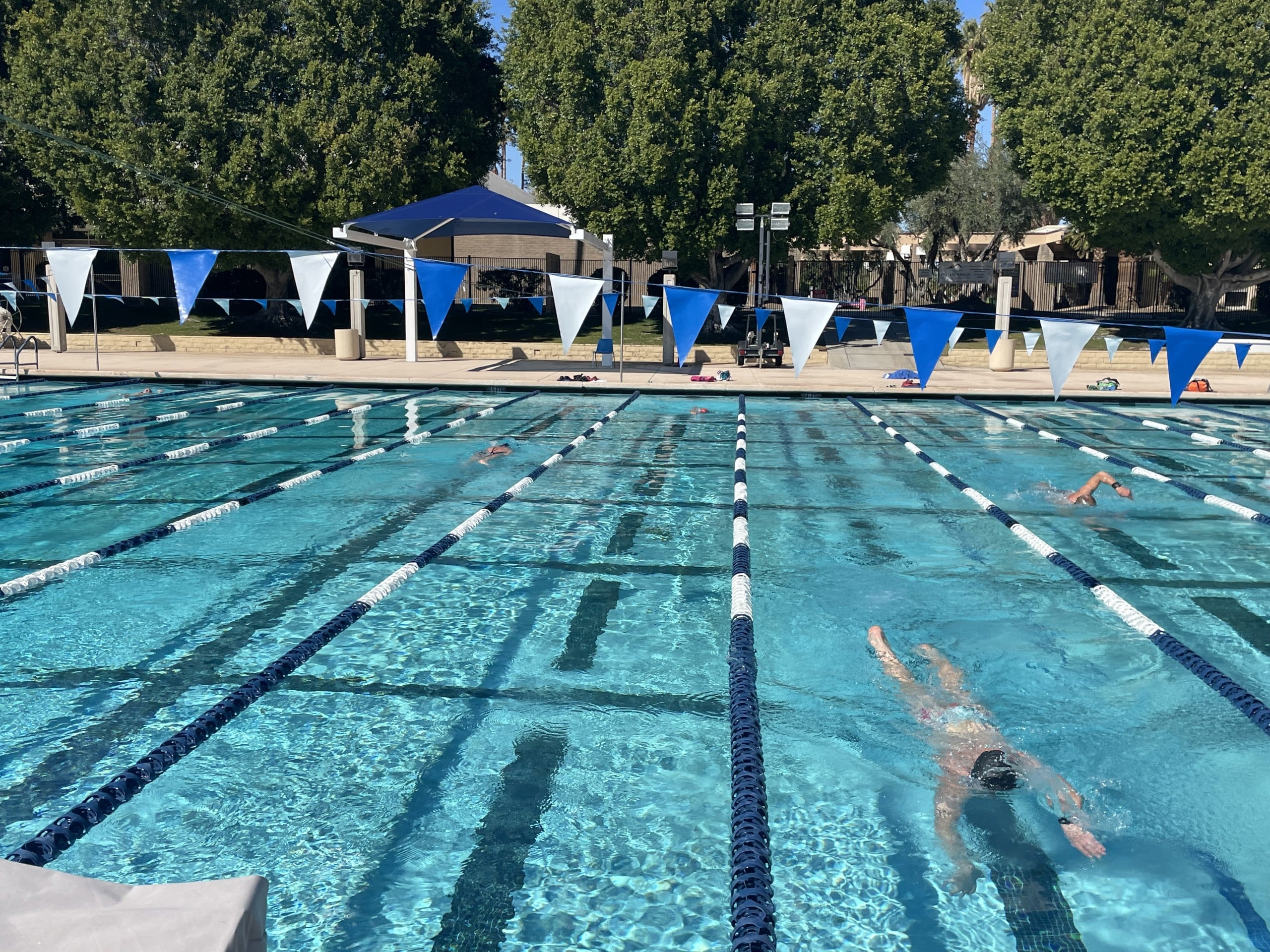
Palm Springs could explore solar solutions to reduce the carbon footprint of its swim center, which might be the city’s largest consumer of fossil fuels for heating. The 500,000-gallon pool at the Palm Springs Swim Center is maintained at 80 degrees year-round, requiring a tremendous amount of non-renewable energy.
The Sustainability Commission is considering solar installations and other renewable energy options to address this issue. Designer Tom Dolle presented his vision for Sunrise Park, where the swim center is located, at the commission’s June 18 meeting. His plan was initially rolled out last October.
Local reporting and journalism you can count on.
Subscribe to The Palm Springs Post
“The swim center is an interesting one because in the late seventies, when there was the second gas crisis, there were three very serious proposals to do solar,” Dolle said. “And they got to the point of being funded and approved and ready to go, and then for some reason, they fell apart.”
Dolle emphasized the importance of creating a sustainable swim center, stating, “It would be great to have a big initiative to do a big solar project that could actually heat the pool. And what an incredible story that would be for our community to have this very positive, sustainable swim center.”
Sustainability Director Lindsey-Paige McCloy said it’s difficult to figure out exactly how much non-renewable energy is used to heat the pool. But, she said that according to the city’s latest greenhouse gas inventory, pool heating is the single largest use of natural gas in the city.
“And that’s for all pools, not necessarily just the city pool,” she said. “So I would not be shocked if [the city pool] was a relatively high consumer of natural gas.”
The swim center is part of the larger Sunrise Park, a 38-acre campus near Palm Springs High School and a block away from the planned College of the Desert Palm Springs campus. Dolle’s vision for renewing the park includes historical protection, sustainability and solar, better signage and identity, and restoration, renovation and adaptive reuse.
“Let’s establish Sunrise Park as a leader in sustainability through targeted turf removal, desert landscaping, tree planting along the perimeter of the park, solar installations and strategically located shade structures,” Dolle proposed. “Once enacted, that program can be extended to other city parks.”
Dolle suggested that a section of Sunrise Park would be a great location for temporary or permanent art installations that use the sun and solar energy as the theme, visibly demonstrating that Palm Springs is a leader in desert sustainability.
The Sustainability Commission discussed exploring some of Dolle’s ideas, including cool pavement coatings and utilizing solar energy throughout the parks.
Author

Related Articles
City leaders, public thank retiring city manager and fire chief, list their accomplishments
Council members and residents praised Scott Stiles and Paul Alvarado Wednesday for storm response and public service. Both men gave the credit to their staffs and the community.

Temporary dog park approved for Victoria Park; Demuth Park project progressing
Parks commissioners backed a pop-up pilot with Blue Zones Palm Springs that will open Dec. 11 and run through about the end of January, with a resident survey to gauge interest in a permanent site.
This week at City Hall: Planning Commission to weigh delivery hub; City Council postpones underground utility hearings
A proposed warehouse on 19th Avenue, a pop-up dog park and a canceled public hearing on a nearly $10.1 million utility project top meeting agendas this week.