
Sustainability Commission moves to dissolve ad hoc subcommittees after wave of resignations
The city’s new sustainability director said the commission’s three standing subcommittees and six separate ad hoc subcommittees were redundant and poorly attended after several recent commissioner resignations.
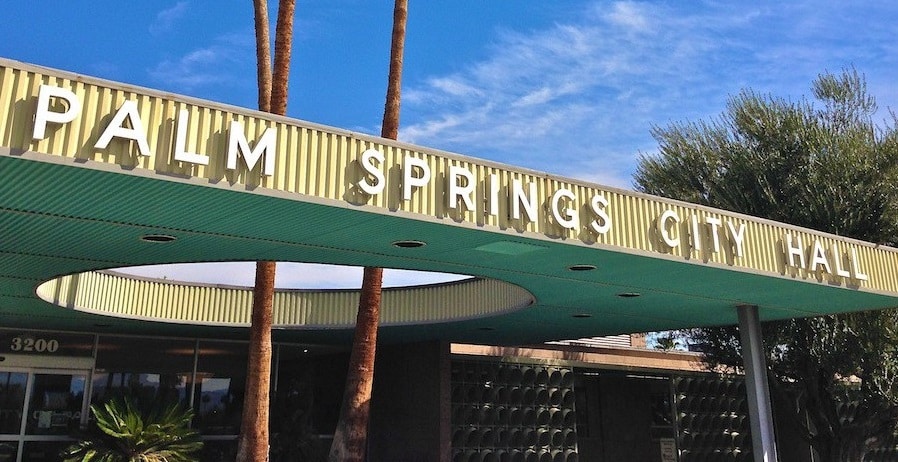
The Palm Springs Sustainability Commission on Tuesday dissolved all of its ad hoc subcommittees, citing thinning membership after the recent resignations of commissioners Bernard Rottner and Michael Frick.
The three standing subcommittees, Waste Reduction, Climate Action, and Active Transportation, remain in place but the six Ad Hoc Subcommittees on bird strikes, leaf blowers, commission outreach, pesticides and wildlife, noise, and light pollution were all dissolved by the commission on Tuesday.
Local reporting and journalism you can count on.
Subscribe to The Palm Springs Post
Standing subcommittees cannot be dissolved without the issue being on the agenda and formally voted on by commissioners.
The commission on Tuesday elected Don Barrett as chair and Ken Alexander as vice chair, succeeding Rottner, who had chaired the panel and led its standing Climate Action subcommittee. Frick, who chaired the Active Transportation Subcommittee, had also served on four of the commission’s six ad hoc subcommittees. Commissioner Erin Boyd, who leads the standing Waste Reduction subcommittee and is also a member of three ad hoc subcommittees, was not in attendance Tuesday.
Sustainability Director Jasmine Fields, who was appointed to the job on March 30, told the commission the ad hoc groups had accumulated over time without the structure needed to justify keeping them open.
“Ad hocs should have a specific project or a timeline, and those things were not established with these ad hocs, so we’re going to be closing them out,” Fields said.
She said many of the ad hoc subcommittee issues involved sustainability as a whole, and it made more sense for the whole commission to tackle those issues rather than niche splinter groups.
“I need justification as to why we should keep ad hocs open, and I don’t have that right now,” she said.
The recent departures left even some standing subcommittees with almost no participation. She singled out the Climate Action subcommittee, which had shrunk to herself and a single commissioner, Kathleen Cohn.
“With just Kathy just on there, that does not make sense to me,” Fields said. “For us to continue that…I’m saying that from a staff standpoint because we’re posting agendas almost every week.”
Between February and July, the commission grew from eight to 12 members, earlier in the year commissioner Prema Walker left and five new members had joined.
With so much turnover, one commissioner suggested the time is right for many of the ad hocs to be dissolved.
“Five of us are new, so we have a bunch of fresh faces, fresh ideas,” he said. “We have so many new members that these [subcommittees] could be streamlined or merged.”
Commissioners agreed to consider dissolving or combining some standing subcommittees on the agenda for their next meeting in September, but noted that the recently formed Active Transportation Subcommittee was in no danger of being dissolved.
The resignations also delayed a related item: a proposal to install bike racks at three trailhead locations at an estimated cost of $40,000. The plan had been developed through the Active Transportation Group under Frick before his departure.
After discussion over the appropriateness of the proposed sites, a commissioner made a motion, “to continue this to a date uncertain, just until we analyze the active transportation plan, so we can prioritize sites better,” the commissioner said.
The motion passed, with one commissioner abstaining.
Author

Related Articles
City plans to study downtown walk buttons, Belardo bike markings in safety plan
Members of the Active Transportation Subcommittee this week urged faster action on pedestrian crossings and shared-lane confusion.

CV Link path under Ramon Road to close fully for two-year bridge reconstruction
City staff say no part of the path can stay open while crews dig 23 feet down while a preferred detour along Sarah Street in Cathedral City is stalled over property access.

City to host listening sessions on heat and shade mitigation plan this fall
The $400,000 state-funded plan will target vulnerable residents who walk, bike or take transit amid rising heat-related illness.