
Palm Springs preservation group steps in to help revive a piece of Palm Desert history
The Palm Springs Preservation Foundation has offered to fund conceptual design work for a recreation of a historic Palm Desert entry sign designed by noted desert architect William F. Cody.
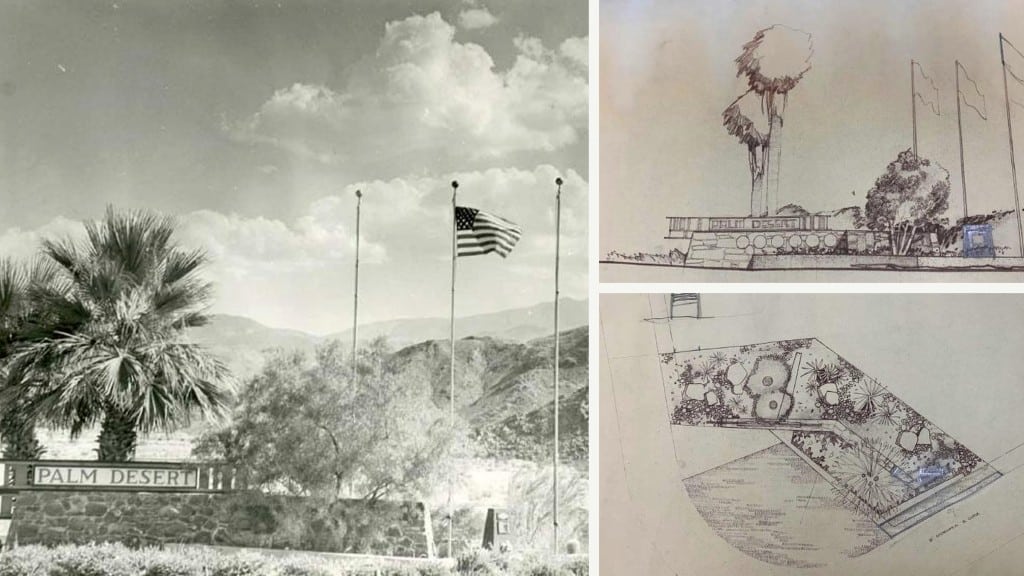
A Palm Springs preservation group is putting up as much as $30,000 to help a neighboring city revive a piece of Coachella Valley architectural history.
The Palm Springs Preservation Foundation has offered to fund conceptual design work for a recreation of a historic Palm Desert entry sign designed by noted desert architect William F. Cody. The Palm Desert City Council voted 4-1 last week to accept the offer and begin the process of hiring a consultant.
Local reporting and journalism you can count on.
Subscribe to The Palm Springs Post
Cody designed the original sign in 1968 for a site at Highway 111 and Painter’s Path. It was built on property Cody donated to Palm Desert and dedicated that May. The sign was later removed for commercial development and was gone by January 1981.
Cody was an influential figure in the Palm Springs architectural canon whose work in the city spans icons like the Del Marcos Hotel (1947), L’Horizon Hotel (1952), St. Theresa Catholic Church (1968), and the Palm Springs Public Library Center (1975).
The Palm Springs-based foundation offered in June to reimburse Palm Desert for up to $30,000 in architectural documentation and conceptual design costs. Palm Desert will hire and manage the consultant through its normal procurement process, while the foundation reimburses eligible expenses.
“It’s a pretty great sign,” Ron Marshall of the Palm Springs Preservation Foundation told councilmembers Thursday. “I think it proclaims that Palm Desert has some interesting architecture going on here, and I think the architecture in Palm Desert, quite frankly, is totally underappreciated.”
Marshall emphasized the significance of the Palm Springs group’s investment in preserving regional desert modernism.
“I know that $30,000 doesn’t sound like a lot in a good-sized city’s budget, but for PSPF, a relatively small nonprofit, I can tell you that that’s a lot of house tour tickets we’ve got to sell to raise $30,000, and I bring that up because I think it’s testament to how enthusiastic our board is about this concept,” Marshall said.
The consultant will research the original sign and develop drawings detailing its dimensions, materials, finishes and architectural character. The work will also include evaluating as many as three potential locations and preparing an initial estimate of what it would cost to rebuild the sign.
No site has been selected. Councilmembers discussed whether a recreated sign should be positioned primarily for motorists to see or placed somewhere more accessible to visitors who might want to photograph it.
The vote does not commit Palm Desert to rebuilding the sign. The conceptual plans will not include construction-ready engineering, and any future project would require another council vote, environmental review and separate funding.
The final cost could be considerably more than the foundation’s $30,000 grant. City staff estimates final design and engineering could cost another $30,000, while the overall project — including design, fabrication and installation — could reach roughly $330,000.
With the foundation covering the first $30,000, Palm Desert’s share could be as much as $300,000. Staff said that figure represents the upper end of an early estimate and actual costs are expected to be lower, although a more precise number will depend on the location and scope.
If Palm Desert ultimately moves ahead, money for final design and construction would be considered as part of the city’s fiscal year 2027-28 budget.
The Palm Springs Preservation Foundation told the city earlier this year that its board unanimously supported recreating the sign, describing it as an important example of midcentury design and a reminder of Palm Desert’s architectural history. The group also recommended drawing on the Palm Desert Historical Society and local historian Luke Leuschner as the design work moves forward.
Author

Related Articles
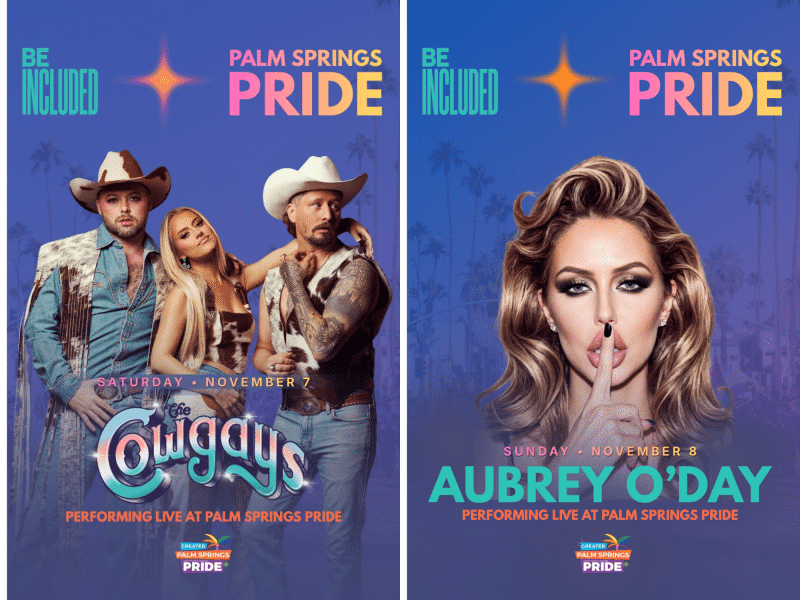
Greater Palm Springs Pride names Aubrey O’Day, The Cowgays as 2026 headliners
The free, three-stage festival marks its 40th anniversary Nov. 6-8 in downtown Palm Springs.
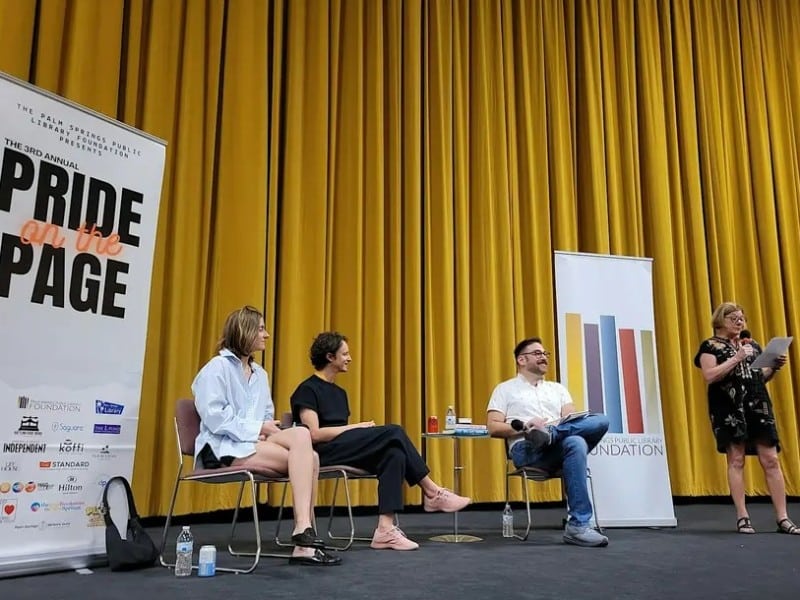
Palm Springs LGBTQ+ book festival announces full lineup, adds Ty Herndon as headliner
Pride on the Page’s 5th annual event is free this year for the first time, with Grammy-nominated country singer Ty Herndon discussing his memoir at the evening program on Nov. 14.
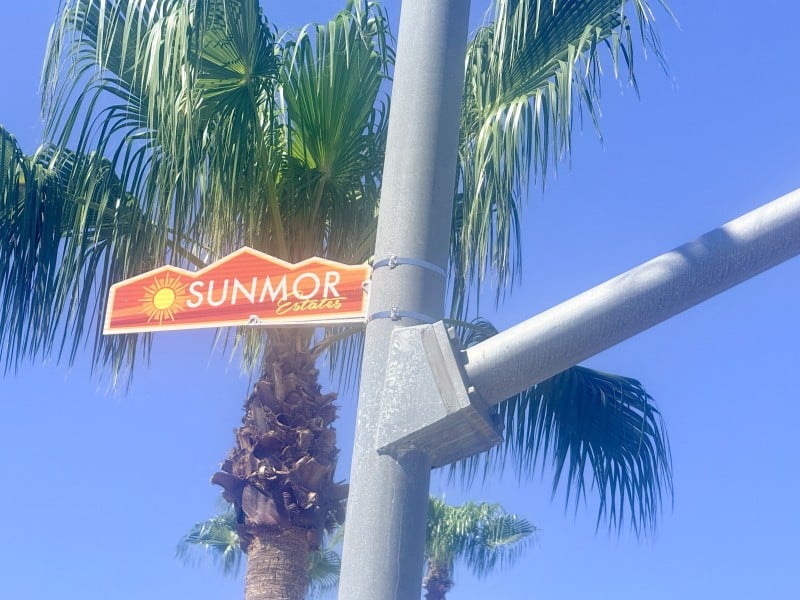
Nearly 1,000 neighborhood signs now mark Palm Springs streets as program nears full coverage
Palm Springs neighborhoods are adding custom colors and logos to city intersections, backed by a Measure J grant and ONE-PS’s push for 100% citywide representation.