
Palm Springs planning commissioners raise concerns about proposed 104-unit development
During a study session Tuesday evening, commissioners questioned financing, affordable housing details, and a proposed gate at The Village @ Racquet Club project.
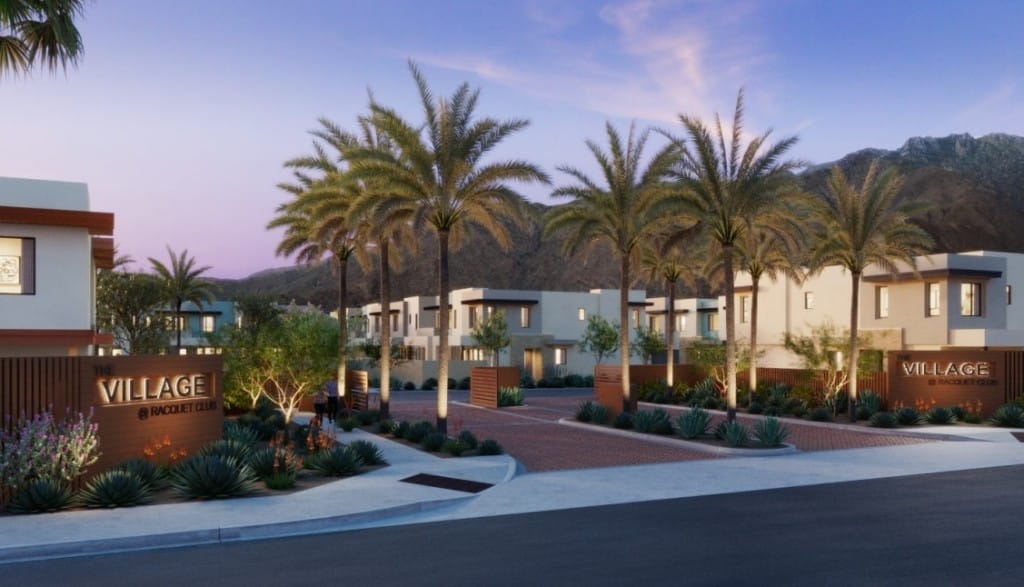
The Palm Springs Planning Commission raised numerous concerns about a proposed 104-unit residential development at Racquet Club Road and Indian Canyon Drive during a study session on Tuesday, questioning everything from financing to whether or not the community should be gated.
The project, called The Village @ Racquet Club, is being proposed by GHA Investments, LLC, which intends to develop the 8.23-acre site with 31 detached single-family homes, 53 townhomes, and 20 affordable apartments. The apartments would be designated for moderate- to low-income residents and include 14 studio units and six one-bedroom units.
Local reporting and journalism you can count on.
Subscribe to The Palm Springs Post
Commissioners asked for clarity from the developer about whether or not the 20 units would serve moderate, low or very low-income residents. Planning Director Christopher Hadwin explained that affordable housing definitions range from moderate income at 80 to 115% of area median income down to very low income below 30% of area median income.
The developer, Mario Gonzalez of GHA Investments, said he was “still determining” what made the most sense for the development but confirmed that he is working with the city as it relates to affordable housing.
“At this time, we don’t know…or, we have an idea where we’re going to be priced,” Gonzalez said. “But what we tried to do here was provide as many units as we can, sensitive to the area and knowing that prior to our development there were several projects that had higher densities.”
Vice Chair Lauri Aylaian questioned the developer about their plans for financing the project,
“Did you tally up how many tax credits you qualify for?” she asked. “That makes a difference, pretty much, as to whether or not you can build the project.”
Gonzalez acknowledged that affordable housing projects propose unique financing challenges, especially after redevelopment agencies were eliminated. He said again that he has met with city staff about the affordable component but details remain to be determined.
Aylaian told the developer that the affordable component of the project is critical because if approved, the city would be granting concessions on setbacks, building separation and open space requirements.
“Those are deep concessions, and in exchange, the public benefit has to be substantive.” she said.
The proposed gated entry sparked strong reactions from commissioners. Alternate Commissioner Hernandez said she opposes gated communities not just because of the inconvenience but because “it sends a message of exclusivity versus inclusivity” and gives residents a false sense of security.
Commissioner Robert Rotman added that he saw no justification for the gate based on the staff report, which mentioned protecting against traffic and parking impacts.
Gonzalez argued that buyers want safety, security and privacy, and that gates help maintain property values.
“All communities surrounding our project are gated: Colony Racquet Club and 43 at Racquet Club, and I don’t have to tell you about the unfortunate homeless crisis we are all living with, and it’s only getting worse,” Gonzalez said. “Theft is a huge concern whereby an unsecured community does not have a chance against the homeless or folks that have no business in your community other than monkey business.”
However, Aylaian pushed back on the security argument, saying the location is far from downtown and the wash where homeless individuals typically congregate because of access to services and transportation.
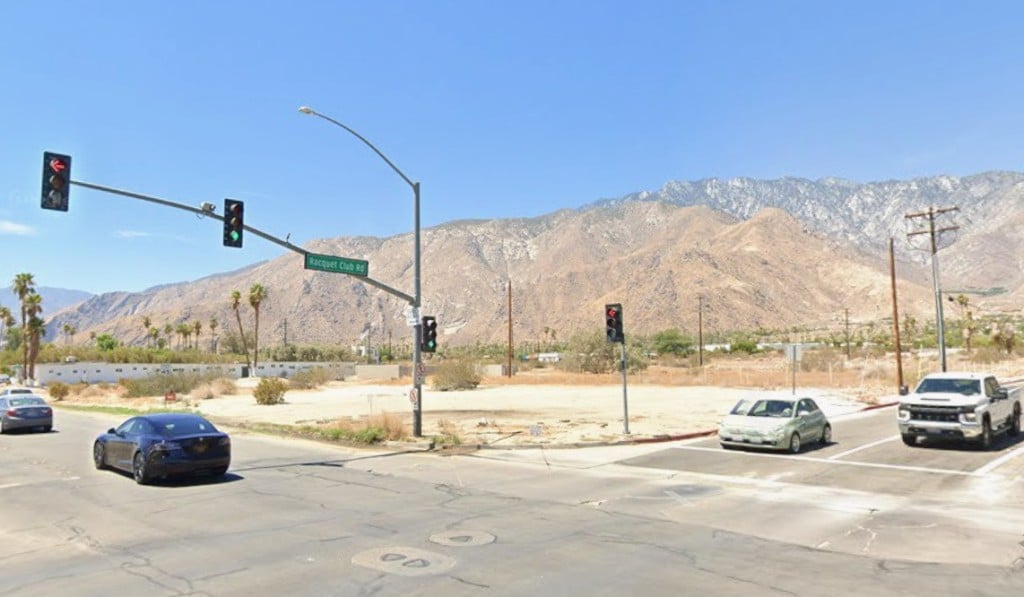
She encouraged the developer to work with the police department on Crime Prevention Through Environmental Design (CPTED) principles, which use landscaping, lighting and sight lines to enhance security without gates. Hadwin also noted the city’s general plan prohibits using gated communities and gates to control unhoused populations or address safety issues.
Commissioners also suggested more trees, and even eliminating some units to allow for more “breathing room” between units.
The project requires approval of a planned development district (PDD) application because it does not conform to various R-2 zoning standards. According to a staff report, the proposal includes reduced front setbacks along Racquet Club from 30 feet to 20 feet, reduced building separation from 15 feet to 10 feet, and reduced open space from 50% to 34%.
The site has a medium density residential designation allowing 6.1 to 15 units per acre. The proposal would result in a density of 12.6 units per acre.
No action was taken at the study session. The developer will incorporate the commission’s feedback before submitting a formal application.
Author

Related Articles
Council to review updates on Dream Hotel, Orchid Tree Hotel projects
City leaders will review a revised development agreement for the Dream Hotel and a milestone update for the Orchid Tree Hotel proposal when they meet next week.
Architectural Review Committee sends back plans for eight-home development, votes for a restudy
The Architectural Review Committee preferred a monochromatic palette, rejecting a Planning Commission request for more color. “I just don’t want it to be atomic ranch and kitschy,” one member said.
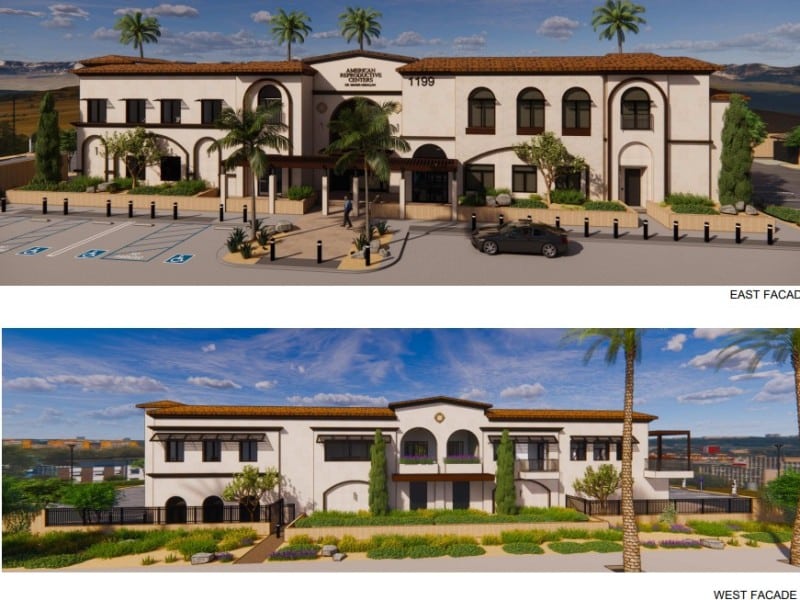
American Reproductive Center rebuilding plans move forward with security, design conditions
Planning Commission approves the project unanimously but calls for more contemporary architecture and better pedestrian access along Palm Canyon Drive.