
Palm Springs Planning Commission approves 60-Unit project on North Palm Canyon Drive
The proposed Siena Townhomes development will be built at the site of a former motel and include townhouses, a clubhouse, a pool, and dog park.

The Palm Springs Planning Commission approved a major development permit Wednesday for a 60-unit condominium complex along North Palm Canyon Drive, paving the way for new housing on the site of a former motel.
Monaghan Palm Canyon, LLC proposed the development – the Siena Townhomes — at 1875 North Palm Canyon Drive. The site previously contained a Shiloh Inn, but its buildings were ordered torn down by the city in 2021 after the planned Tova Hotel and Beach Club never came to fruition.
Local reporting and journalism you can count on.
Subscribe to The Palm Springs Post
As currently planned, the 4.37-acre site would contain two- and three-bedroom townhouses with attached garages, along with a community building featuring a clubhouse, pool, and dog park, and a right-in, right-out driveway from North Palm Canyon Drive.
The project follows recent zoning changes that support residential development and has been classified as an “in-fill” project under the California Environmental Quality Act (CEQA), qualifying for streamlined environmental review.
During deliberations Wednesday evening, commissioners debated whether a Conditional Use Permit (CUP) was needed for the residential component in the C1 zone but ultimately accepted staff’s interpretation that it was not required.
“We did have this discussion with the city attorney’s office,” said Planning Director Christopher Hadwin. “The way that we’ve determined that the CUP is not required in this case is this is one lot.”
The project’s design sparked discussion among commissioners, who requested several modifications. These included adding shade trees and public benches along Palm Canyon Drive, creating unisex restrooms in the clubhouse, and ensuring a uniform pool depth for both swimming and walking.
Concerns were also raised about the lack of landscaping and prevalence of garage doors in the interior street design. One commissioner suggested staggering the buildings to create more space for greenery.
“My biggest concern about this is just the street within the development and there not being enough landscape material,” he said. “It is literally, even though you’ve slightly twisted or jogged the garage doors, it’s still a sea of garage doors.”
The developer agreed to consider ways to integrate the clubhouse’s design elements into the residential units for a more cohesive look. The project will use Corten steel panels with brass accents, avoiding a corrugated steel aesthetic that some commissioners felt was overused.
Roof decks were approved with the condition that screening be added where needed for privacy between units. The Architectural Review Committee will further review building colors, window designs, and landscape treatments.
The approval includes conditions that no two adjacent units have the same garage door style and that a three-foot-wide sidewalk of integral material be added to the internal streets.
Applicant Mark Wortman said the project team would work to address the commissioners’ concerns and recommendations as they move forward with final designs.
“To the extent that we could play with it, we will,” Wortman said, referring to potential adjustments to building placement and landscaping.
The project now moves to the Architectural Review Committee for further refinement.
Author

Related Articles
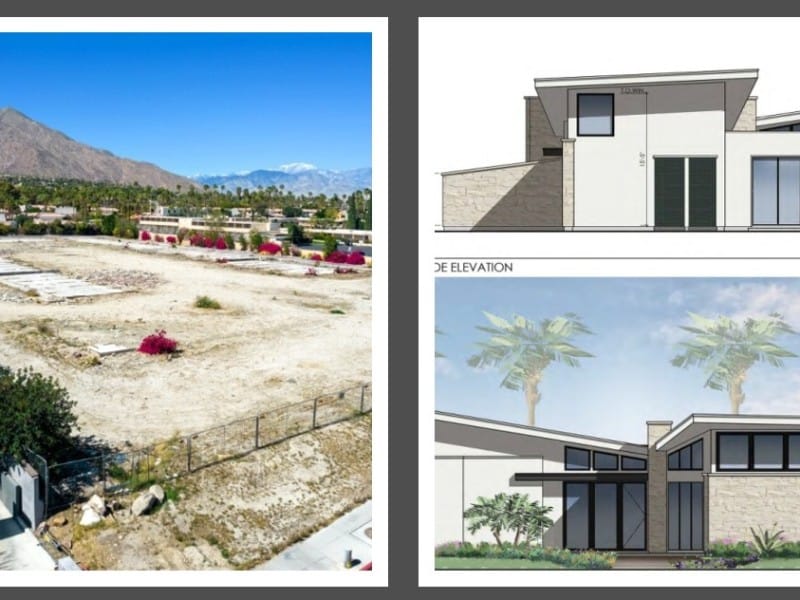
Palm Springs Planning Commission grants extension for 60-unit condo project on North Palm Canyon
Delays tied to reviews by Caltrans, Southern California Edison, and Desert Water Agency prompted the two-year extension request for the Siena Townhomes project.
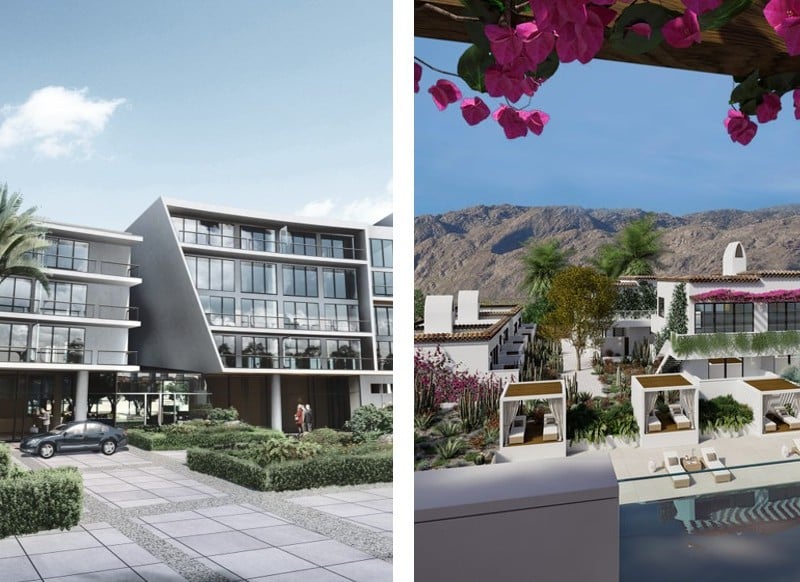
Palm Springs City Council hears updates on two long-stalled hotel projects
Both the Dream Hotel and the Orchid Tree Hotel have faced repeated delays, with revised timelines now pushing key milestones and completion dates further into the future.

Palm Springs commits $3 million to affordable senior housing project on church land
Seven units will carry a veteran housing preference, and approximately 36 units may be set aside for formerly unhoused individuals, contingent on rental voucher awards from the County of Riverside.