
Palm Springs officials ask to revisit Flock camera policy amid public pushback
After years of expanding the city’s surveillance network, the Palm Springs City Council is asking police for a public update on how the technology is being used and what safeguards are in place.
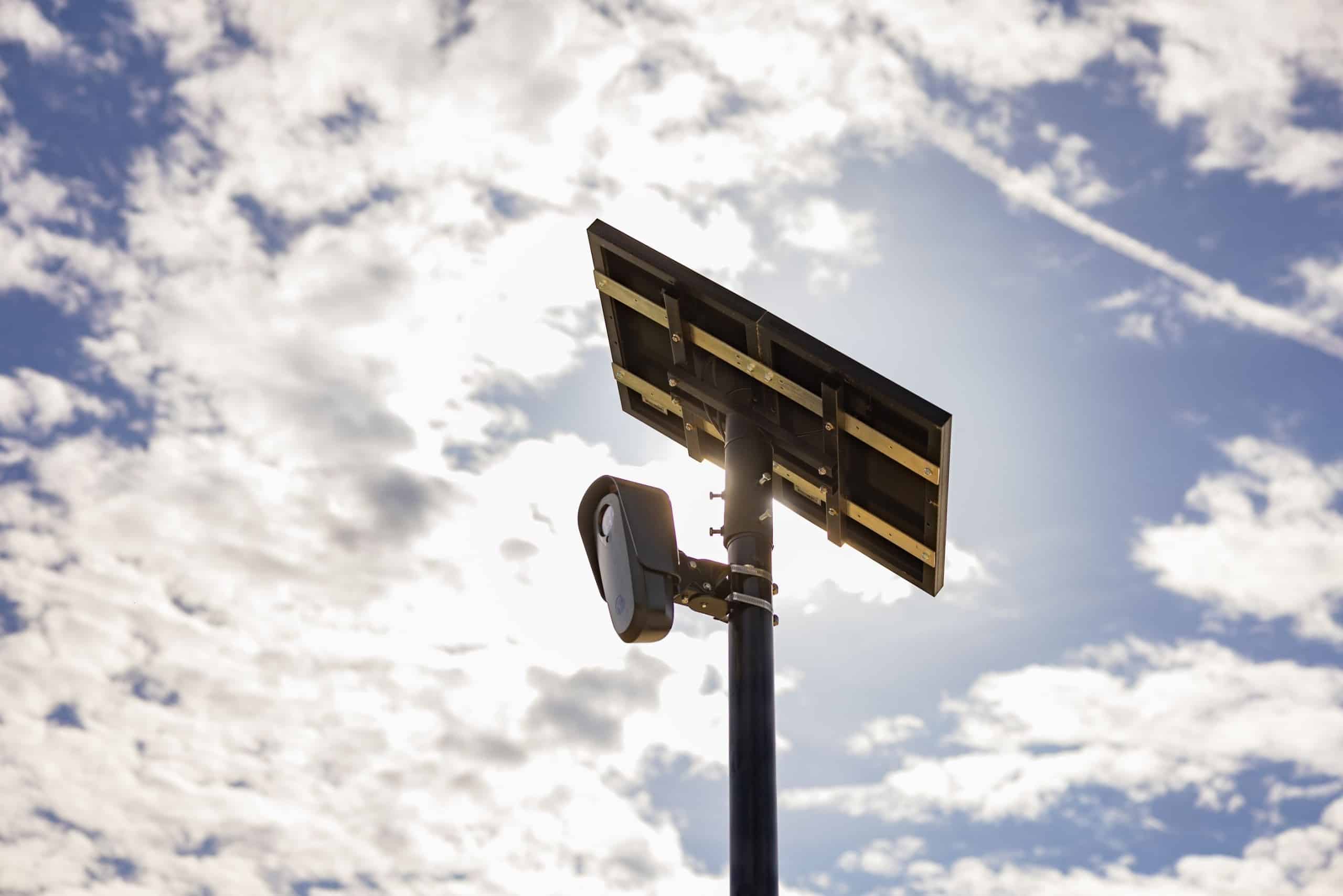
Growing concern over the use of Flock camera technology reached the Palm Springs City Council last week, prompting councilmembers to ask staff for a public update on how the city’s police department is using the surveillance system.
Several residents used public comment to question the use of automated license plate readers, raising concerns about privacy, the potential for individuals to be tracked and reports of similar systems being misused elsewhere in the country. Some urged the city to provide greater transparency and stronger oversight as the technology becomes more common.
Local reporting and journalism you can count on.
Subscribe to The Palm Springs Post
The concerns come after Palm Springs steadily expanded its relationship with Flock over the past three years. The city first contracted with the company in October 2023, purchasing 15 automated license plate readers. In December 2024, the council voted to replace the city’s public safety camera system with Flock cameras at 52 non-residential intersections.
That expansion continued in September 2025, when the council unanimously approved additional surveillance technology after then-Police Chief Andy Mills assured councilmembers that the agreement would not allow Palm Springs police data to be shared with Immigration and Customs Enforcement.
The agreement included Flock Nova crime-analysis software at an additional cost of $280,000, bringing the total contract to as much as $301,000 and extending the city’s agreement with Flock through Oct. 1, 2028.
The cameras record and store information on vehicles passing certain intersections, allowing investigators to identify vehicles near a crime scene and trace where they traveled before and after an incident.
With questions about the technology now surfacing at City Hall, Councilmember Ron deHarte asked staff on Aug. 26 to schedule a summary from the Palm Springs Police Department as a future business item.
Councilmember Grace Garner said she wants staff to include data showing how the technology is being used, calling it a subject of significant public interest. Councilmember Jeffrey Bernstein pointed to a previous police department session on the technology that drew strong attendance and asked that any future discussion be held after regular business hours, such as after 5 or 5:30 p.m., so working residents can participate.
A police department representative told the council the department is willing to discuss the technology at any time and wants to be as transparent as possible.
The council discussion comes as automated license plate readers face increasing scrutiny across the Coachella Valley and Riverside County. The Desert Sun has reported that local police agencies have rapidly expanded their use of the devices over the past five years, with 748 cameras operating throughout the valley, a relatively high concentration compared with some other cities nationally.
The scrutiny also comes at a time of growing national opposition to automated surveillance systems, including vandalism of camera equipment in some communities.
On Friday, the newspaper reported that the Palm Springs Police Department had created a five-member Technology and Surveillance Community Advisory Board to review the department’s use of surveillance technology, beginning with license plate readers. The board held its first meeting last Thursday.
Police have not publicly identified its members but told the newspaper the panel includes technology experts as well as people skeptical of law enforcement’s use of the systems. Lt. William Hutchinson said the department sought out people who had previously voiced opposition to the technology or expressed interest in serving.
The meetings will not be open to the public because members will review sensitive material, including investigative leads tied to open cases, although the department plans to release some materials publicly. The board is eventually expected to review other police technology, including drones and body-worn cameras.
Author

Related Articles
Palm Springs Measure J fund closes fiscal year with $2.1 million surplus
Sales tax revenue beat projections by about $800,000 as investment income also topped budget, though officials say heavy capital spending will sharply draw down the fund next year.
Planning Commission to weigh golf course-to-housing rezoning, with strings attached
Staff wants a General Plan Amendment for the closed Bel Air Greens golf course to take effect only alongside a full development plan — a compromise commissioners first floated in 2022.
Panorama Road hillside home approved for major renovation, expansion
The Architectural Review Committee on Wednesday signed off on a nearly 2,000-square-foot addition, a new single driveway entry and desert-toned landscaping near the North Lykken Trailhead.