
Palm Springs council approves historic status for Temple Isaiah
The council voted unanimously to designate the synagogue and Jewish community center a Class 1 landmark, citing its layered architecture and 75-year role as a cultural gathering space.
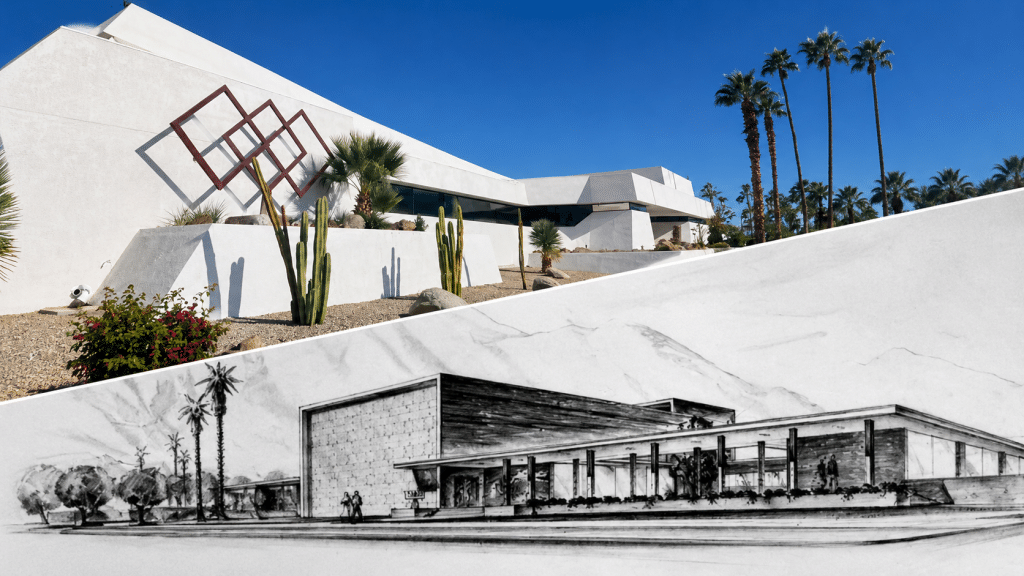
The Palm Springs City Council voted 5-0 Wednesday to designate Temple Isaiah as a Class 1 historic landmark, approving an application for the property at 332 West Alejo Rd.
The council’s vote followed a recommendation from the city’s Historic Site Preservation Board, which found the site meets several criteria under the city’s historic preservation ordinance, including that it reflects a significant period of local history and represents the work of a master architect, according to a city staff report presented at the meeting.
Local reporting and journalism you can count on.
Subscribe to The Palm Springs Post
Founded in 1950 by Holocaust survivors, Temple Isaiah evolved over several decades into a more than 50,000-square-foot campus shaped by some of Palm Springs’ most prominent Modernist architects. Its original sanctuary was designed by E. Stewart Williams, later expanded in the early 1960s by Donald Wexler and Richard Harrison, and then enclosed in the 1980s by David Christian within a sweeping Late Modern, Brutalist-style design.
Temple Isaiah President Robert Weinstein said Wednesday that Frank Sinatra helped raise funds for the Christian-designed expansion. Sinatra organized two fundraising concerts that helped finance the project.
City Historic Preservation Officer Sarah Yoon told the council that despite the design changes, the site’s location, setting and overall integrity have remained consistent, supporting the case for a Class 1 designation. The site also contains notable religious artwork, including a kinetic Torah ark by Israeli artist Yaacov Agam and stained glass by Eric Ray.
Beyond its architectural history, staff and public speakers said Temple Isaiah has served as a cultural hub for the broader Palm Springs community, hosting weddings, funerals, quinceañeras, musical and opera performances, theater, and a Jewish film festival now entering its 14th year.
“It is one of the biggest attractions to the city of Palm Springs,” said Douglas Morton, who described serving on the temple’s board for more than a decade, including 12 years as executive director.
Weinstein said preserving the building is meant to protect it for the long term.
“We want to preserve this for future generations because it is a historical item in our community,” he said.
Palm Springs Preservation Foundation’s Steven Keylon, who worked on the nomination, called Temple Isaiah “one of the most important cultural resources we have in the city.”
During council discussion, Councilmember Jeffrey Bernstein asked about the Mills Act, a program that can reduce property taxes for owners of historic properties who commit to restoration and maintenance work. Yoon said the ordinance does not have authority over interior alterations, since some character-defining features have been internalized through the building’s various design phases.
Weinstein said the property does not currently pay property tax because it is a religious institution, so a Mills Act designation would not provide direct savings, though Yoon said the designation could still open up other grant opportunities.
Bernstein, who had his bar mitzvah and was married at Temple Isaiah, urged preservation groups to help support the building while it remains active.
Author
Related Articles
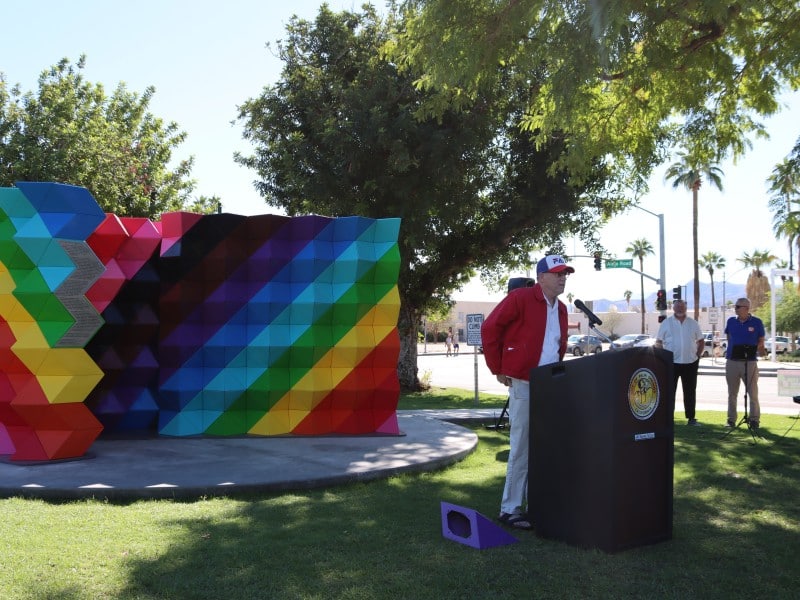
Palm Springs art commission approves up to $50,000 for sculpture repairs, adds time capsule to inventory
The Pride Monument was vandalized with the words, “hate, hatred, hated” according to the chair of the Public Arts Commission.
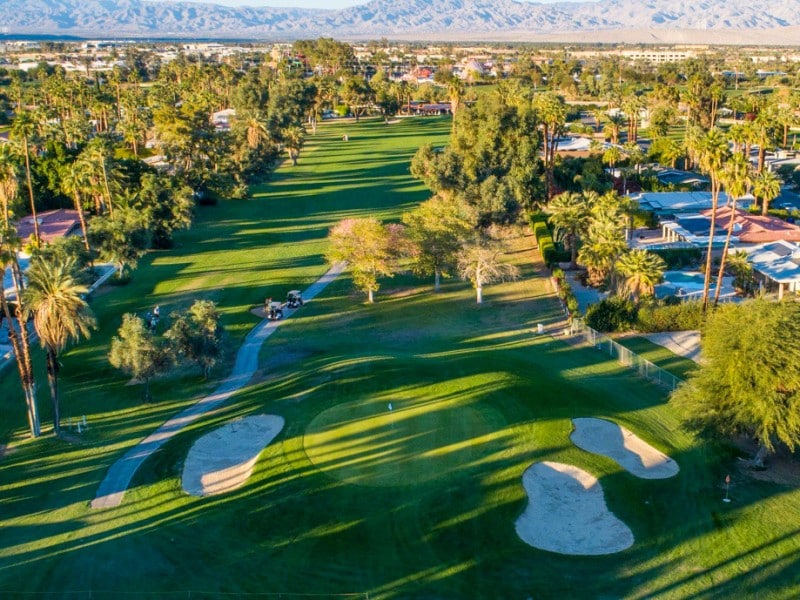
Palm Springs parks commission approves golf fee increase, redesigned Ruth Hardy Park workout pad
Resident rates at Tahquitz Creek’s two city-owned courses would rise about 9%, or $1 to $6 per round. The revised workout pad design heads next to the City Council.
Palm Springs council advances removal of cannabis lounge event provision
Council members said the subsection was unnecessary because the zoning code already governs special events and directed staff to return with an ordinance removing it.