
Palm Springs airport shade structures approved with conditions after debate over historic design concerns
Members of the Historic Site Preservation Board cited tension between passenger comfort needs and the Wexler-designed terminal’s architectural legacy before approving the structures with a design revision condition.
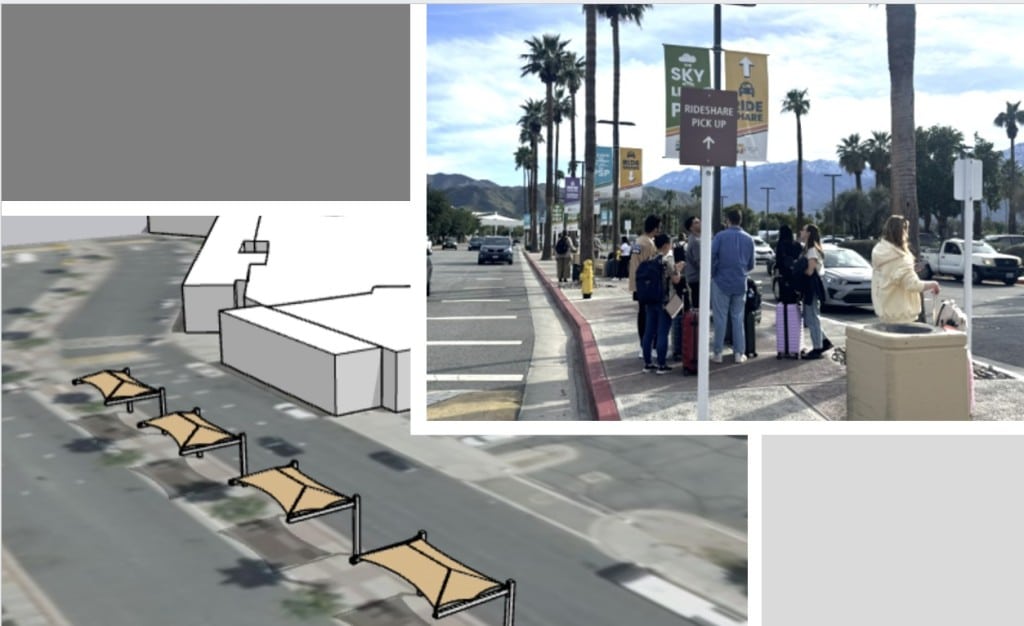
Two key features of Palm Springs — heat and midcentury modernism — were briefly in tension on Tuesday as the Historic Site Preservation Board debated whether proposed new shade structures at the Palm Springs International Airport clashed with the Donald Wexler-designed passenger terminal.
The airport is proposing four new shade structures along the pedestrian walkway island on Kirk Douglas Way, an area that’s used by passengers waiting for ride share companies like Uber and Lyft. But because the airport is a Class 1 historic site in the city, any minor alterations are required to meet certain criteria and receive approval from the Historic Site Preservation Board.
Local reporting and journalism you can count on.
Subscribe to The Palm Springs Post
The terminal building was completed in 1966 “and showcased Wexler’s expertise in creating sleek, functional, and visually appealing spaces,” according to the airport’s website. The terminal building is also on the National Register of Historic Places.
In the 60 years since a mostly outdoor airport opened in the desert, Palm Springs has seen more annual airport passengers (including in the summer months), more triple-digit hot days, and more people utilizing ride-share companies to travel between the airport and their destination.
Transportation Network Companies (or ride shares) now make up about 80% of the airport’s total ground transportation ridership, with a total of approximately 409,000 riders in 2024. The proposed shade structures would provide shade during the peak hours between 10:30 a.m. and 1:30 p.m., when passengers currently wait for their rides under the direct sun. Kirk Douglas Way is lined with palm trees, which, while iconic, provide minimal shade.
The proposed shade structures presented Tuesday would be about 13 feet high, 14 feet wide, and 22 feet long, with a geometric, slightly-sloped roof-like structure in a desert sand colorway. This caused concern among some board members on Tuesday, who worried that the structure was visually at odds with Wexler’s tendency for clean lines.
“I would be in favor of something more discrete,” said one board member, adding that “a quieter visual experience, rather than a distinct roof structure” would be preferred.
“We’re looking at temperatures of 120-plus degrees. We have tens of thousands of people coming through the airport all the time,” said another, noting the urgent need for more shade.
City staff recommended that the board approve the shade structures, with a condition added of revising the shade structure’s design to be more similar to existing structure on the airport’s interior, where pedestrian walkways are shaded by simpler shade structures that are flat on top. The board ultimately voted to approve this recommendation, and the final design will be reviewed and approved by city staff.
Author

Related Articles

Palm Springs boards tackle airport operations, property fee dispute, and civil rights issues this week
Meetings spanning bicycle infrastructure, airport operations, and a code enforcement fee appeal fill a busy four-day stretch at City Hall and beyond.
Palm Springs moves to create hotel district to fund convention center expansion
The city took a key procedural step Wednesday toward establishing a tourism assessment district that would levy a 1% fee on hotel and vacation rental revenue to finance convention center improvements.

Residents warn City Council directly elected mayor could undermine civil rights gains
Around a dozen residents spoke against the direct mayor system during the public comments section of Wednesday’s city council meeting. The council later debated the issue.