
Palm Springs AIDS Memorial design approved amid Public Arts Commission funding debate
The commission’s decision to delay the funding vote sparked a broader discussion about the precedent it might set for future gifted artworks.
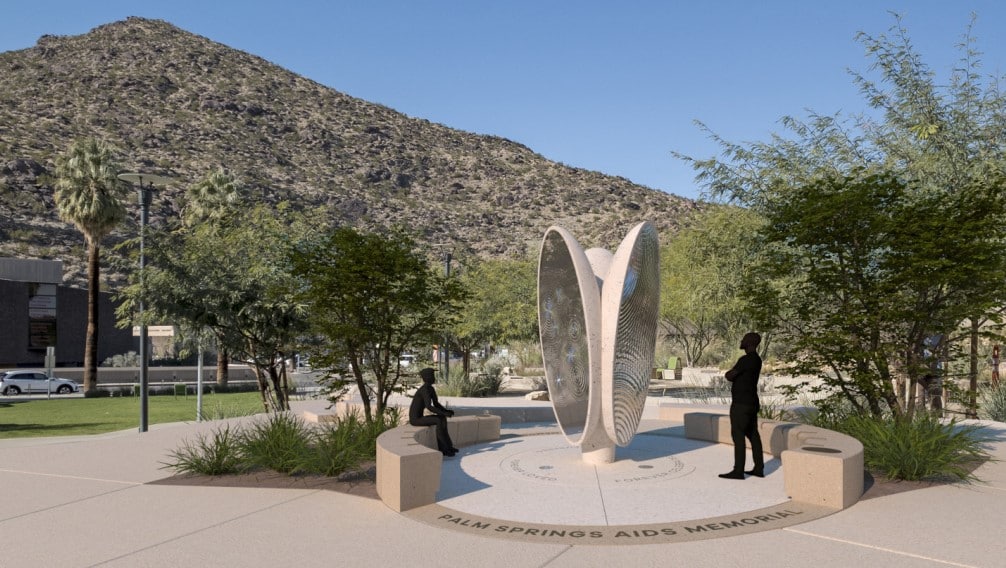
The Palm Springs Public Art Commission approved a new design for the city’s AIDS Memorial Tuesday evening, featuring a “well of love” concept with three stone faces and reflective glass surfaces. However, the commission delayed a decision on allocating $65,000 for the memorial’s installation, citing concerns about setting a precedent for funding gifted artworks and the need to discuss maintenance costs.
The approval comes after a year of community engagement following controversy over the initial design. Artist Philip K. Smith III presented the revised concept, which he said was shaped by extensive public input.
Local reporting and journalism you can count on.
Subscribe to The Palm Springs Post
“Through everything, we have distilled this memorial down to three messages: Forever remembered, forever loved, forever celebrated,” Smith told the commission.
The new design features an 11-foot-tall structure with three oval forms, each representing one of the key messages. Reflective glass surfaces are intended to incorporate viewers into the memorial experience.
“Each of these ovals, each of these wells, these pools of tears, are created through a one and a half to two inch thick cast glass that is laminated to a mirrored surface at the backside of that,” Smith explained. “The result is you see yourself within the memorial itself.”
Commission Chair Gary Armstrong raised concerns about maintenance costs and potential damage, requesting a detailed budget before final approval of city funds.
“As I’ve always said, the Arts Commission has two roles. One is accepting art into the collection and then the maintenance of it,” Armstrong said. “So my concern as soon as I saw this, is, what’s the cost to maintain this and repair it?”
Smith acknowledged the need for a maintenance plan but emphasized the memorial’s durability and simple upkeep requirements.
“I don’t see this as not a $30,000 a year cleanliness project,” Smith said. “It seems to me very straightforward, which is really the intent.”
The commission’s approval was contingent on three conditions: addressing components to prevent people from sleeping on the memorial’s benches, providing a full maintenance plan, and establishing a terms of service agreement for the privately-held QR code component.
“The new design reflects everything we had hoped for and more, far exceeding my own expectations. It has the support of 90% of my group.”
— Raymond Lafleur, moderator of an influential online group
Dan Spencer, founder of the Palm Springs AIDS Memorial Task Force, reported that over 400 individuals have donated to the project. The current budget ranges from $1 million to $1.2 million, with about $540,000 raised so far.
The commission’s decision to delay the funding vote sparked a broader discussion about the precedent it might set for future gifted artworks.
“I think there’s a broader discussion about philosophically, about approving installation dollars for gifts to the city that we haven’t taken on as a mission,” said Vice Chair Tom Burns. “I think part of our discussion or decision making should be around the fact that if we decide to do that and we have other gifts coming to the city, it sets a precedent.”
Commissioners agreed to revisit the funding decision at their Nov. 7 meeting, ahead of potential Palm Springs City Council consideration of the memorial on Nov. 14.
Despite the funding delay, Smith expressed optimism about the project’s progress.
“Of the two votes tonight, I’m most excited about the first,” Smith said, referring to the design approval.
The AIDS Memorial project has faced challenges since its inception in 2012. The task force’s initial design was met with controversy last year, prompting a series of community listening sessions and a redesign process.
Raymond Lafleur, representing a large social media group for gay men, praised the new design during public comment.
“The new design reflects everything we had hoped for and more, far exceeding my own expectations. It has the support of 90% of my group,” Lafleur said.
The commission plans to continue discussions about distinguishing between memorials and public art in their approval and funding processes. The AIDS Memorial installation is tentatively scheduled for late 2025 or early 2026, pending fundraising progress and final approvals.
Author

Related Articles
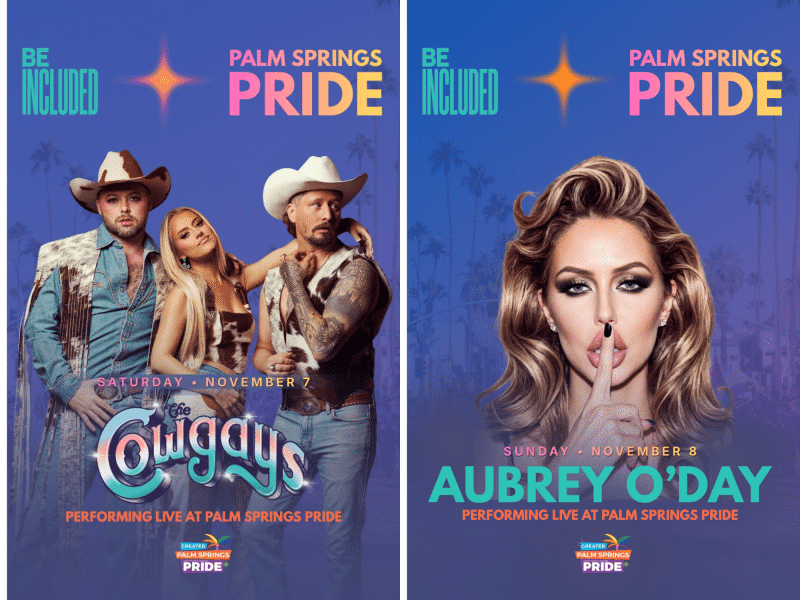
Greater Palm Springs Pride names Aubrey O’Day, The Cowgays as 2026 headliners
The free, three-stage festival marks its 40th anniversary Nov. 6-8 in downtown Palm Springs.
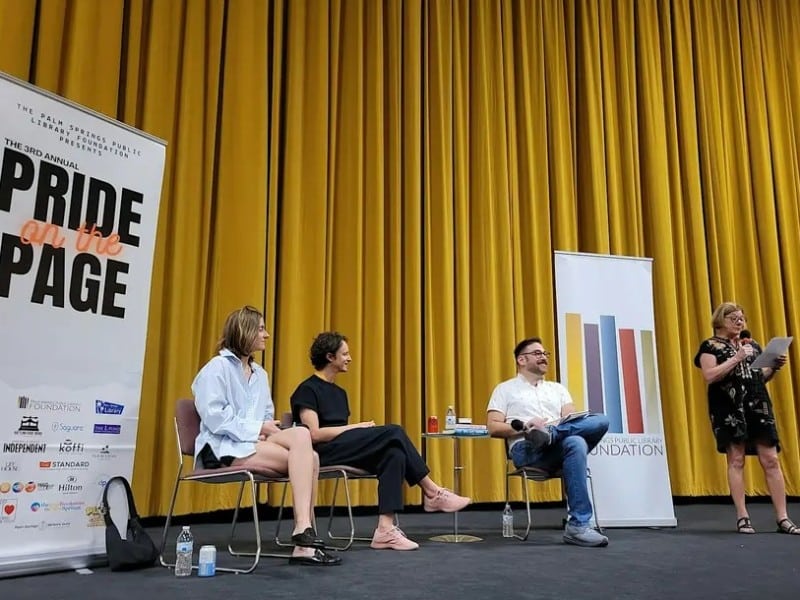
Palm Springs LGBTQ+ book festival announces full lineup, adds Ty Herndon as headliner
Pride on the Page’s 5th annual event is free this year for the first time, with Grammy-nominated country singer Ty Herndon discussing his memoir at the evening program on Nov. 14.
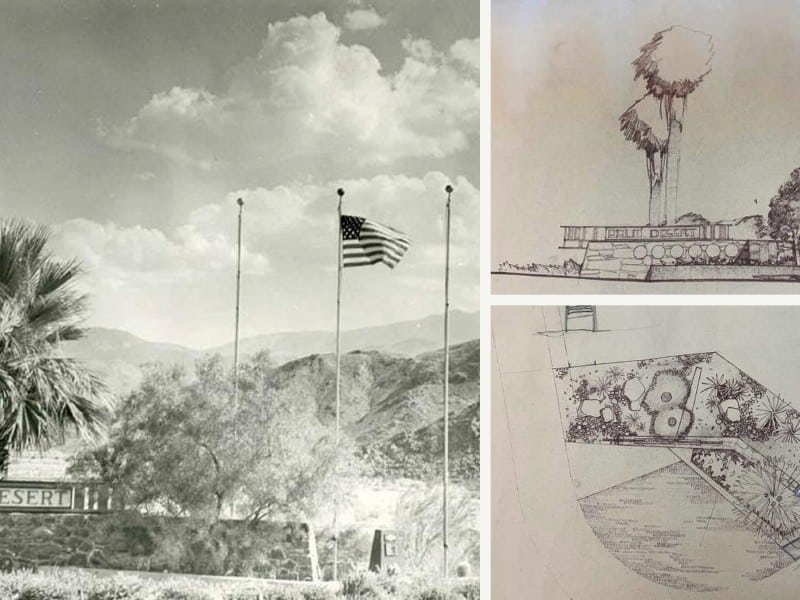
Palm Springs preservation group steps in to help revive a piece of Palm Desert history
The Palm Springs Preservation Foundation has offered to fund conceptual design work for a recreation of a historic Palm Desert entry sign designed by noted desert architect William F. Cody.