
Kors abruptly resigns as Palm Springs Blue Zones director
The move comes after a January launch event at the Mizell Center that brought together city officials, healthcare leaders, educators and community organizations to begin the public health project.
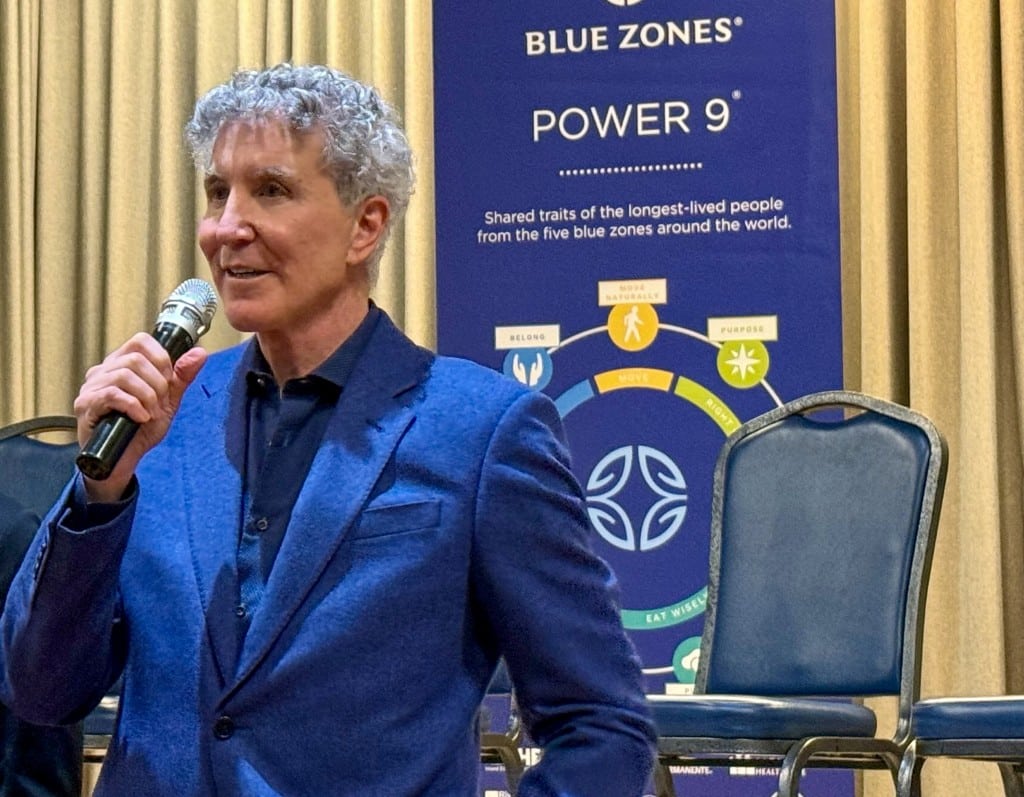
Geoff Kors, former Palm Springs councilmember and mayor, has resigned as director of the Blue Zones health initiative in the city just months after his appointment.
The resignation, which Kors submitted on March 12, comes after a January launch event at the Mizell Center that brought together city officials, healthcare leaders, educators and community organizations to begin the public health project. News of his appointment was announced last December.
Local reporting and journalism you can count on.
Subscribe to The Palm Springs Post
On Wednesday, Kors told The Post that while he has documented his reasons for leaving with Blue Zones leadership, contractual obligations prevent him from discussing them openly.
“In my resignation memo I provided the reasons that led to my decision and gave permission for the company to share my memo with anyone who requests a copy,” Kors said. “I would welcome the opportunity for them to provide the community an explanation. Given terms in the non disclosure agreement that was a condition of my employment with Blue Zones, I’m not going to share anything further at this time.”
A Blue Zones executive said late Wednesday that Kors’ memo would not be released and that the project would continue in Palm Springs with support from a steering committee that Kors had established. That steering committee is scheduled to meet Thursday.
“We don’t disclose specifics about personnel matters, but we’re grateful for the work he has done in getting the Project started and building such a talented team,” said Mark Ishikawa, vice president of operations. “The team remains enthusiastic and committed to the work we have underway. We’re well focused on a smooth transition and on keeping the momentum going.”
Blue Zones, an initiative aimed at improving community well-being through policy changes, environmental improvements and lifestyle interventions, was relaunched in Palm Springs this year under a public-private partnership after a previous attempt failed to gain traction two years earlier.
“For Blue Zones to be effective, it’s going to take all of us working together to improve the health and well-being of our community,” Kors said at the January meeting.
Data presented at that meeting showed Palm Springs faces significant health challenges with approximately 50% of residents not exercising enough, 80% overweight or obese, and 67% lacking sufficient fruit and vegetable intake.
The project secured financial backing from multiple healthcare organizations including Inland Empire Health Plan Foundation, Eisenhower Health, Kaiser Permanente and Molina Healthcare, along with support from Riverside County Public Health and the city itself.
In July of last year, the City Council tentatively approved $180,000 for the project to be paid out over three years, but there were questions about whether or not the first $60,000 would be incorporated in the existing budget, or if the money would be allocated when the city decides on the next two-year budget this year.
Even though the vote for the money was unanimous, Councilmember Grace Garner warned that the project could end up being redundant and questioned what tangible benefits the community would gain.
“What is Blue Zones actually doing?” she asked. “If it’s just telling us things we already know we need to do and things we’re already working on, I don’t understand the benefit.”
By the end of the discussion, councilmembers decided to approve the money. Then-Council member Christy Holstege called the move a “no-brainer” and that the expected benefits would far outweigh the $180,000 investment.
This came after city leaders initially approved $85,000 in 2022 to assess health needs but decided not to pursue Blue Zones designation at that time.
Then-Mayor Jeffrey Bernstein had expressed support for the initiative, noting that it aligned with the city’s “existing efforts to improve quality of life by investing in safer parks and recreational spaces, improved infrastructure, and more resources for the unhoused.”
Kors, who served on the City Council from 2015 to 2022 including a year as mayor, had not been seeking a full-time position when he accepted the Blue Zones role. While his future plans are yet to be decided, he said he does plan to remain in the community.
When announcing the rollout in January, project leaders said they would gather feedback to narrow down priorities and develop a blueprint for Palm Springs’ Blue Zones Project by May, with a community launch event to follow. Among issues that might be tackled are bicycle infrastructure, walking paths, access to healthy food options and food deserts in the northern section of the city.
Author

Related Articles

Palm Springs mayor responds to ICE activity with community resources, legal guidance
Mayor Naomi Soto outlined legal protections during federal immigration enforcement, announced police assistance for property retrieval, and directed affected families to community organizations for support.
Readers name fertility-clinic bombing as Palm Springs’ biggest story of 2025
Taken together, the responses to our annual poll tell the story of a community shaken by an act of violence and bracing for a year defined by competing pressures — economic, political, and environmental.
Palm Springs 2025 Year in Review: Our top 5 stories
Your clicks told a story of a year defined by crisis, change, and a few surprises — including Palm Springs’ most anticipated hamburger.