
For participant in troubled basic income program, frustration followed by humiliation
Clarence S. was left struggling as promised $800 monthly payments were delayed or never materialize; the city and law enforcement are probing possible mismanagement of the funds.
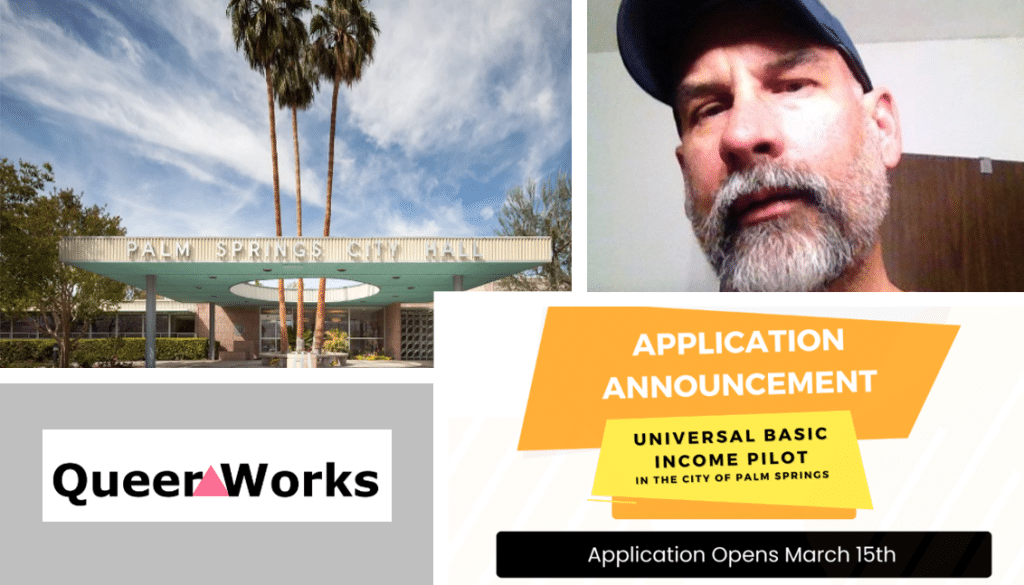
A Palm Springs resident’s hopes for financial stability were dashed after a city-funded Universal Basic Income (UBI) pilot program failed to deliver promised payments for months, leaving him and other participants struggling to make ends meet.
Clarence S., one of 30 participants selected for a program that was supposed to deliver $800 a month, says he was forced to ask friends for money on Facebook after the program’s organizer, Queer Works CEO Jacob Rostovsky, repeatedly failed to distribute funds as promised.
Local reporting and journalism you can count on.
Subscribe to The Palm Springs Post
“It’s embarrassing, it’s uncomfortable being poor, and so this was a really amazing opportunity,” Clarence says. “Some of the people I know involved in this are homeless and really thought that they would have a place that was moved out on the streets for the summer anyway, that just never materialized at all.”
As first reported by The Post last week, the guaranteed income project, reserved for residents of Palm Springs making less than $16,600 a year, had mostly failed to be delivered as promised by Rostovsky when questions began to be raised last year.
Rostovsky’s actions are now subject to investigations by both city officials and law enforcement.
At issue is that Rostovsky billed for and received the entire $700,000 approved for the program by the Palm Springs City Council despite an understanding that most of the funds would be set aside for direct payments to program participants.
Benefit of the doubt
Reached last week, Rostovsky said Queer Works transferred the program and any remaining funds to DAP Health. The healthcare organization confirmed taking over the program earlier this month. Still, neither its spokesperson nor Rostovsky could offer specifics about how much of the funds from Queer Works might have been available to DAP Health.
The participant said that in the program orientation in April 2023, Rostovsky told participants they could count on this money, and he encouraged them to make ambitious plans for their lives.
Thinking his rent would be covered, Clarence pursued a longtime dream. He said he is close to finishing his bachelor’s degree in social work and made plans to re-enroll come September.
The first deposit was supposed to come on April 15, 2023, and participants were told they could expect deposits every month on the 15th after that.
But April 15 came and went without a deposit. As each month passed without a deposit, Clarence said there was always an excuse. At first, they were told the money was tied up in a bank that went under; then participants were told there was a delay because of a family emergency.
The participant said he gave Rostovsky the benefit of the doubt.
“I have a background in social work,” he said. “I know sometimes things don’t always go smoothly.”
In June, Clarence said Rostovsky suddenly changed the program’s criteria and announced that the funds would instead be dispersed in separate cohorts, starting either in October or December.
The participant decided to take action. He connected with other participants that he met around town. As they compared notes, he said, they all realized something wasn’t adding up.
Frustrations mount
For months, the participant’s emails to Rostovsky, reviewed by The Post, were his only point of contact for the program. They either went unanswered or received a canned response.
It was only when Clarence started reaching out to members of the Palm Springs City Council, city staff, and DAP Health and threatened to go to the news that he started to receive more information.
In October, six months late, Clarence finally received his first direct deposit, albeit with his last name misspelled. He said when he thanked Rostovsky for the money, he received a reply urging him to contact councilmembers and reassure them that participants were getting their due.
While he was grateful for the money, it was too little too late.
“I had made the decision to start going to school because I knew my rent would be paid,” Clarence said. “So by September, I didn’t have any more money, and I reached out to my Facebook friends, which was humbling and humiliating at the same time.”
In addition to the money, the plan for the program laid out for City Councilmembers in July 2022 referenced nearly $1.6 million in in-kind services from DAP Health and Queer Works, including benefits counseling, medical, and social services. The participant, who was already working with DAP Health, said he never received any services outside of the money.
Not every participant received their money in October, and since then, Clarence said it’s common for payments to come late.
The program was transferred to DAP Health’s control this month. The healthcare organization told The Post that the program now provides monthly $800 payments to 14 low-income individuals or families and will conclude in April 2025.
“When you’re poor, it’s really expensive to be poor,” the participant says. “You really have to be strategic, and I’m being strategic here and not pushing it because I’m afraid I’m just waiting for the other shoe to drop.”
Author

Related Articles

Palm Springs City Council approves response to grand jury report on $700,000 grant oversight failure
During Wednesday’s council meeting, several members expressed concerns about the city’s response, particularly regarding a key finding about financial losses.
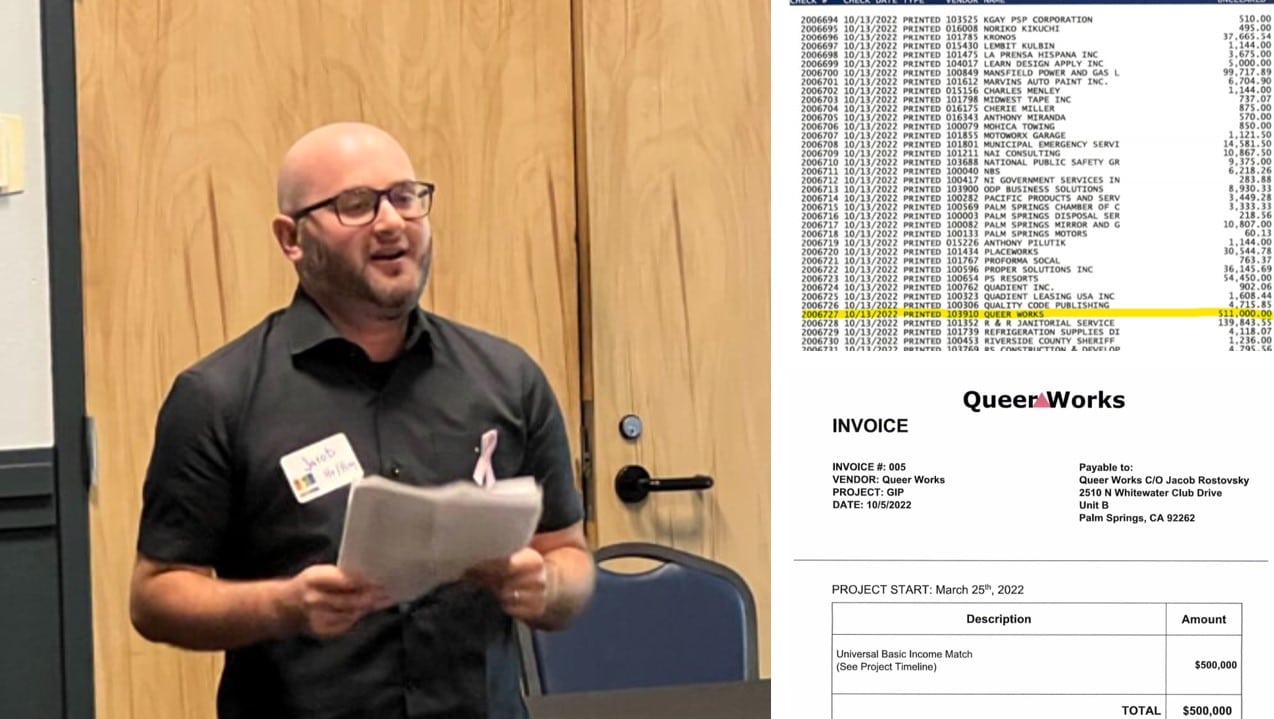
Grand jury: City lacked proper grant oversight when it lost over $700,000 to alleged fraud
In a response, the city acknowledged the grand jury’s findings and said it had already begun addressing the issues identified in the report.
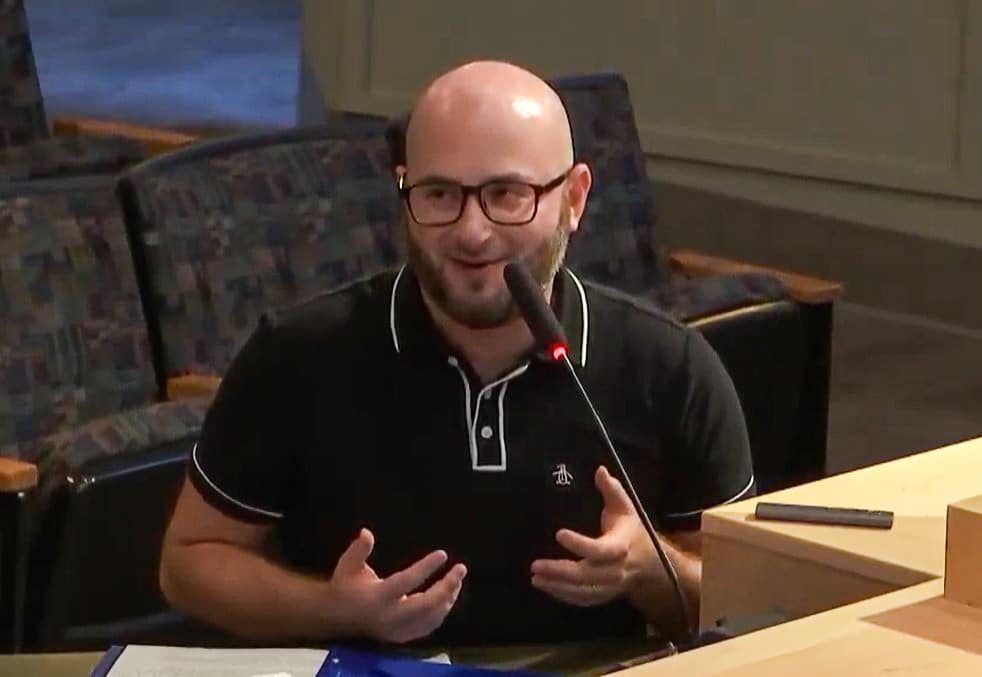
Grand jury indicts Queer Works CEO on multiple fraud charges
In an announcement made Wednesday, Queer Works founder Jacob Rostovsky is accused of misusing over $840,000 in public funds intended for housing assistance and basic income payments.