
Customer convenience vs. community concerns: Commission debates rental car center location
The facility north of the terminal was approved for recommendation, but a $500M cost may require scaled-back initial construction. The ultimate decision will be made by the Palm Springs City Council.
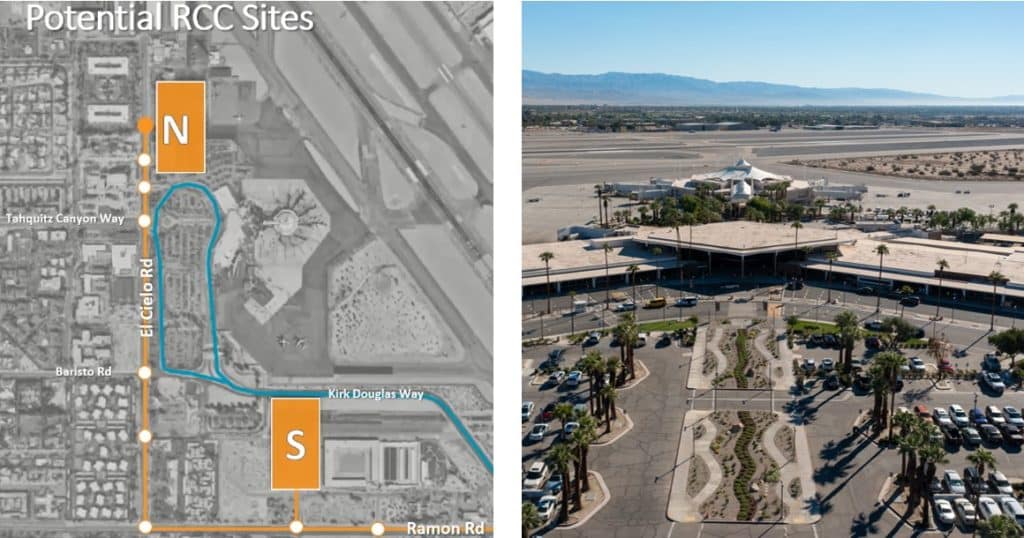
The Palm Springs Airport Commission continued its evaluation of two potential locations for a new consolidated rental car facility this week, weighing customer convenience against community concerns and construction costs estimated at around $500 million for either option during.
During their regular meeting Wednesday evening, commissioners discussed the merits of building the facility north of the terminal versus a southern location across Ramon Road. In the end, the north location was unanimously approved for recommendation to the Palm Springs City Council.
Local reporting and journalism you can count on.
Subscribe to The Palm Springs Post
The north option was favored for its proximity to terminal access, promising enhanced customer convenience by allowing travelers to walk directly to their rental cars. However, that option has raised concerns among members of the public over the visual impact on the surrounding area and the potential disruption during construction.
“The north side for many reasons I think is the preferred option,” said one commissioner, citing customer convenience. However, concerns about cost and flexibility led to debate about a phased approach.
Ryan Hayes, a consultant presenting the options, explained that both locations would be able to house all rental car functions, including check-in desks, parking, storage, and maintenance facilities.
“The bottom line is that we had estimated previously through our cost estimator that a five story rental car center would cost about $450 million for the north side,” Hayes said. Adding two subsurface levels would increase the cost to just over $500 million.
The south option carried similar costs when factoring in land acquisition and a 20-year electric shuttle bus operation.
Traffic impact analysis showed both locations would have comparable effects on surrounding roads. Hayes noted that rental car traffic would be spread throughout the day along along either El Cielo or Ramon roads, avoiding peak rush hours.
“The traffic impact analysis was a little bit surprising to us in that we don’t have any failing intersections on El Cielo,” Hayes said. “El Cielo seems to be able to handle the traffic, which is counterintuitive in that El Cielo is only four lanes wide and Ramon is six lanes wide.”
Commissioners also debated the merits of a phased construction approach to manage costs and maintain future flexibility. One commissioner suggested building two-thirds of the facility initially, with room for expansion.
It was noted that current plans call for temporarily relocating rental car operations to the economy parking lot until 2030. This move is intended to free up space for terminal expansion in the interim.
A consultant working on near-term parking solutions outlined plans to accommodate both rental cars and public parking growth over the next five to six years.
“We’re really focused on how to get you from here to about 2030 or so, knowing that the rental cars will move and we still have to provide growth to accommodate your public parking needs as well,” he said.
He also explained that the first phase, over the next year or two, would utilize existing paved areas around the airport while environmental studies and site preparation are completed for future expansion.
Commissioners expressed concern about the project’s high cost and potential funding challenges. At $500 million, they heard that the facility “doesn’t pencil out at the moment” with current customer facility charge (CFC) funding projections.
“There’s just not enough CFC funding,” Hayes said. “And honestly, if you borrow the money to build it, it would be hard to make it work with the fees that you’re able to charge the rental car [companies].”
He suggested that post-master plan discussions may need to consider a smaller initial facility or alternative funding sources.
Author

Related Articles
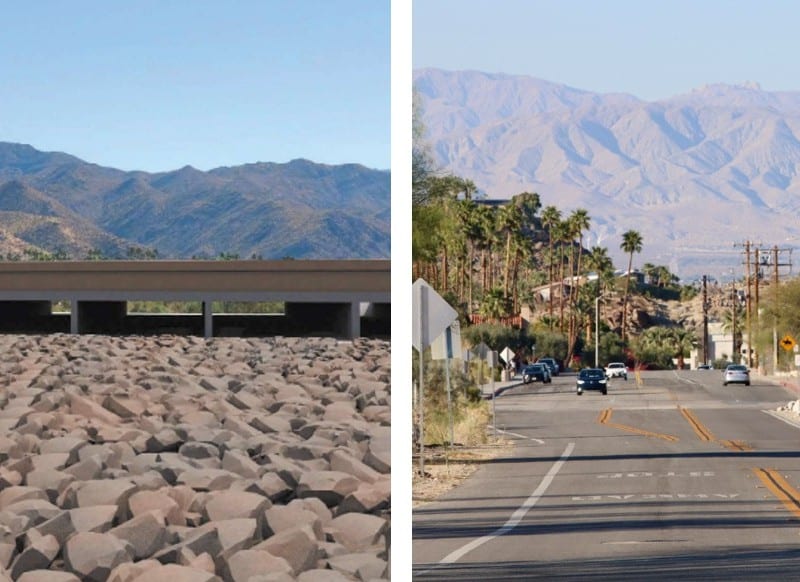
City: Bridge project faces minimum 2-year delay amid environmental lawsuit
An organization has filed suit challenging the city’s approval of a flood-control bridge design on South Palm Canyon Drive. The move will threaten federal funding and push back a project nearly two decades in the making.
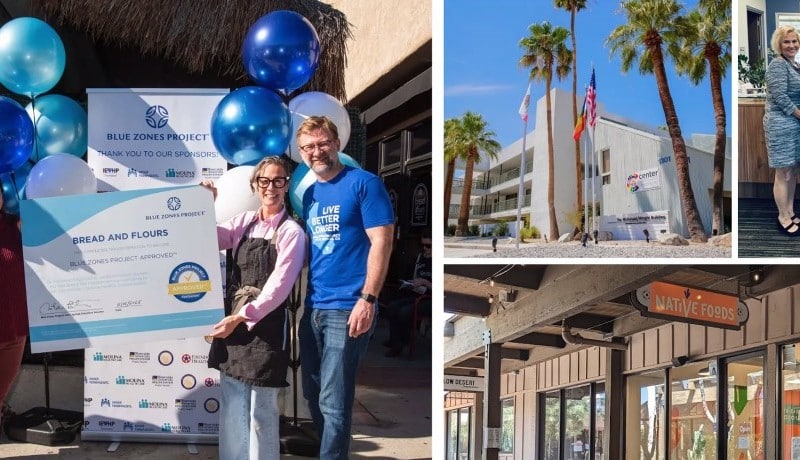
Blue Zones Palm Springs marks one year, sets sights on schools, restaurants and city partnerships
The organization spent its first year building relationships, identifying partners and establishing a foundation for long-term change in the community.
Survey: Palm Springs residents face many of the same health challenges seen across the Coachella Valley
A new study reveals the biggest surge in hunger in a decade and a regional doctor shortage leaving thousands without care.