
Committee will start reevaluation of city’s climate goals
Sustainability Commission members will review a five-year-old document ahead of a 2027 update, with officials signaling some goals may need to be revised.
Next year, Palm Springs will update the city’s Climate Action Roadmap, a guiding document produced five years ago that outlines the city’s climate goals.
The Palm Springs Sustainability Commission discussed the update process at their meeting on Tuesday. The previous Climate Action Roadmap emerged from Sustainability Commission discussions in 2019 on how the city could best move forward to address climate change.
Local reporting and journalism you can count on.
Subscribe to The Palm Springs Post
The resulting document “is intended to serve as a focus for further discussions among the Commission and the City Council” and serves as “an initial step in developing more detailed climate goals and strategies,” according to the Climate Action Roadmap.
The three biggest goals outlined in the roadmap are reducing greenhouse gas emissions by least 40% compared to 1990 levels by the end of 2030, to 80% below 1990 levels by 2050, and to achieve carbon neutrality for municipal emissions (the greenhouse gases that result directly from the city’s own operations) by 2030. Those goals also align with the city’s earlier 2013 Climate Action Plan.
The city will be “working internally to better understand where we’re at with emissions reductions,” said Sustainability Director Jasmine Fields. That information will be used to realign city planning and goals, and an updated climate action roadmap. Fields brought up the carbon neutrality goal as one example.
“If we realize that that’s not feasible, we need to just be revisiting those goals and being more realistic about how we want to proceed forward as an organization and a community,” said Fields.
The Sustainability Commission’s climate action subcommittee members will be reviewing the Climate Action Roadmap this year in advance of the city’s plans to update the document in 2027.
“I think it would be good if commission members all review that and note anything we think might be of concern or new issues that we might want to address,” said commission Chair Bernard Rottner on Tuesday.
In March 2020, the city moved from Southern California Edison to Desert Community Energy, a new local community choice energy authority. Automatically enrolling the entire city in the 100% carbon-free plan reduced the city’s carbon footprint “by over 8,000 metric tons each month,” the equivalent of removing over 22,000 cars from the road for a year, according to Desert Community Energy.
But transportation emissions in particular remain a stubborn challenge in Palm Springs and other parts of the state. At the time of the Climate Action Roadmap, transportation emissions accounted for over half of the city’s total emissions.
“Unless we reduce these emissions significantly, we will never reach our future reduction goals,” states the Climate Action Roadmap.
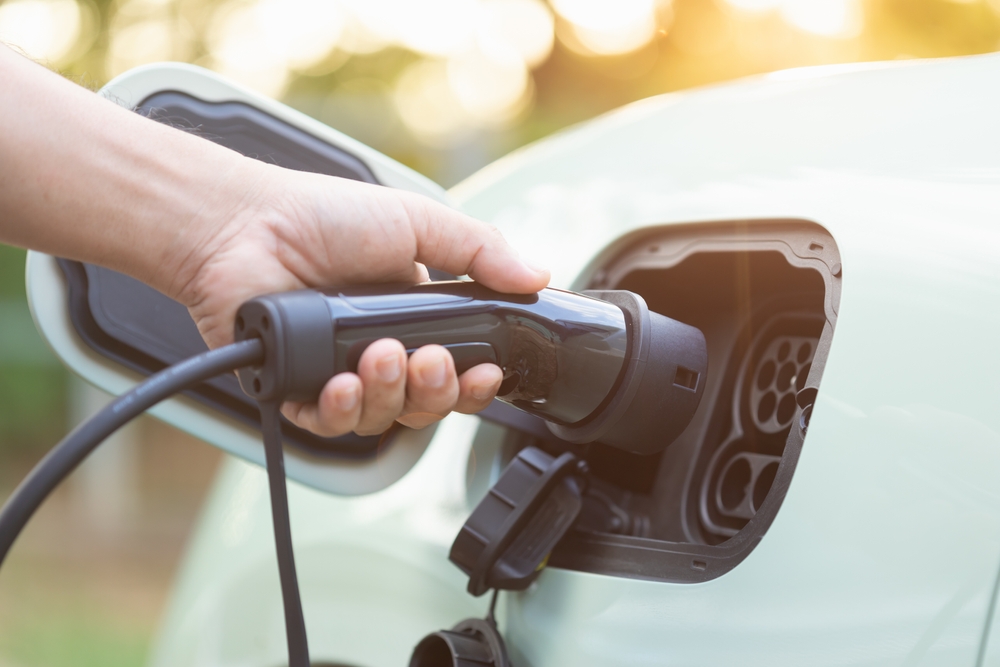
Some strategies outlined by that document include expanding EV charging stations, improving walkability in the city, and promoting mass transit to and from Palm Springs for tourists and other regional visitors.
Author

Related Articles
City to host listening sessions on heat and shade mitigation plan this fall
The $400,000 state-funded plan will target vulnerable residents who walk, bike or take transit amid rising heat-related illness.
Sustainability Commission moves to dissolve ad hoc subcommittees after wave of resignations
The city’s new sustainability director said the commission’s three standing subcommittees and six separate ad hoc subcommittees were redundant and poorly attended after several recent commissioner resignations.
Sustainability subcommittee presses ahead on curbing single-use plastic water bottles at events
Members of the subcommittee dealing with waste reduction plan to speak with about plastic bottle waste to organizers of large community gatherings.