
Commission votes to split art collection into two distinct categories
The restructuring establishes a Public Art Collection for artist-led, curated works selected through the city’s existing public process, and a new Cultural Collection for civic and commemorative works often donated.
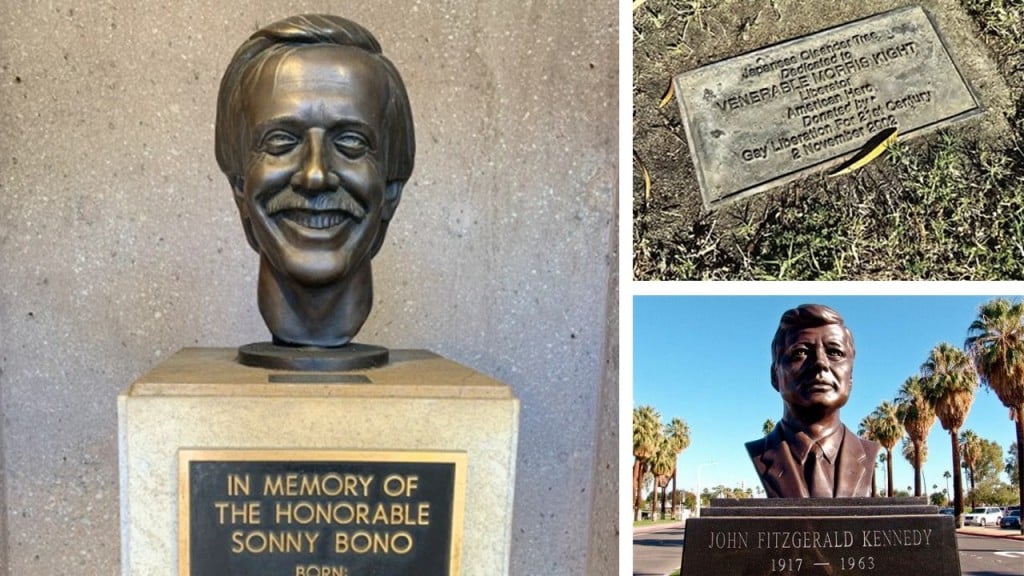
The Palm Springs Public Arts Commission voted unanimously last week to rename the city’s art holdings as the Art Collection and Culture Collection, creating two separate branches to try to address the question of what qualifies as public art.
The restructuring establishes a Public Art Collection for artist-led, curated works selected through the city’s existing public process, and a new Cultural Collection for civic and commemorative works often donated or initiated outside the formal public art pipeline.
Local reporting and journalism you can count on.
Subscribe to The Palm Springs Post
“Art can and often does serve two distinct but vital roles,” Commission Chair Gary Armstrong said during the July 3 meeting. “It can invite personal reflection, creating space for individual interpretation and emotional connection. And it can deliver a civic message, communicating shared values, history, and identity.”
Armstrong estimated that roughly one-third of the city’s current art collection would likely be reclassified under the new Cultural Collection. He emphasized that no art will be removed from the collection during the process.
Recent acquisitions highlight the challenges the Commission has navigated in classifying works.
For example: The Morris Kight memorial plaques, which the Commission voted to accept last month, represent a good fit for the Cultural Collection since “they were not conceived through a creative public art lens,” Armstrong said. “They are civic in purpose — commemorations of a legacy — rather than interpretive, artist-led expressions.”
A recent example illustrating the need for such distinctions is the Morris Kight and LGBT Veterans memorial plaques in Sunrise Park, which were accepted by the commission last month. Armstrong noted the plaques were “not conceived through a creative public art lens” and serve a civic, commemorative function rather than an interpretive one. As such, they are a clear fit for the Cultural Collection.
Local designer and advocate Tom Dolle, who brought renewed attention to the neglected memorials, welcomed the change.
“As a regular swimmer at the Swim Center, I pass the forlorn Morris Kight and LGBT Veterans memorials every day,” he said. “It was shocking that something so significant to this community had been forgotten for over 20 years. Because they weren’t really seen as public art, no city agency had taken ownership until I raised the issue.”
Dolle credited Mayor Ron deHarte and Armstrong for championing their relocation to a more visible and appropriate space.
“Certain important community sculptures, memorials, plaques and installations like this should have a category separate from public art,” Dolle wrote in support of the move. “They are important for being historic, or have community significance, or were maybe a gift — but artistic integrity is not always the point.”
In contrast, the AIDS Memorial will remain in the Public Art Collection despite its commemorative purpose, “Because it fundamentally is a work of art,” Armstrong explained. Created by artist Phillip K. Smith III, the piece is site-specific, abstract and fully aligned with the artist’s established practice.
“It isn’t figurative. It doesn’t instruct. It invites,” Armstrong said. “It transforms its environment. It speaks in the language of public art.”
The Commission will create two subcommittees to implement the new structure over the coming months. One will develop submission and acceptance guidelines for the Cultural Collection with public input and collaboration from other city commissions. The other will review the existing inventory and recommend whether any works should be reclassified under the new framework.
The implementation process is expected to take nine months or more, as the subcommittees’ recommendations must be approved by the Commission and then go through legal review and City Council approval.
Staff will work to identify a separate funding stream for the Cultural Collection, since the city’s Public Art ordinance restricts current funds to artist-commissioned works. The Commission is following the lead of cities including Portland, Minneapolis and San Diego, which have created similar frameworks to distinguish between civic expression and artistic authorship.
Author

Related Articles

Palm Springs Speaks to open season eight with Go-Go’s co-founder Jane Wiedlin
Wiedlin will discuss her new memoir, perform a few songs and sign books Dec. 8 at the Palm Springs Cultural Center.
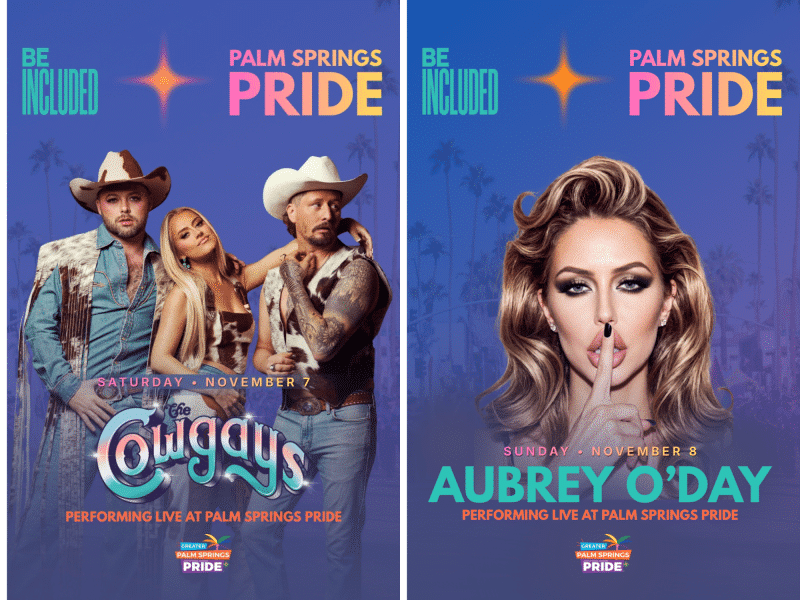
Greater Palm Springs Pride names Aubrey O’Day, The Cowgays as 2026 headliners
The free, three-stage festival marks its 40th anniversary Nov. 6-8 in downtown Palm Springs.
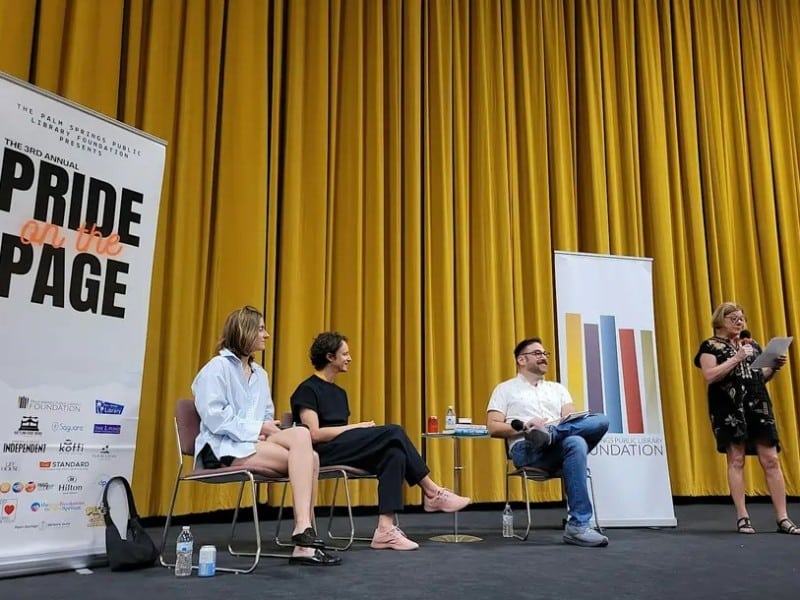
Palm Springs LGBTQ+ book festival announces full lineup, adds Ty Herndon as headliner
Pride on the Page’s 5th annual event is free this year for the first time, with Grammy-nominated country singer Ty Herndon discussing his memoir at the evening program on Nov. 14.