
City reaches historic agreement with Section 14 survivors; council approval looms
The Palm Springs City Council is set to consider an agreement Thursday that includes almost $6 million in direct compensation, housing initiatives, and cultural preservation efforts for displaced families.

The city and members of the Palm Springs Section 14 Survivors organization have reached a historic agreement on reparations for the city’s role in injustices done to minority residents in the 1950s and 1960s, it was announced by attorneys for the organization Wednesday morning.
The agreement comes with a nearly $6 million direct cash payment guarantee and city initiatives valued at $21 million. It also comes years after former residents of Section 14 — tribal-owned land in the heart of the city — filed a claim against the city for its role in the forced removal of predominantly African American and Latino residents from their homes on leased land.
Local reporting and journalism you can count on.
Subscribe to The Palm Springs Post
Pearl Devers, president of the Palm Springs Section 14 Survivors — comprised of more than 1,000 former residents and their descendants — called the agreement “a pivotal moment in Palm Springs’ history.”
“We tried for years to bring attention to this case,” Devers said in a statement. “…(T)his agreement is a long-overdue recognition of what we experienced, and how our lives have been changed because of the destruction of our homes. While no amount of money can fully restore what we lost, this agreement helps pave the way for us all to finally move forward.”
The comprehensive package includes nearly $5.9 million in direct compensation to survivors and their families, as well as initiatives to promote economic development and cultural preservation.
In April, the Palm Springs City Council approved a settlement package with an initial cash settlement of $4.3 million. The increase to $5.9 million reflects updated information that an estimated 197 homes were involved in the original abatements, up from the previous 145 homes identified.
“The City Council is deeply gratified that that the former residents of Section 14 have agreed to accept what we believe is a fair and just settlement offer,” said Mayor Jeffrey Bernstein in a statement released by the city. “The City Council has always respected the historical significance of Section 14 and with this resolution of the claim which includes $20 million in housing programs and $1 million in business support we are taking bold and important action that will create lasting benefits for our entire community while providing programs that prioritize support for the former residents of Section 14.”
The council will discuss and vote on the settlement offer in detail at a meeting on Thursday.
If approved, aside from the cash payments, the city also committed to the renaming of a community park when new parks come online and establishing a public monument to honor the legacy of Section 14 residents. It will also dedicate $20 million in housing initiatives over 10 years.
The housing initiatives include $10 million for a first-time homebuyer assistance program and $10 million for a community land trust to create affordable housing opportunities.
Additionally, the city will allocate $1 million over five years toward small business development, promoting diversity and inclusion in Palm Springs’ business community.
The agreement also outlines plans to establish a community-driven cultural and racial healing center in recognition of the Section 14 community’s legacy and contributions.
“The eyes of the nation are on Palm Springs,” said Areva Martin, the attorney representing the survivors group. “With this vote, Palm Springs has the opportunity to set a powerful precedent for how cities can meaningfully address historical injustices and create pathways toward true healing.”
Author

Related Articles
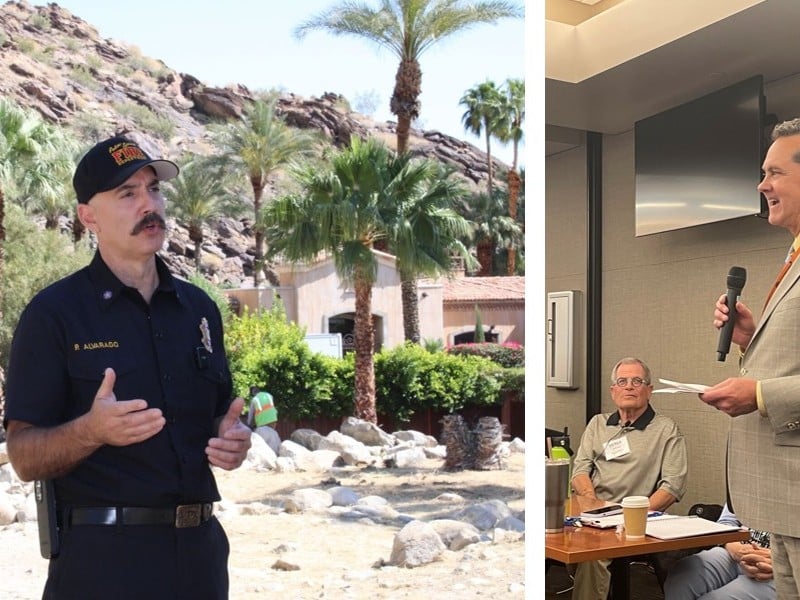
City leaders, public thank retiring city manager and fire chief, list their accomplishments
Council members and residents praised Scott Stiles and Paul Alvarado Wednesday for storm response and public service. Both men gave the credit to their staffs and the community.

Temporary dog park approved for Victoria Park; Demuth Park project progressing
Parks commissioners backed a pop-up pilot with Blue Zones Palm Springs that will open Dec. 11 and run through about the end of January, with a resident survey to gauge interest in a permanent site.
This week at City Hall: Planning Commission to weigh delivery hub; City Council postpones underground utility hearings
A proposed warehouse on 19th Avenue, a pop-up dog park and a canceled public hearing on a nearly $10.1 million utility project top meeting agendas this week.