
City provides update on Racquet Club Road project; meeting focuses on fire response impacts
A reconfiguration in the works would add bike lanes and reduce traffic lanes, but potentially add between 5 to 53 seconds to emergency response times during peak hours.
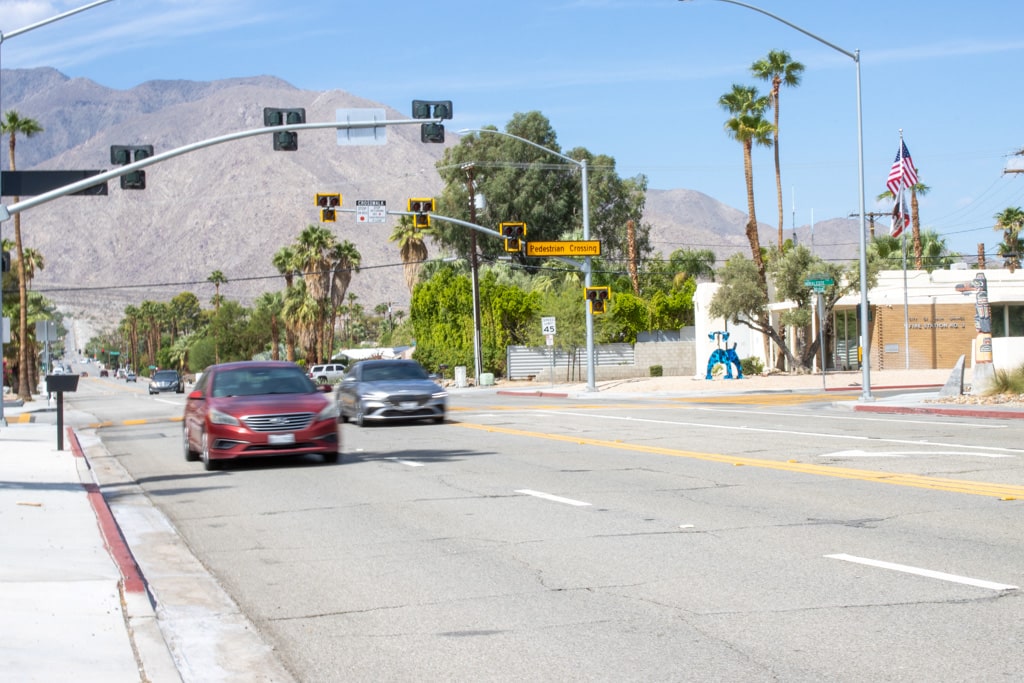
The city of Palm Springs and engineering and design consultants from Kimley-Horn provided updates on the Racquet Club Road Reconfiguration Project on Wednesday evening, with a special focus on potential impacts to fire response times.
The road reconfiguration focuses on a two-mile corridor from North Palm Canyon Drive along Racquet Club Road to Farrell Drive and Via Escuela. It would involve adding bike lanes and reducing traffic lanes to one lane in each direction with a dedicated two-way center turn lane.
Local reporting and journalism you can count on.
Subscribe to The Palm Springs Post
The project “is an opportunity to close the active transportation gap through introducing bicycle facilities, visibility enhancements, and safety improvements,” all of which can “help connect residential communities, schools, and commercial areas,” according to the city.
The city and Kimley-Horn held a series of three community meetings last fall and earlier this year to hear feedback and narrow down from five design opinions to one preferred design. This week’s meeting, held on Zoom and in person at Vista Del Monte Elementary School, primarily focused on the potential impacts of the reconfiguration on response times from Fire Station 3, located on Racquet Club Road within the project’s corridor.
That station currently has the longest average response times of the city’s five fire stations, according to Palm Springs Fire Chief Paul Alvarado. Station 3 covers a vast area of Palm Springs, stretching from Stevens Road in the Old Las Palmas neighborhood up to Tramway Road.
The station’s overall response time (which includes responses from that station and other responders traveling from other stations to incidents within Station 3’s area) is 7 minutes and 14 seconds. “That’s not what I want. I want a five-minute travel time,” said Alvarado.
The city is currently evaluating locations for Fire Station 1, which is downtown, and also planning renovations to Station 3.
Kimley-Horn’s fire response study looked at existing and future travel times during peak morning and afternoon hours along the project corridor, breaking it down into three separate “routes” along Racquet Club Road. Under 2024 conditions, increased travel time during peak hours could be anywhere from 5 seconds to 53 seconds, depending on which portion of the road is used.
For example, Route 1 only focuses on fire engines traveling west from the station to the end of the project corridor, and could add 5 to 8 more seconds of travel time for trucks driving that full route. But this additional travel time would be shorter if the fire engine turned off Racquet Club Road before traveling the full path, such as if the truck was responding to a call in an adjacent neighborhood.
The 53 seconds of additional travel time happened in the model for a fire engine that needed to travel the entire two-mile corridor, heading eastbound, in peak morning hours.
The team also modeled changes to response times under projected 2040 conditions, with some of the increased travel times being a few seconds longer.
However, the model comes with a caveat: the traffic model does not account for “fire truck specific maneuvers,” such as using the center turn lane or parking lanes, or for emergency vehicle preemption, which times traffic signals to provide green lights to emergency vehicles, according to the presentation from Kimley-Horn.
As the project timeline transitions past the community input phase, “The next step really is to gather the information, make sure that we are understanding what the community wants,” said a city staffer at the meeting. “This is the fourth meeting, and we want to make sure that we address concerns. But we also need to bring the project forward.”
If there’s consensus surrounding the current design, the project will next move to the final engineering and design phase, which could take around four to six months. Construction could begin in Spring 2026.
Author

Related Articles
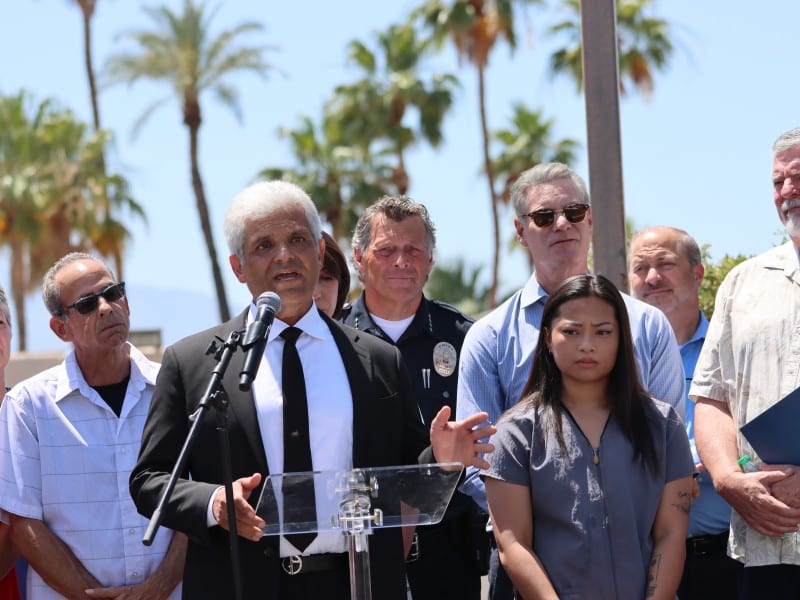
Readers name fertility-clinic bombing as Palm Springs’ biggest story of 2025
Taken together, the responses to our annual poll tell the story of a community shaken by an act of violence and bracing for a year defined by competing pressures — economic, political, and environmental.
Palm Springs 2025 Year in Review: Our top 5 stories
Your clicks told a story of a year defined by crisis, change, and a few surprises — including Palm Springs’ most anticipated hamburger.
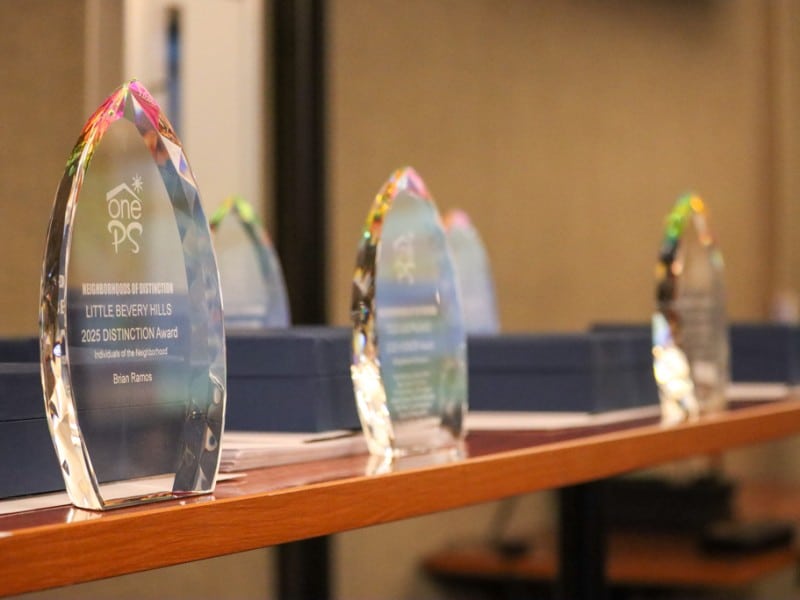
Palm Springs neighborhoods, residents honored at inaugural Distinction Awards
Four individuals and four neighborhoods were recognized for their efforts during the past year at what organizers hope will become an annual ceremony.