
Arts Commission approves relocation of sculptures large and small, hoping to improve visibility for one
The relocations are part of ongoing efforts by the commission to ensure the city’s 140-piece public art collection remains visible and accessible to residents and visitors.
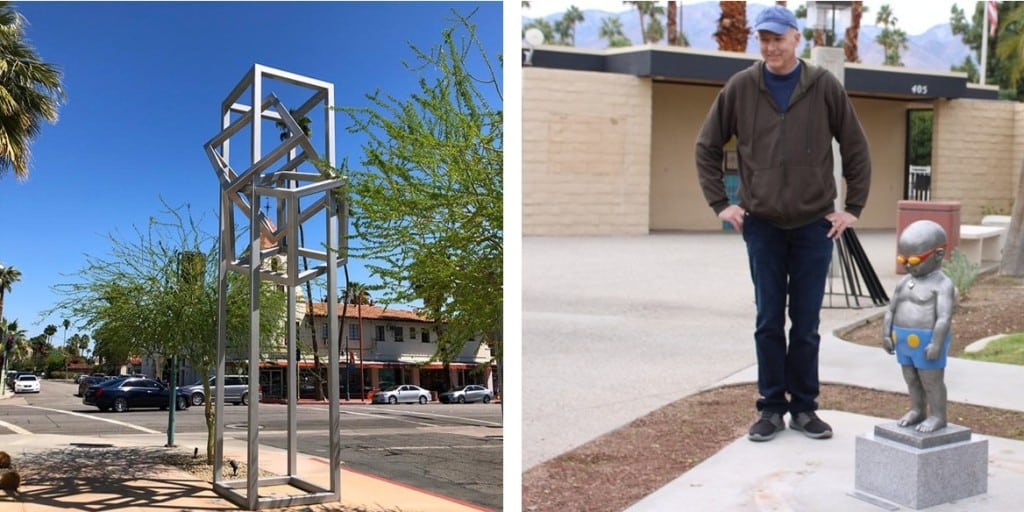
The Palm Springs Public Arts Commission voted Thursday to relocate two sculptures in the city’s public art collection, including moving a large geometric piece from the Uptown area to Sunrise Park.
“Intersecting Cubes,” currently located at 803 North Palm Canyon Drive, will be moved to Sunrise Park along a walkway between the library and baseball fields. Commission Chair Gary Armstrong said trees planted by the city after the sculpture’s installation have grown to obscure the artwork.
Local reporting and journalism you can count on.
Subscribe to The Palm Springs Post
“The trees by nature are supposed to be big. That’s the problem,” Armstrong said during the meeting. “You’re just going to continue to be trimming the trees back.”
In supporting the move, another commissioner noted that park visitors would better appreciate the artwork than pedestrians in the Uptown shopping district.
“When I’m Uptown, I’m not looking at art. I’m going shopping, I’m eating. I’m not looking at art on the sidewalk,” the commissioner said. “When you’re in a park, it’s like I can see the art, and I can appreciate it a lot more because it’s actually visible.”
In a separate vote, commissioners approved moving a sculpture called “TOT” approximately eight feet from its current location in front of the city’s Swim Center. The minor relocation will allow the return of “Spider,” a functional bike rack that doubles as public art, to its original position.
Parks Department staff requested the swap, saying parkgoers prefer using Spider as a bike rack over other standard bike racks in the area. The commission also approved repainting Spider as part of the relocation.
Both moves require coordination with city departments for new concrete pads and installation. The relocations are part of ongoing efforts by the commission to ensure the city’s 140-piece public art collection remains visible and accessible to residents and visitors.
Author

Related Articles
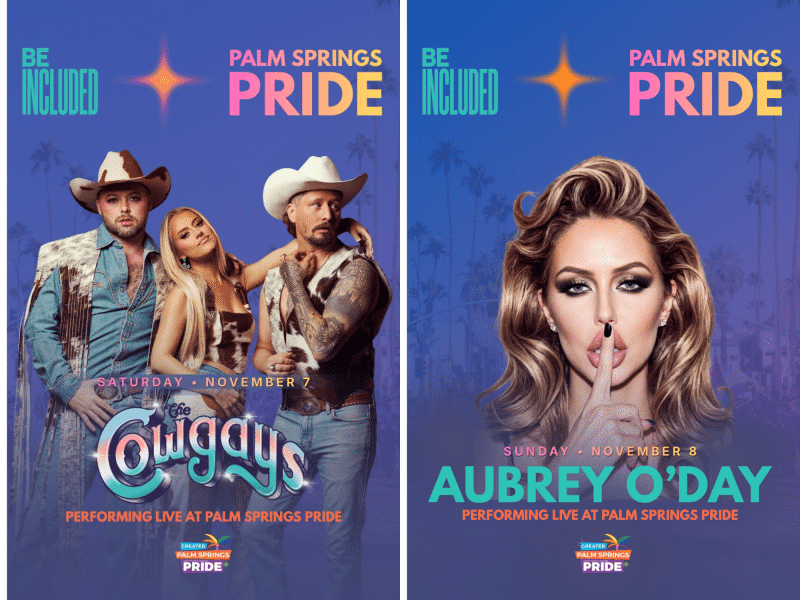
Greater Palm Springs Pride names Aubrey O’Day, The Cowgays as 2026 headliners
The free, three-stage festival marks its 40th anniversary Nov. 6-8 in downtown Palm Springs.
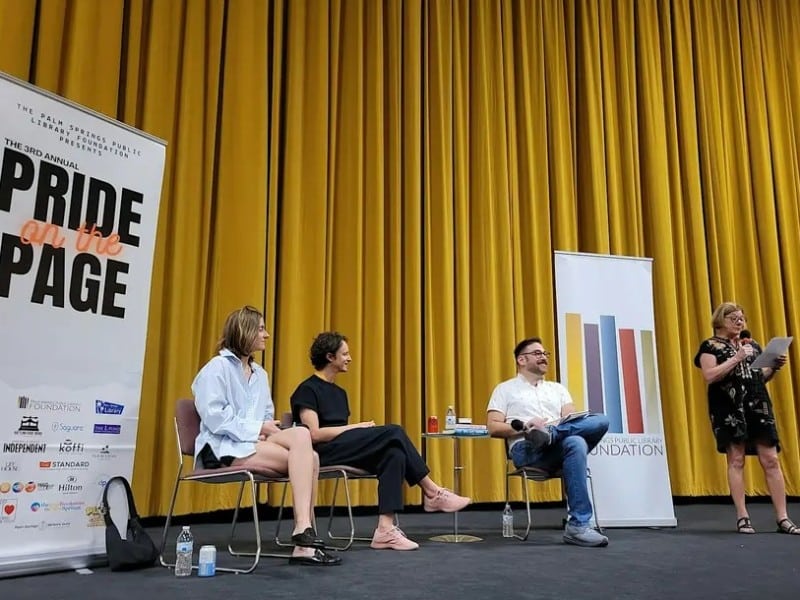
Palm Springs LGBTQ+ book festival announces full lineup, adds Ty Herndon as headliner
Pride on the Page’s 5th annual event is free this year for the first time, with Grammy-nominated country singer Ty Herndon discussing his memoir at the evening program on Nov. 14.
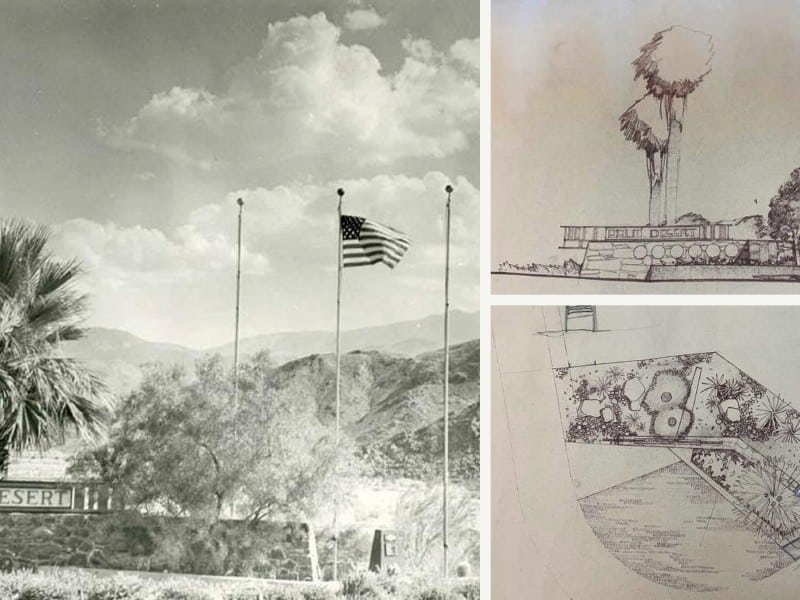
Palm Springs preservation group steps in to help revive a piece of Palm Desert history
The Palm Springs Preservation Foundation has offered to fund conceptual design work for a recreation of a historic Palm Desert entry sign designed by noted desert architect William F. Cody.