
Palm Springs Human Rights Commission weighs volunteer patrol to enforce disabled parking rules
A subcommittee’s proposal, modeled on a Fremont, Calif., program, is one option under review as the city studies how to police handicap spaces on private property.
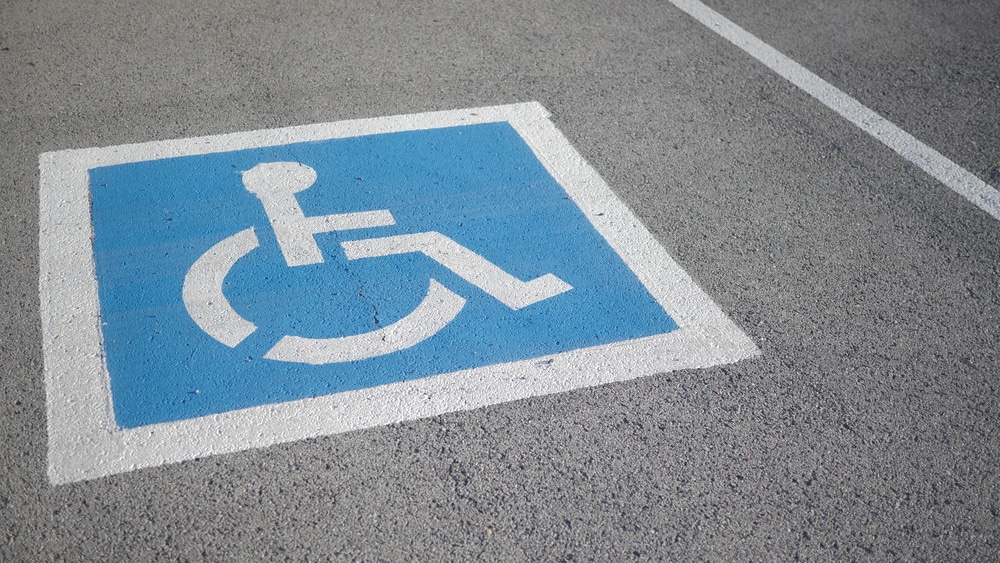
The Palm Springs Human Rights Commission’s Disability Access Subcommittee outlined a proposed action plan Monday to combat illegal parking in disabled spaces, including a recommendation to enlist a volunteer citizen patrol modeled on a program used in Fremont, Calif.
The subcommittee, led by Commissioner Malakai Strong, has spent months focused on the issue after Strong described being repeatedly blocked in or out of his own parking space by vehicles without handicap placards, both near his home and at stores such as Walmart. Deputy City Manager Jeremy Hammond, the commission’s staff liaison, presented the update in Strong’s place.
Local reporting and journalism you can count on.
Subscribe to The Palm Springs Post
Enforcement is complicated by a jurisdictional divide between public and private property, Hammond said.
The city can cite illegally parked vehicles on public streets, but handicap spaces in private lots — at apartment complexes, Home Depot, Ralphs and similar businesses — require property owners’ permission for the city to tow or cite, along with additional signage at lot entrances and individual parking spaces. A subcontracted company, LAZ Parking, currently issues citations only on public property.
Commissioner Beverly Greer said she researched how other cities address the problem and found that Fremont uses a Citizens on Patrol program, in which retired officers and community volunteers, working alongside the police department, patrol neighborhoods and issue citations for misuse of handicap spaces. Fremont provided the subcommittee with the legal framework behind its program, Greer said.
Hammond said he has spoken with the city’s new police chief and others in the department who have committed to launching an educational campaign targeting residential complexes and large businesses with multiple handicap spaces. There is also interest in investigating how the Citizens On Patrol program in Palm Springs could play a role, according to Hammond.
Commissioners also raised the separate problem of placard misuse, such as family members using a relative’s handicap placard without them present. Greer called that “almost impossible” to police, noting it may ultimately fall to the Department of Motor Vehicles or physicians who issue the placards rather than local law enforcement.
Commissioner Carlotta Rinke asked whether police have sufficient resources to handle enforcement on private property. Hammond said he could not answer immediately but would pose the question to the police chief ahead of a planned future presentation to the commission.
Author

Related Articles

Palm Springs puts $1 million behind business program tied to Section 14 settlement
Five-year agreement will fund entrepreneur training and micro-grants, with priority outreach to Section 14 survivors and descendants.
City boards weigh bike safety, airport upgrades, subcommittee votes and hillside remodel this week
Active Transportation, Human Rights, Sustainability, Airport and Architectural Review panels meet across four days on Ramon Road safety, Measure J seating funds and a Panorama Road home project.
Dream Hotel project falls further behind schedule as Palm Springs council reviews progress
The developer missed deadlines for a construction cost estimate and model room completion, but still plans to start construction by Oct. 1, city staff said.