
Part of Navigation Center now open, allowing police to shift focus, offer more options to those living on streets, in washes
The $40 million facility, set to open fully later this year, will provide temporary housing and support services. It also offers police more options when helping the unhoused.
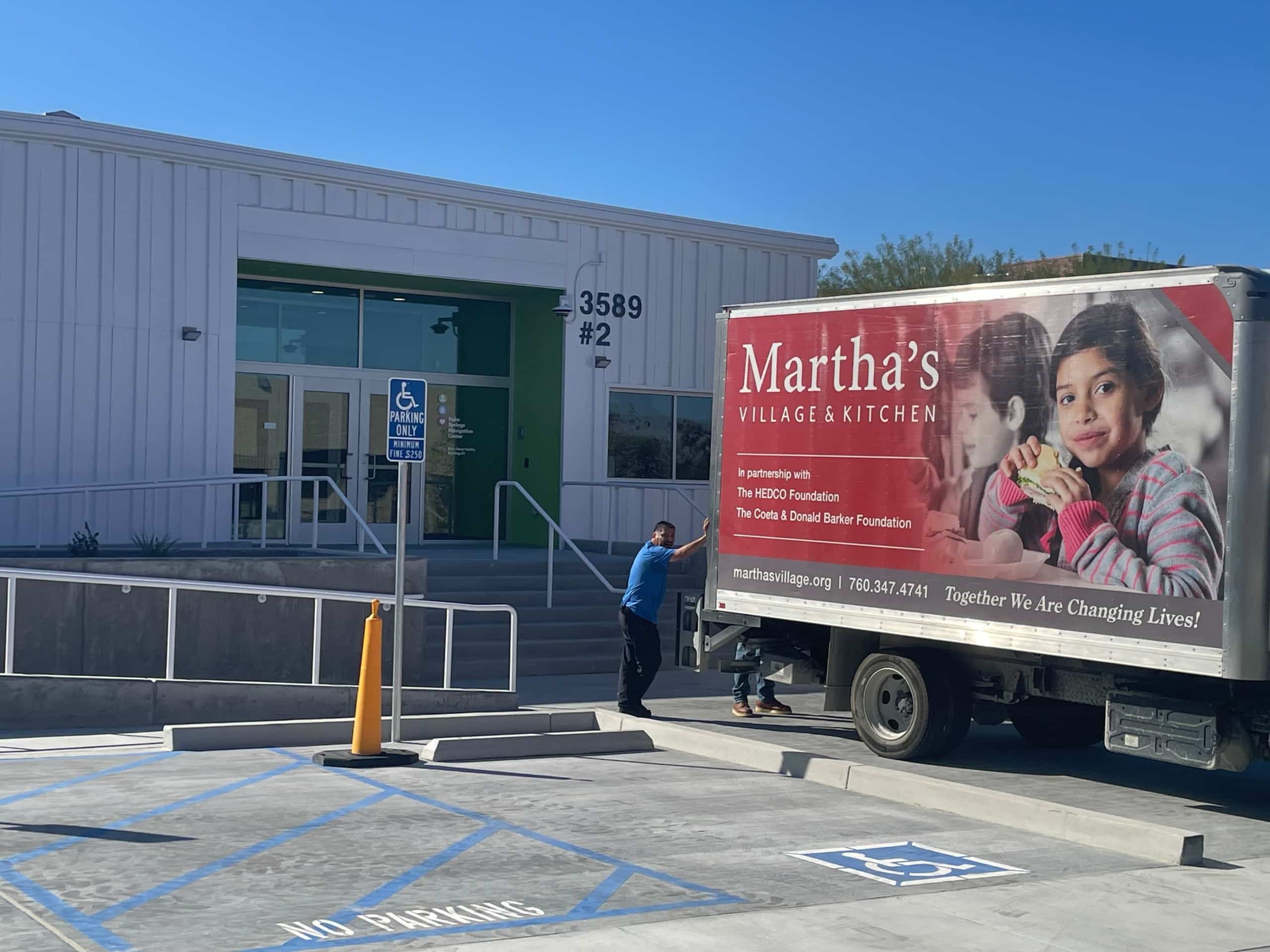
After more than two years of planning, a first-of-its-kind facility for the city’s unhoused residents partially opened on Monday, allowing police to shift their approach to dealing with those who live on city streets.
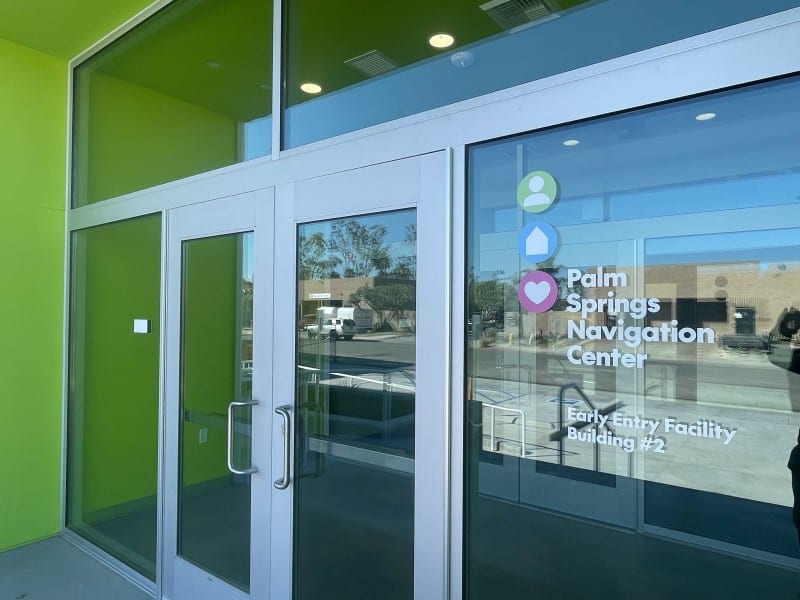
When fully opened later this year, the Palm Springs Navigation Center, located off McCarthy Road in the city’s northern section, will provide temporary housing and wraparound services to homeless residents. As currently designed, the $40 million facility — paid for primarily with funds from outside the city — would have 80 modular housing units and support services to aid in transitioning residents out of homelessness.
Local reporting and journalism you can count on.
Subscribe to The Palm Springs Post
The units will include kitchenettes and bathrooms, and different units will serve different populations, including unhoused youths and families. There will also be a children’s play area, green space, and a dog park.
As of Monday, the center’s early entry section was operational, providing about 50 beds for those awaiting placement in the modular housing. This initial phase is intended to transition people from the streets to transitional housing by offering overnight shelter. Intakes are conducted at the city’s Access Center on El Cielo Road.
Sgt. Marcus Litch of the Palm Springs Police Department informed downtown business leaders on Tuesday that the new beds were quickly utilized, with over two dozen individuals staying the first night.
In a statement made Monday evening on social media, Police Chief Andy Mills said the opening of the facility allows his department to shift from “Operation Relentless Sun” – launched a year ago in an effort to apply intense pressure on criminals living among the city’s homeless population – to “Operation Rising Hope.”
Under the goals of the new operation, Mills said officers who encounter people living on the streets or in washes can now help steer unhoused residents toward the navigation center and educate them on what it can do to help them.
SunLine Transit has contributed a vehicle to facilitate transportation from homeless hotspots to the Access Center for initial intake, enhancing the outreach process.
Last week, a majority of residents who met with police during a series of town halls identified homelessness as their top priority, just as they did during similar meetings two years ago.
During those town hall meetings, Mills told residents that evidence shows the city has made progress in tackling the issue. He highlighted the city’s progress on Monday, noting a reduction in the homeless count from 330 to 150 over the past year.
During “Operation Relentless Sun,” Litch said 105 individuals were relocated or reunited with family members, and 65 entered housing programs.
“There are people who want to get off the street,” said Mills. “The city has done an amazing job … to get this thing open in a timely fashion.”
The Navigation Center is anticipated to open fully in August. Next Tuesday, an open house and tours of the facility are scheduled starting at 11 a.m. Community members are invited to attend.
Author

Related Articles
City Council moves to extend Access Center hours to help unhoused residents better deal with extreme conditions
Councilmembers also asked staff to explore limited overnight shelter during extreme weather events, at an estimated annual cost of $171,700.
Palm Springs continues to seek sustainable funding for Navigation Center’s $5 million annual budget
No specific grant sources, funding commitments or timelines have been announced, but elected officials said last week they remain committed to securing long-term funding.

Police and residents share concerns about Navigation Center’s first year, note signs of progress
City officials say the facility has helped people find housing and jobs, but police and neighbors worry Palm Springs is becoming a magnet for the region’s unhoused.