
School district’s Kings Circle program inspires confidence, leadership potential in BIPOC teen boys
The effort aims to nurture students through education, mentorship, and exposure to leaders and history to build self-esteem and prepare them as the next generation of leaders.
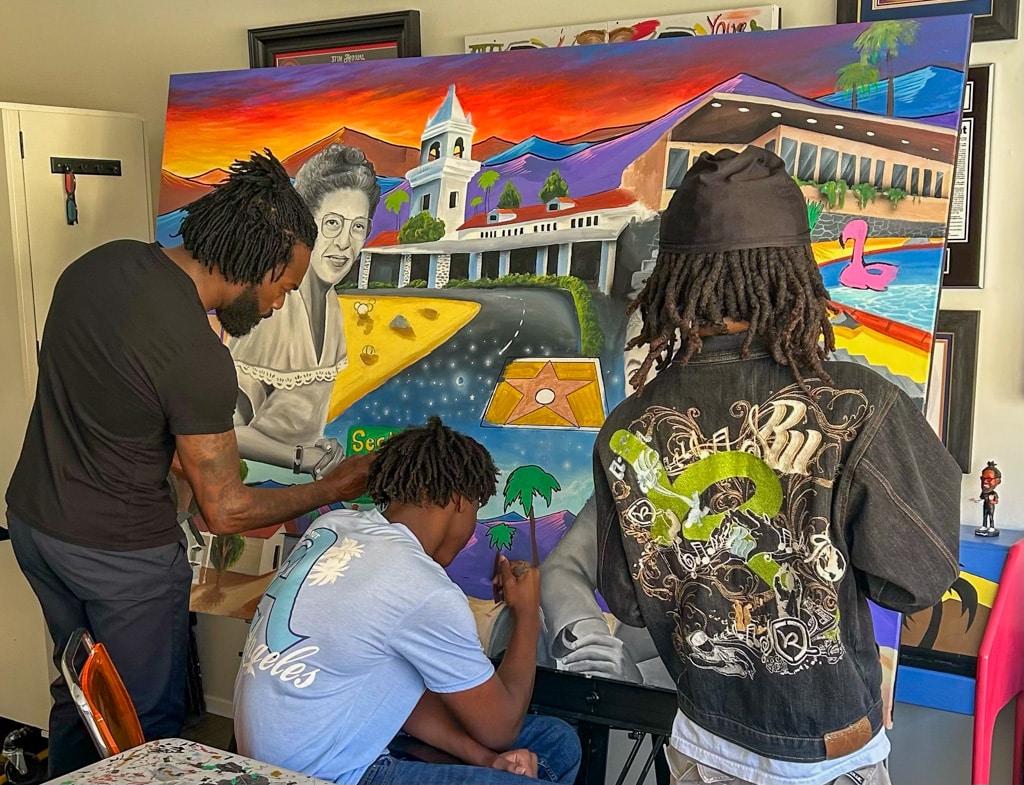
“We appreciate our experiences, said to be life’s greatest teachers. We’ve expressed our feelings through art with Tysen Knight and Manny Doublin. We’ve encouraged and are being encouraged. We’ve been empowering and have been empowered. We’ve stood at the feet of MLK’s monument in D.C. We’ve stood tall when others chose to fall. Tears, smiles, and laughter, we learned to love it all.”
Those were the words spoken by Palm Springs High School students Christopher Francosi, Darren Moore, and Ariel Mendez during a poetry slam at Together We Grow, a fundraiser held last month to support Kings Circle, a transformative program by the Palm Springs Unified School District Family and Community Engagement Center dedicated to nurturing the potential of young Black, Indigenous, and People of Color (BIPOC) teen boys from the district.
Local reporting and journalism you can count on.
Subscribe to The Palm Springs Post
Presented by Sol & Seed Collective and hosted by Jim Budman at Budman Studio, the event was part of an ongoing effort to raise support for life-changing opportunities for participants, including an overnight educational trip planned for next year that will expose the young men to opportunities beyond Palm Springs.
According to Jarvis Williams, coordinator of family and community engagement for the district, Kings Circle began at Desert Hot Springs High School in response to behavioral challenges that emerged after the COVID-19 pandemic.
“I think COVID turned the world upside down, so this was a response to that,” Williams said. “There was some fighting going on. There were disagreements, and the campus environment became really toxic and hostile.”
Williams partnered with DHSHS Principal Omar Tinoco to develop opportunities for young men — both those already involved in the Black Student Union and those who were not. Together, they worked to create a well-rounded environment that encouraged students to recognize their individual strengths and how those talents complemented one another, with the intention of fostering unity and empowerment across the school and community.
Two years ago, the program expanded to Palm Springs High School. At the beginning of this year, Williams brought on Million Essex as a family and community engagement specialist for the district. He appointed him as the program facilitator for Kings Circle. Together with local educators and community members such as Billy Harris, they developed a dynamic curriculum.
The program includes education in financial literacy, healthy relationship-building, the medical and legal systems, and navigating the educational landscape. Students also receive strategic life-planning tools to prepare for life after high school. These lessons align with the school district’s core values.
In addition to structured instruction, students are encouraged to share their perspectives, and community experts are invited to lead discussions on topics that matter to them — such as dating, gun violence, and mental health.
The goal, Williams said, is to provide students with foundational knowledge so they can walk confidently, conduct independent research, and make informed decisions. Over time, this leads to increased self-confidence, improved academic performance, better behavior, and stronger relationships with peers, educators, and community members.
“I think, particularly, one thing for our young African American males is that, unfortunately, a lot of our history is not included in the curriculum,” Williams said. “That ultimately affects self-esteem.”
“When I open up the book, and every positive example is with someone that looks the exact opposite of me, that makes things a little more challenging,” Williams continued, noting that while the issue may not be the district’s fault, there currently isn’t a single African American teacher on campus for students to look up to as an example.
To help address that gap, the program highlights BIPOC leaders and history from around the world, including figures such as Nelson Mandela, while incorporating creative modalities like art.
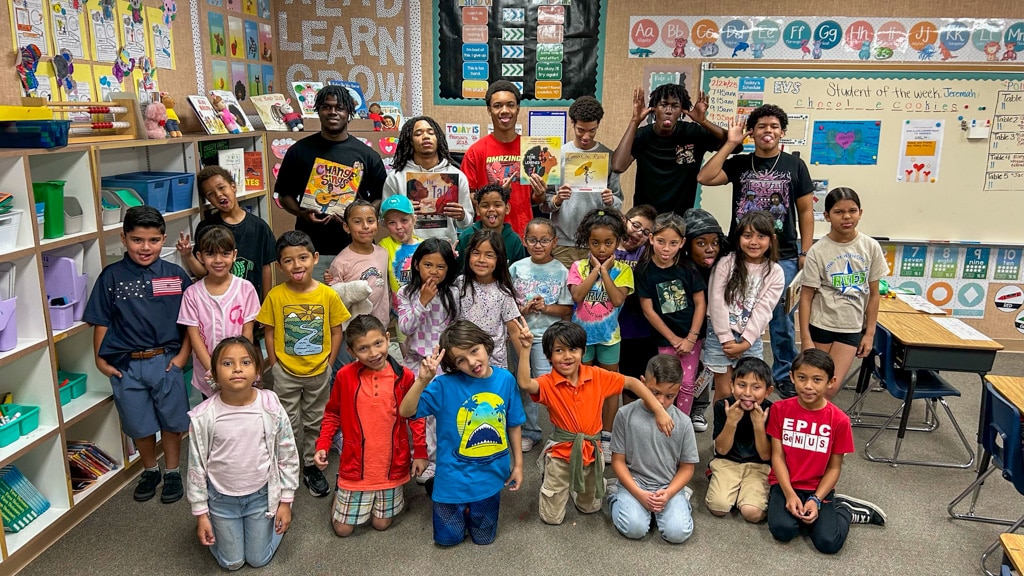
“Not only did they paint a portrait of Nelson Mandela, but they got to learn about who he is, how he went to prison, and what Apartheid is. They were well educated about his offerings and the things that he offered to South Africa,” Williams said. “They studied the letters that he wrote while he was in prison, so getting to learn more intimately about leaders like that from their history, it just infuses confidence into them.”
Portraits painted by students now hang in the Family Engagement Center, where the group meets biweekly during the school year. The first quarter of the program follows a set curriculum, while the second is shaped by student feedback, emerging trends, and the students’ emotional and intellectual needs.
Williams credits Essex with elevating the program. He works closely with the young men both individually and in group settings, offering personalized support and building meaningful relationships. He also works with their families, helping parents access district resources and support systems to support their children’s success better.
Students are selected for the program during Club Rush Week at the beginning of the school year. To qualify, they must be passing all classes with a C or higher, have no disciplinary issues, and go through a vetting process with Essex and the Palm Springs High School administration.
Although still new to Palm Springs, the program is already making a significant impact. Williams highlighted one transformation in particular from this school year.
“We had a young man at the start of this school year who, if you could imagine the darkest possibility, it just did not look like a light at the end of the tunnel. Without saying too much at the top of the year, we didn’t even know if he would live,” Williams said.
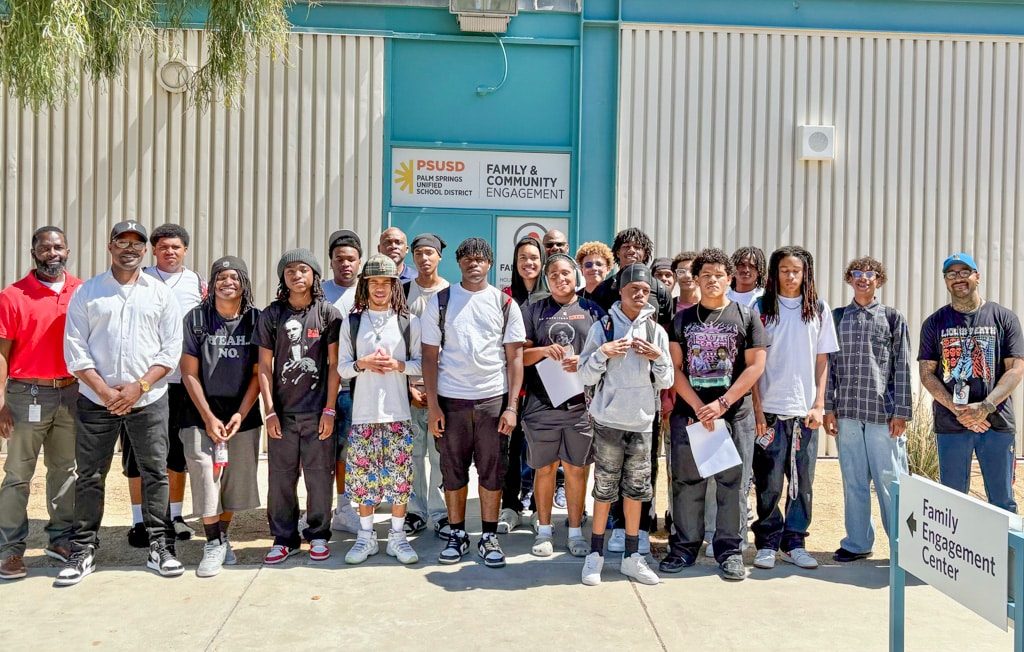
That student graduated from PSHS on June 3.
“So that is a huge success and testament as to why Kings Circle definitely needs to exist,” he said.
According to Williams, Kings Circle currently receives no formal funding. Donations made through this link help support trips, meals, senior-year expenses, and other program-related needs, such as exposure and discovery experiences. Williams also has hopes to expand the program to more school sites around the desert.
Palm Springs Mayor Ron deHarte, who spoke at the fundraiser, emphasized the program’s broader importance:
“When we look at investing in our youth, it really is all about inspiring,” deHarte said. “…This is all about inspiring our young men that are truly the next generation of leaders.
“They are our thinkers for tomorrow. They’re the thinkers today. They are going to make the changes for tomorrow. They’re our entrepreneurs; they’re our innovators. And they’re right here, they’re right here in Palm Springs, and they’re here in this room.”
Author

Related Articles

Former COD president sues district, board chair alleging discrimination, retaliation, financial misconduct
Laura Hope claims gender bias, a hostile work environment and whistleblower retaliation, specifically naming current board member and former president Joel Kinnamon.
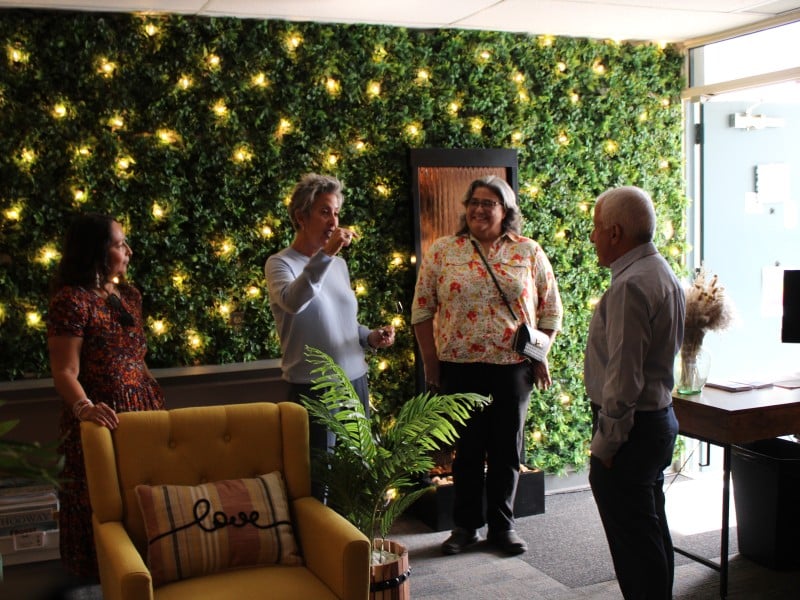
Latest Measure J project will see fourth wellness center coming to local elementary school
The new wellness center at Cahuilla Elementary should be up and running by the end of this school year, and will mark the fourth and final facility of its type funded by the city tax.
Meet Ellen Goodman, our Palm Springs Person of the Year for 2025
As executive director of The Foundation For PSUSD, Goodman has spent a decade building programs that reveal the Coachella Valley’s children — and its future — to a community that often overlooks them.