
Remembering Billy Steinberg: Hitmaker, farm kid and Palm Springs original
From “Like a Virgin” to “True Colors,” Steinberg shaped pop history — but in Palm Springs, he was a rock rebel and loyal friend who never forgot his roots.
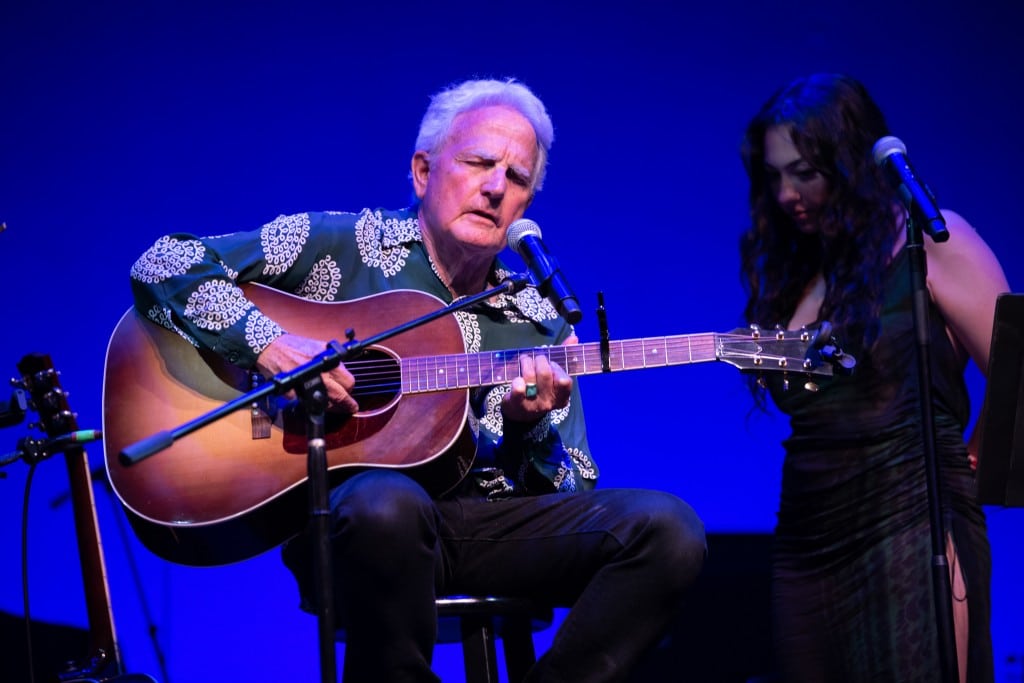
The national media has been describing Billy Steinberg as one of the greatest pop music lyricists of the 1980s and ‘90s, following his death from cancer Monday, 10 days before his 76th birthday.
They recall Madonna’s “Like a Virgin,” Cyndi Lauper’s “True Colors,” Whitney Houston’s “So Emotional,” the Bangles’ “Eternal Flame,” and Heart’s “Alone” as some of his hit songs. They note he won a Grammy for co-writing and producing the 1996 Album of the Year, “Falling Into You,” by Celine Dion.
Local reporting and journalism you can count on.
Subscribe to The Palm Springs Post
But long-time desert residents knew Billy as an unassuming scion of Coachella Valley royalty who, in many respects, exceeded his parents’ accomplishments.
His father, Lionel Steinberg, owned the largest grape farm in the Coachella Valley and served as head of the state Board of Agriculture under Gov. Pat Brown and his son, Gov. Jerry Brown. President Lyndon Johnson asked him to help organize a Food For Peace program. His mother, Louise, was an art collector and major socialite. They hung out at the fabled Racquet Club and were friends with the Kennedy family.
I met Billy in 1980 when he was fronting a rock band known as Billy Thermal. Linda Ronstadt had just recorded his song, “How Do I Make You,” and he wanted to carve a new identity — like he was no longer the society child who had been educated at Bard College.
But the name “Thermal” betrayed his reinvention. That’s where his father’s ranch was based. Billy worked in the fields, spoke fluent Spanish and was so respectful of his Latino workers that his father, with Billy’s encouragement, signed the first collective bargaining contract with Cesar Chavez’s United Farmworkers.
Billy told me he didn’t want his father mentioned in my story. I told him I couldn’t do that because he was very relevant to it. Billy got upset and demanded to see the story before it was published, and I told him I couldn’t do that, either.
I quoted Billy as saying he often worked 60 hours a week on the ranch, overseeing as many as 1,000 farmworkers. But I focused on how he got his musical break at age 30 after plying his craft since he was 14. Then I reported in my end-of-the-year wrap-up column that Billy was one of my 10 favorite interviews of the year, right behind the last interview ever given by the co-founder of the Racquet Club, Charlie Farrell.
I noted whimsically that Billy had told me if he didn’t like the story, “I’ll come back and kill you!” I think that endeared me to him because, not only was I still alive, but we remained friendly for the next 45 years. In 2008, he asked me to induct him into the Palm Springs Walk of Stars.
Billy and his family moved to Palm Springs from Fresno in 1958 and The Beatles inspired him to form his first rock band in 1964. Two of his band mates were the sons of Gus Patzner, the highly respected head of the Palm Springs High School music department, and the fabulous Fables played venues that would have been off-limits to rock and roll just two years earlier.
Palm Springs opposed Black music and rock and roll in 1964, but Billy was already infatuated by blues, R&B and soul. I considered him a valid source in 2010 for a story on the origins of desert rock.
I thought he was worthy of the Songwriters Hall of Fame, and Billy knew he was. He told me, “I think it will happen. I just haven’t been that focused on it.”
The next year, he was inducted into the Songwriters Hall of Fame.
Behind his rock rebel façade, Billy was one of the nicest guys I’ve ever met. In 2014, when I asked him to be a judge in the Tachevah Music Showcase my newspaper co-sponsored, Billy agreed to drive in from Santa Monica. A Goldenvoice official asked me for his pedigree and I said, “He wrote ‘Like A Virgin’ for Madonna. The guy nodded and said, “That’ll pay the bills.
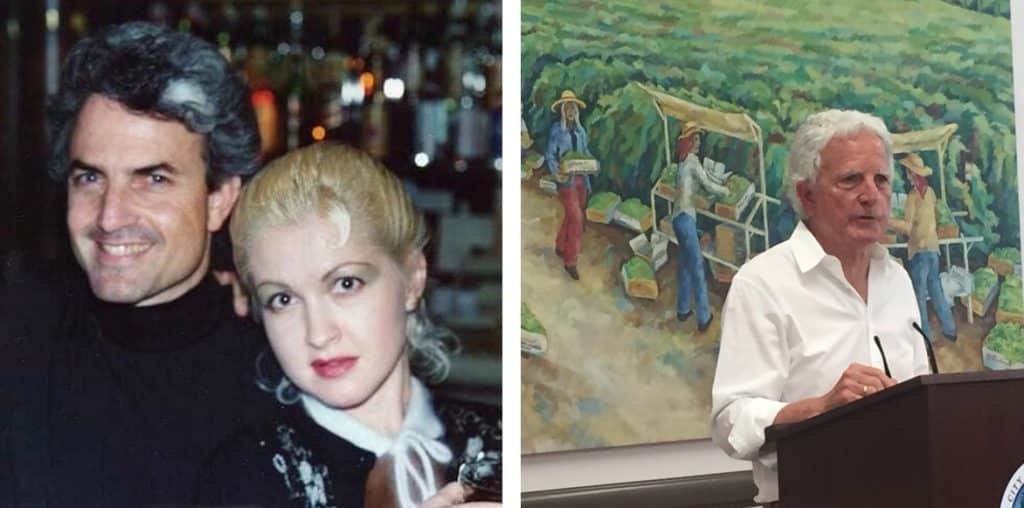
In 2021, Billy donated a mural acclaimed for its sensitive depiction of farmworkers to the City of Coachella. Billy spoke at its dedication that May at the new Coachella Public Library, and drew many of his old workers 33 years after the company had been sold.
Nine months after that, I asked Billy if he’d perform at a benefit concert I was producing in September of 2022 for the animal welfare education nonprofit, Amy’s Purpose. He agreed to open for John Garcia, another desert rock progenitor, with one caveat. He told me he had stage IV cancer and he didn’t know how long he had to live. But he didn’t want me to tell anyone.
I agreed and Billy threw himself into creating an original show with a band led by Alannis Morrisette’s music director, featuring tales behind the stories of his biggest hits. Originally, he didn’t think he could do 40 minutes. But, as we got closer to the date of the show, he asked, “Could we go longer?”
Billy paid for his band, his band’s rehearsal space, and their time to rehearse this unique show. He asked me to find a backup female vocalist and, when the one I found didn’t measure up to his standards, he hired a vocalist who played at Stagecoach.
When his music director got stuck on tour in Louisiana the night before the show, Billy paid for him to fly in the day of our benefit. He arrived just in time for sound check and the set went flawlessly.
We got to hear how Billy had written “Like A Virgin” sitting in a red truck in Thermal. Madonna and Billy’s songwriting partner, Tom Kelly, turned Billy’s sensitive love ballad into an upbeat dance tune, but Billy sang it as he wrote it and it was incredibly moving.
He said he wrote “Drive All Night” while hearing Roy Orbison in his head on his commute from the desert to L.A. while taking care of the grape business, and he was thrilled when Orbison sang it just the way he imagined it.
Cyndi Lauper brought her own meaning to “True Colors,” turning an homage to Billy’s mom into a LGBTQ+ anthem, but he was so proud of their collaboration, he made the song his finale.
Billy and I continued to talk after that. He was a Palm Springs High School classmate of Pearl Devers, who had become the chairperson of the Section 14 Survivors, and he was friends with her brother, drummer Alvin Taylor, who had conceived the Section 14 Survivors idea. Pearl had sang on Billy’s demos before going to work for Rosa Parks and fellow Palm Springs High School graduate Willis Edwards, who Billy thought deserved championing. Billy publicly endorsed the Section 14 Survivors claim against the City of Palm Springs and encouraged me to research Edwards.
I learned Willis directed Jesse Jackson’s California campaigns for President. The fact that he died the same day as Billy somehow makes sense to me.
But there was one other thing I recently discovered Billy did for Palm Springs.
I’ve written how rock and roll was banned from Palm Springs until 1962. It was only played out of town in Cathedral City and Desert Hot Springs. But that year, The Twist became such a national dance craze, the late drummer, Bill Renner, convinced Ray Ryan to try it out at his El Mirador Hotel. Ryan agreed if Renner’s beautiful wife, Diane, would lead the Twist in front of the band. So she did, and that paved the way for Renner to incorporate pop covers of rock and roll into his setlists.
But people Twisting the night away in Palm Springs got even more attention that year when Look Magazine came to town seeking to photograph a house owned by Robert Alexander, a builder whose family helped make mid-century modern houses affordable in Palm Springs. Look called the Alexander architectural marvel the “House of the Tomorrow” and it wanted to photograph it with a party of hip “not-too-old” socialites.
Alexander and his wife, Helene, recruited partygoers including Barbara Marx (later Barbara Sinatra), her friend Nelda Linsk, and Lionel and Louise Steinberg. The Alexanders’ daughter, Jill, and the Steinbergs’ son, Billy, were put in charge of the party music.
A Palm Springs Life story by a writer named David Lansing on the “House of the Tomorrow” party appeared in January 2024 citing the names of the records played at that manufactured soiree. They included Dick Dale’s “Let’s Go Trippin’,” the Beach Boys’ “Surfin’ Safari” and Bobby Darin’s “Beyond the Sea.”
But the Look magazine photos showed all the “beautiful people” dancing the Twist to these early rock and roll songs. That explained how the Twist opened the door to rock and roll in Palm Springs!
I called Billy and asked how that writer could possibly have known the names of the records played 62 years ago! Lansing didn’t quote Billy or Jill Alexander. He just said those songs were played.
Billy said Jill contacted him about the story and he recalled the records he selected. He was a passionate collector even at age 12 and he enjoyed shopping at Butch Diamond’s record store, the only store in town that carried Black music. There was probably R&B on the play list that didn’t get mentioned in the story, but it was all music that middle-aged white people could Twist to.
Billy Steinberg, with help from his friend Jill, made Look magazine’s readers believe Palm Springs society was that cutting edge.
Rest in peace, Billy. We’ll really miss you.
Related Articles
When the bass steps into the spotlight
At the Palm Springs International Jazz Festival, an instrument long consigned to the background becomes the through line of a century of jazz history — from New Orleans parades to fusion, funk and the future.
Historic board recommends landmark status for director Edmund Goulding’s ‘Little White House’ estate
The home, built eight years before the city of Palm Springs was incorporated, represents the Spanish Colonial Revival architecture that dominated in the interwar period.
Don McLean brings a lifetime of song to the Plaza Theatre
Ahead of his Palm Springs show, the “American Pie” songwriter reflects on six decades of music, creative independence and why he’s still performing at 80.