
Palm Springs Ride of Silence honors fallen cyclists as community demands safety action
Cycling advocates revealed troubling statistics: cyclist fatalities in the Coachella Valley have been on the rise in recent years, with 30 deaths recorded since 2015 compared to just 20 between 2000 and 2015.

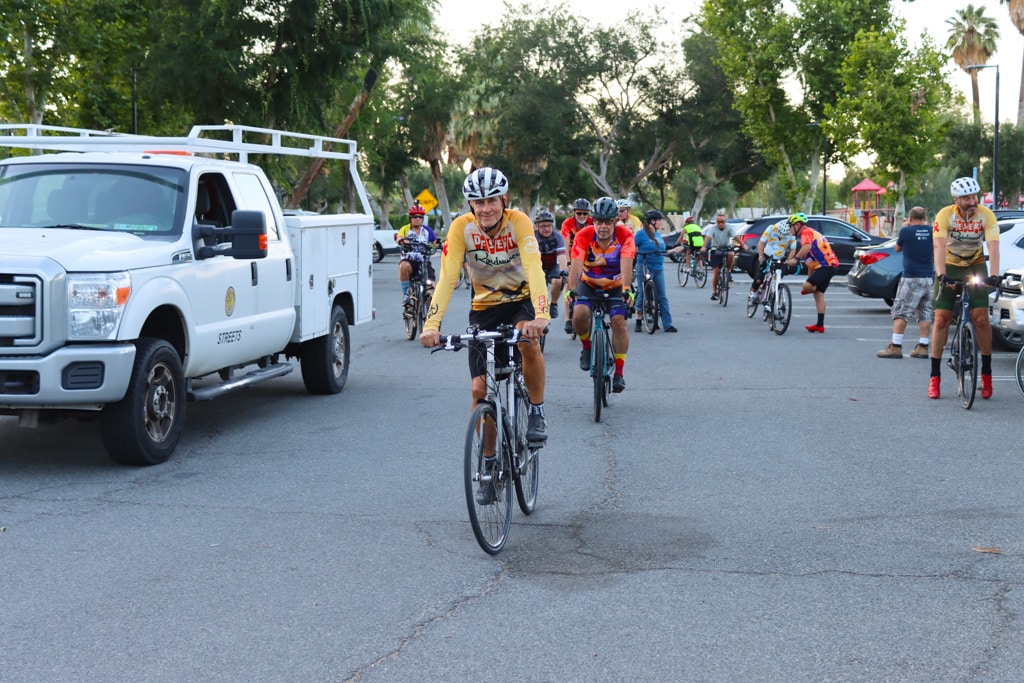
The fourth annual Ride of Silence held at Ruth Hardy Park brought together cyclists and local officials Wednesday evening in Palm Springs to honor those killed or injured while cycling on public roads, while highlighting an alarming trend in regional bicycle safety.
Cycling advocates revealed troubling statistics: cyclist fatalities in the Coachella Valley have been rising in recent years, with 30 deaths recorded since 2015 compared to 20 between 2000 and 2015.
Local reporting and journalism you can count on.
Subscribe to The Palm Springs Post
“Since 2015 we have lost another 30 cyclists. That’s up to about three people per year. The rate has increased by about a factor of two recently,” said John Seigel of CV Cycling Communities. “We’re here to improve safety by increasing awareness and honoring the people who we’ve lost.”
The Ride of Silence is an international event held annually in multiple locations to commemorate cyclists killed and support those injured while riding on public roads. Beyond remembrance, it serves as a call to action, raising awareness among motorists, the public, and decision makers about the dangers cyclists face from traffic.
The solemn ceremony included a reading of names of cyclists who have died on local roads since 2016, followed by a moment of silence before participants embarked on their commemorative ride. The event underscored the human cost behind the statistics, as community members gathered to remember neighbors, friends, and fellow cyclists lost to traffic violence.
Beyond remembrance, however, advocacy groups used the platform to call for systemic change. Brett Klein of the Desert Roadrunners cycling group emphasized the need for a more coordinated regional approach to cyclist safety.
“What we miss right now is a collective strategic plan for safety on our roads, for cyclists and pedestrians throughout our valley,” Klein said. “CVAG is poised to do this and to be the leader that we’re looking for to bring our councils together.”
The Coachella Valley Association of Governments (CVAG) offered some hope for improved safety with news of a long-awaited infrastructure project. Randy Bowman, CVAG’s assistant director of transportation, announced that CV Link — a 40-plus mile multi-use path for cyclists, pedestrians, and small electric vehicles — is finally nearing completion after a 14-year development process.
“CVAG is working on several things to help us move from this very long construction phase into operating something that will be open to the public,” Bowman said. “That includes a series of grand opening events that we’re going to be scheduling for the fall after we get through the warm days of summer.”
Looking ahead, Bowman revealed that CVAG is already planning future extensions of CV Link, including connections to the Salton Sea and Desert Hot Springs, which could significantly expand safe cycling options throughout the region.
Several local officials highlighted specific investments their communities are making to protect cyclists. The announcements demonstrated growing recognition among city leaders that cycling infrastructure requires dedicated funding and planning.
Rancho Mirage City Councilmember Michael O’Keefe spoke poignantly about a cyclist killed on New Year’s Day near city hall, using the tragedy as motivation for action. He announced that Rancho Mirage is investing $388,000 in a project to widen bicycle lanes and improve safety at the Bob Hope and Frank Sinatra intersection.
“Our city is committed to providing plentiful and safe bicycle lanes,” O’Keefe said. “This is the first of more of these projects to come.”
La Quinta has taken an even more aggressive approach to expanding cycling infrastructure. City Councilmember Steve Sanchez reported remarkable growth in his city’s bike lane network over the past decade.
“In 2015, we had just about 34 miles of bike lanes. Today I’m proud to share that we have expanded the number to 83.6 miles of bike lanes across our 129 miles of roadways,” Sanchez said. “With every road maintenance project, the city is actively seeking to install bike lanes, often buffered when possible.”
Sanchez also highlighted La Quinta’s ongoing construction of off-road bike and cart lanes on Washington Street, which will connect multiple cities and major regional bike routes, including the future CV Link.
Law enforcement and healthcare professionals added their voices to calls for comprehensive safety improvements. Palm Springs Police Department Lt. Mike Villegas emphasized that road safety requires community-wide commitment rather than isolated efforts.
“Every day we work to promote responsible driving, educate the public about road sharing, and advocate for infrastructure that protects our most vulnerable road users, including cyclists and pedestrians,” Villegas said. “But safety isn’t just about any one specific person. It takes all of us — riders, drivers, planners, policymakers — committed to the idea that every life on the road matters.”

The human toll of inadequate cycling safety was starkly illustrated by Cheryl Malone, trauma injury prevention coordinator at Desert Regional Medical Center, who provided current statistics from the hospital’s emergency department.
“This year alone, 2025, Desert Regional Medical Center has treated 64 cyclists that have been injured and transported to the hospital, with one death,” Malone said. “That’s 65 too many people that have been injured or killed.”
Host city Palm Springs has made cyclist safety a municipal priority, according to City Councilmember Grace Garner, who outlined the city’s ongoing efforts to create safer cycling conditions.
“Here in Palm Springs, that’s been a priority for us for several years now. We’re constantly working on making sure that our bike paths are safer,” Garner said. “We’ve been able to partner with the CV Link to provide a continuous route throughout our city that allows for cyclists and pedestrians to use with ease.”
As the evening’s formal program concluded and cyclists prepared for their commemorative ride, Klein returned to a fundamental challenge that extends beyond infrastructure: education. He argued that even the best cycling facilities are ineffective if drivers don’t understand how to share the road safely.
“We do not have a collective mission and purpose and a focus from leadership to make sure that we can have a collective message out there year round,” Klein said. “Educate our tourists, educate our citizens, educate our seniors on the roads that maybe drive once a week to go somewhere for an appointment.”
Author

Related Articles
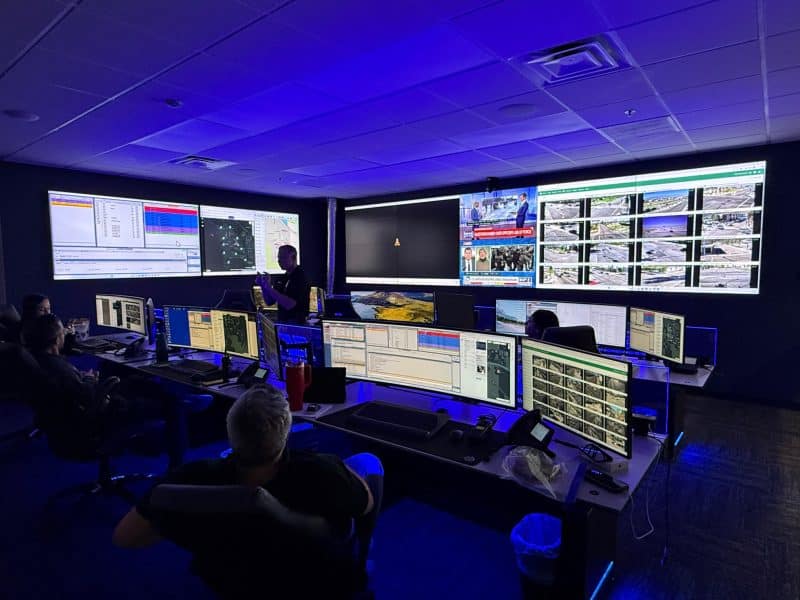
Human Rights Commission examines Palm Springs police drone and AI tech
After reassurances from police, commission members voiced approval of the use of a wide range of security measures, from automatic license plate readers to a network of drones.

Festival of Lights crash victims file lawsuit against city, police department
A Los Angeles law firm filed the lawsuit on behalf of 15 people injured when an officer performing a wheelie lost control of his motorcycle and crashed into spectators.
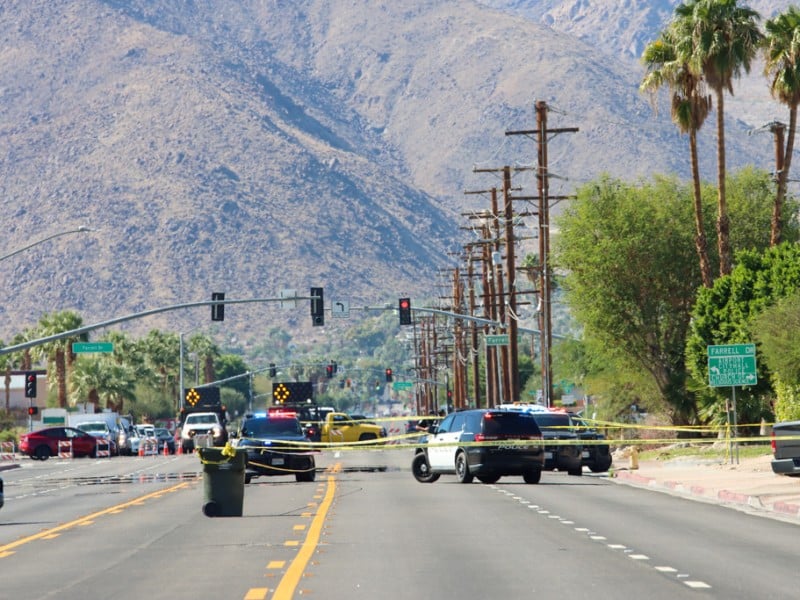
Parole agent shoots person during altercation; ambulance transporting victim crashes
Five people in the ambulance suffered minor to moderate injuries. The individual involved in the confrontation sustained a gunshot wound.