
Palm Springs residents launch campaign for elected mayor as City Council prepares its own review
Group files notice seeking a citywide elected mayor on the November ballot, while some officials warn the change could affect district representation and should undergo a broader public process.
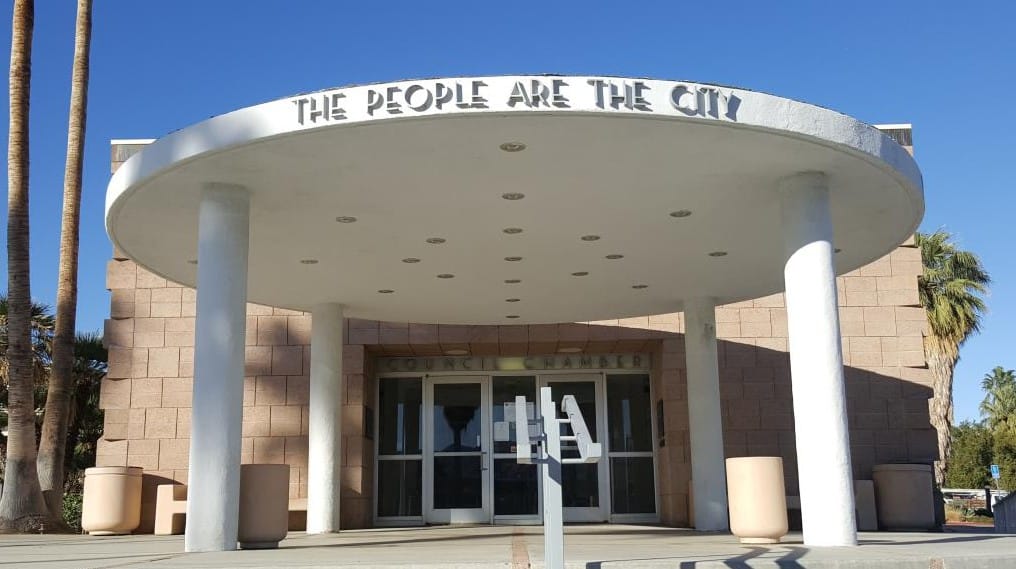
A group of Palm Springs residents has filed paperwork seeking to place a charter amendment on the November ballot that would restore a citywide elected mayor, launching a campaign to change the city’s governance structure even as the City Council prepares to study the issue through its own public review.
The group, calling itself Citizens for an Elected Mayor, submitted a notice of intent Monday to the Palm Springs city attorney requesting approval to begin circulating petitions for a ballot measure that would amend the city charter to allow voters to elect a mayor directly.
Local reporting and journalism you can count on.
Subscribe to The Palm Springs Post
Members of the group were expected to formally announce the effort soon.
The proposed amendment would create a mayor elected citywide to a four-year term beginning with the November 2026 municipal election while leaving in place the city’s five district-based council seats.
Under the proposal, the mayor would remain a voting member of the City Council and would continue to serve largely ceremonial functions rather than acting as the city’s chief executive. Palm Springs operates under a council-manager form of government, in which the city manager oversees daily operations.
The filing marks the first step in the citizen ballot-measure process. The city attorney must prepare an official ballot title and summary before proponents can begin collecting signatures to qualify the measure for the ballot.
The effort comes weeks after the Palm Springs City Council signaled plans to examine the city’s mayoral structure and consider whether to maintain the current rotating system or explore alternatives.
During a February meeting, councilmembers agreed to place the issue on a future agenda for discussion, with the expectation that any potential change would involve legal analysis and public engagement before moving forward.
Councilmember Grace Garner, who represents District 1 and previously served on the city’s California Voting Rights Act (CVRA) working group, said Tuesday that any proposal to alter the city’s election system should undergo a similar process to the one used when Palm Springs adopted district elections.
“We had a robust public discussion on all the implications that came from this,” Garner said of the effort to form districts. “We should do the exact same thing this time if we are going to change our system in any way.”
Palm Springs adopted district-based council elections in 2018 amid concerns that its previous at-large election system could expose the city to legal challenges under the CVRA, a state law designed to prevent election structures that dilute the voting power of minority communities.
Across California, dozens of cities have moved away from at-large election systems after lawsuits alleged that citywide voting prevented minority communities from electing candidates of their choice. Those cases have led many jurisdictions to adopt district-based elections for city council seats.
While the Palm Springs proposal would retain district elections for councilmembers, the mayor would once again be elected citywide. Proponents argue in their filing that electing a single mayor at-large does not conflict with the CVRA because the law generally applies to elections for multiple members of a legislative body rather than a single office.
Voting-rights disputes over election systems remain active in several California cities. A long-running lawsuit in Santa Monica, for example, found that the city’s at-large council elections diluted Latino voting power, while other cities have faced similar legal challenges over election structures.
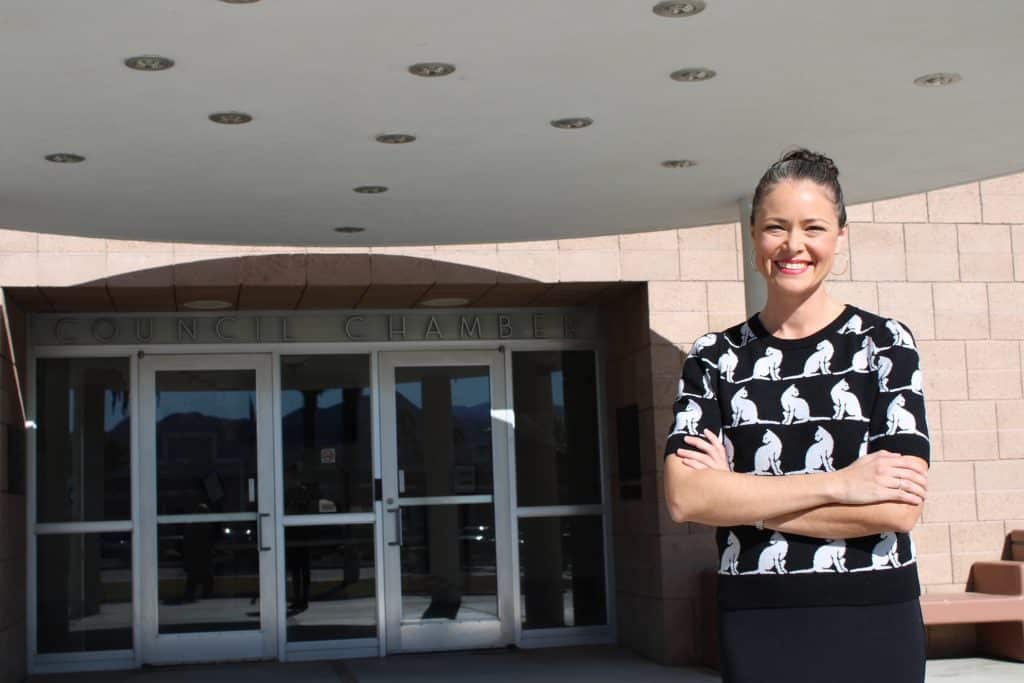
Garner — the first Latina mayor in the city’s history — represents a district intentionally drawn to be majority-minority. She said Tuesday that the current rotating mayor system was intended to balance representation across the city’s districts while maintaining Palm Springs’ council-manager form of government.
Under that structure, five councilmembers elected from geographic districts serve four-year terms, and the mayor’s role rotates annually among them.
“One of the things District 1 is proud of is that we get the opportunity to be in that mayor’s seat,” Garner said. “Everyone gets a chance to have their issues elevated. It’s a far more equitable system and allows people to feel pride in every area of Palm Springs.”
The notice filed with the city lists several Palm Springs residents as proponents of the ballot measure and identifies mediation attorney Rich Gordon as chair of the group organizing the effort. Both current and former members of the City Council have privately expressed interest in running for the position should it be created.
If proponents gather enough valid signatures, the charter amendment could appear on the November ballot for voter consideration.
Meanwhile, the City Council is expected to take up the broader question of the mayoral system at a future meeting as part of the review process discussed earlier this year.
Author

Related Articles

This week at City Hall: parking overhaul, climate policy and a fee fight on the agenda
The Airport Commission considers a $695,000 parking system replacement, the Sustainability Commission reviews a building efficiency ordinance, and the Administrative Appeals Board hears a fee challenge.

Palm Springs library faces outsized budget cut; city says reduction reflects actual spending
A projected $157,000 cut next year may be impossible to absorb, library director warns, as trustees vote to request a meeting with the city manager.

Palm Springs City Council hears updates on two long-stalled hotel projects
Both the Dream Hotel and the Orchid Tree Hotel have faced repeated delays, with revised timelines now pushing key milestones and completion dates further into the future.