
Palm Springs downgraded from ‘very high’ to ‘moderate’ fire hazard severity zone in new state maps
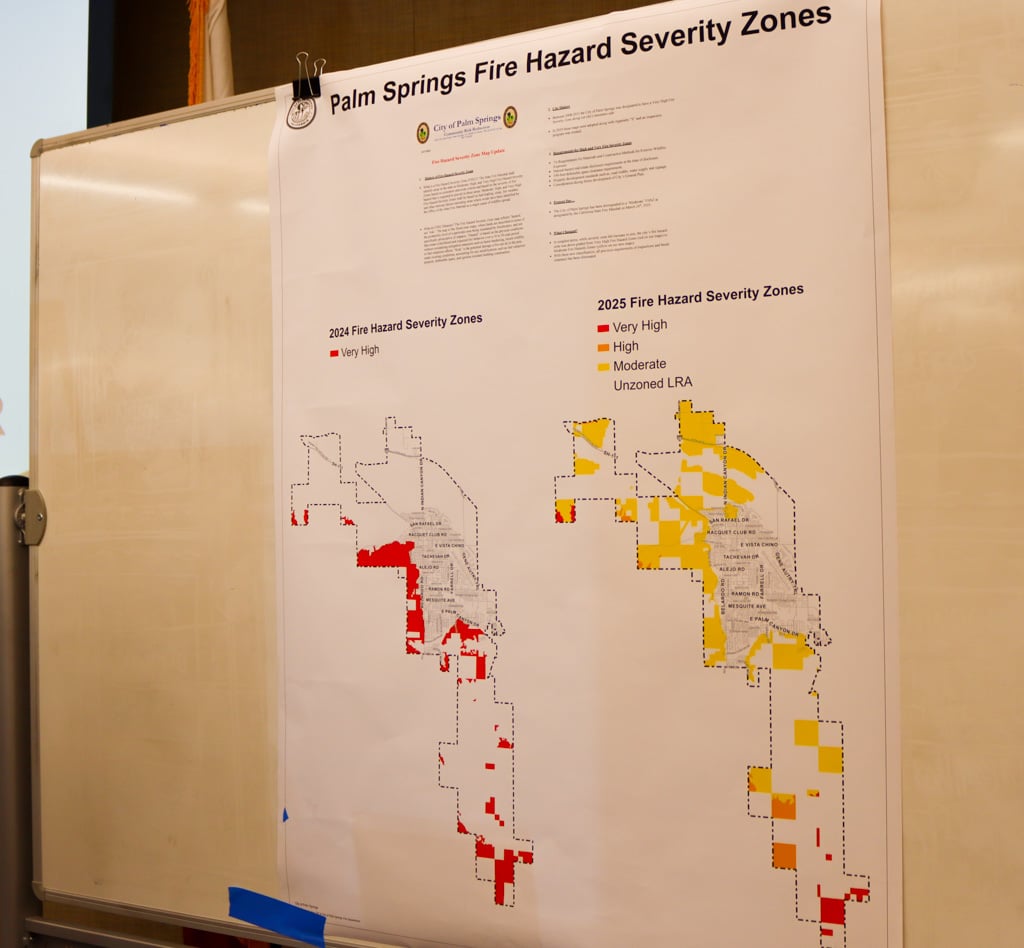
The reclassification affects most of the core areas of Palm Springs, though some portions of the city have been newly added to fire hazard zones.

Palm Springs has been downgraded from a “very high” to a “moderate” fire hazard severity zone in newly released maps from the California State Fire Marshal, Fire Chief Paul Alvarado said Tuesday.
The reclassification, which was released last month, is the first done by the state since 2010. It affects most of the core areas of Palm Springs, though some portions of the city have been newly added to fire hazard zones. It also comes at a time when communities throughout Southern California are on heightened alert following deadly January fires.
Local reporting and journalism you can count on.
Subscribe to The Palm Springs Post
Between Jan. 7 and 31, 14 severe wildfires struck the Los Angeles area and San Diego County, fueled by drought, low humidity, dense vegetation, and Santa Ana winds reaching speeds of up to 100 miles per hour.
The State Fire Marshal now classifies fire risk in three tiers: very high, high and moderate. Palm Springs’ reclassification to moderate reflects both the city’s preventative efforts and the natural landscape, which is less likely to produce the extreme flame heights seen in other Southern California regions.
“When you look at the hills, you can actually see the rocks, you can see the dirt … you fly an airplane over Palm Springs, you can see the homes,” Alvarado told members of Organized Neighborhoods of Palm Springs (ONE-PS) during their monthly meeting. “You do that over Hollywood Hills or Malibu Canyon, you can’t even see the homes. They haven’t cleared their trees, their brush.”
Alvarado credited the aggressive brush clearing and home inspections by the fire department, as well as residents’ willingness to assist, for helping to lower the risk. City crews have cleared approximately 90 acres of brush while educating homeowners about creating defensible space around properties.
Despite the positive reclassification for the city’s core, the new maps expand fire hazard zones in some areas, particularly in northern Palm Springs near Tramway Road and in the south near Racquet Club.
“Although we’ve done better on the moderate level, we’ve added more areas,” Alvarado said. “So that means we’re still prone to fires. But again, it’s not what they saw in Palisades.”
The city has 120 days to formally adopt the new fire hazard maps. Fire officials also plan to return to the Palm Springs City Council with recommendations on future mitigation and prevention efforts in the coming weeks.
Residents with questions about how the new classification might affect their insurance rates were advised to contact their insurance companies directly, though Alvarado noted the Fire Marshal’s classifications and insurance company assessments may differ.
Author

Related Articles
‘Anybody dying in our city is one too many,’ police chief says amid traffic safety concerns
Speaking to the Palm Springs City Council Wednesday evening, Chief Andy Mills outlined collision data, enforcement efforts and the role of alcohol in city traffic deaths.

Human Rights Commission examines Palm Springs police drone and AI tech
After reassurances from police, commission members voiced approval of the use of a wide range of security measures, from automatic license plate readers to a network of drones.

Festival of Lights crash victims file lawsuit against city, police department
A Los Angeles law firm filed the lawsuit on behalf of 15 people injured when an officer performing a wheelie lost control of his motorcycle and crashed into spectators.